Water Chooses
Read the transcript of “Water Chooses”
Film transcript: Water Chooses
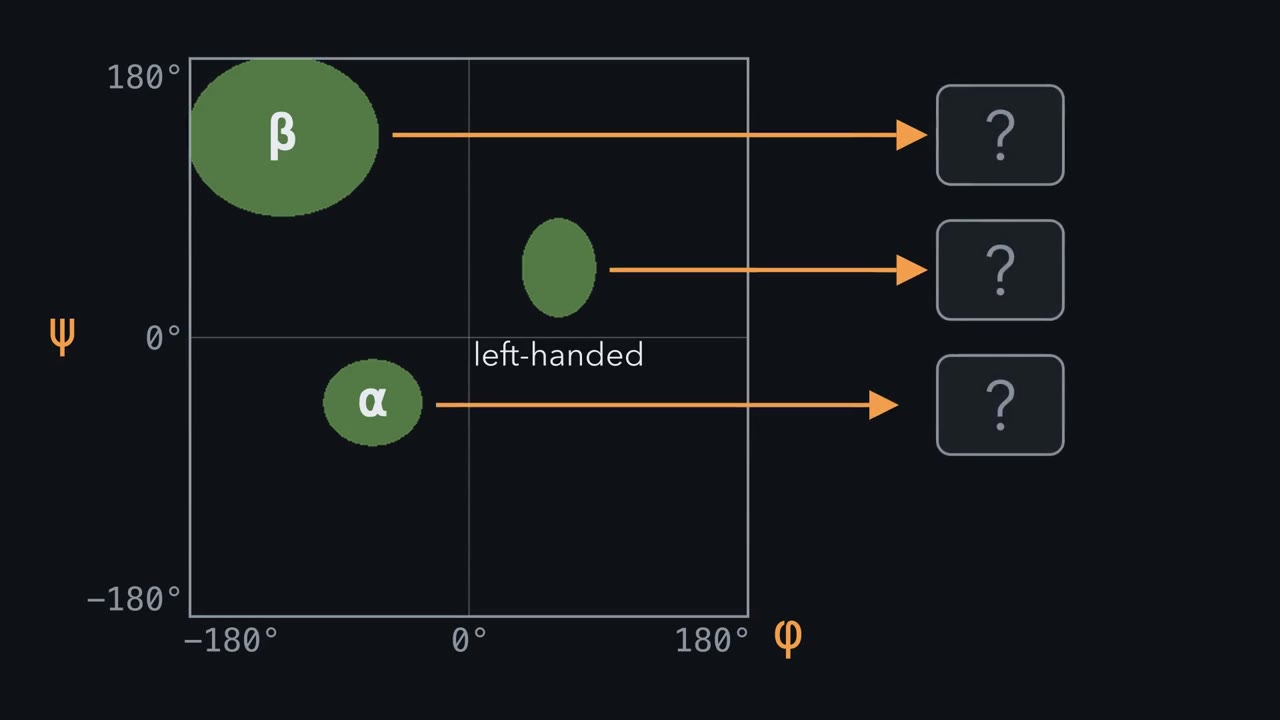
Geometry allows a few shapes. So what chooses among them? Mostly, water does. Picture one oily side chain, like leucine's, sitting in water. Water molecules hydrogen bond to each other all the time, in a shifting network. Next to the oily surface, they cannot hydrogen bond to it. So the water in contact forms a tighter, more ordered network around it, like a cage. Ordered water has lost freedom. That is lost entropy. Now bring two oily side chains together. Less oily surface faces the water. Less water has to be caged. The freed water tumbles away and gains entropy. That gain drives the oily groups together. It is called the hydrophobic effect.
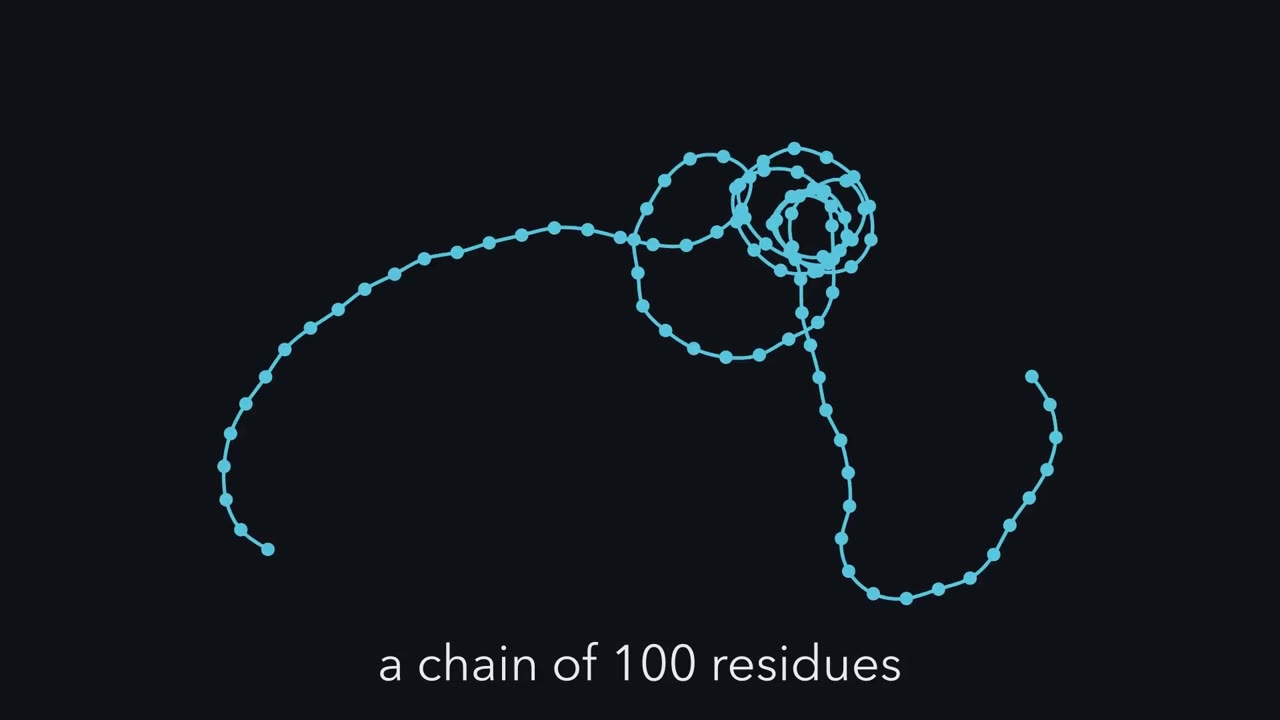
A common mistake is that oil is pulled to oil. But oily groups attract water about as well. Oily groups are pushed together by water, not pulled together by each other. So in a water-soluble protein, the nonpolar side chains end up buried in a core. Polar and charged side chains sit on the surface, in the water. This packs the whole chain into a compact shape. That is tertiary structure. Burial also helps explain helices and sheets. Buried backbone groups lose their water partners. A buried polar group with no partner costs free energy. The cheapest fix is for the backbone to bond to itself. Helices and sheets are the regular ways to do that.
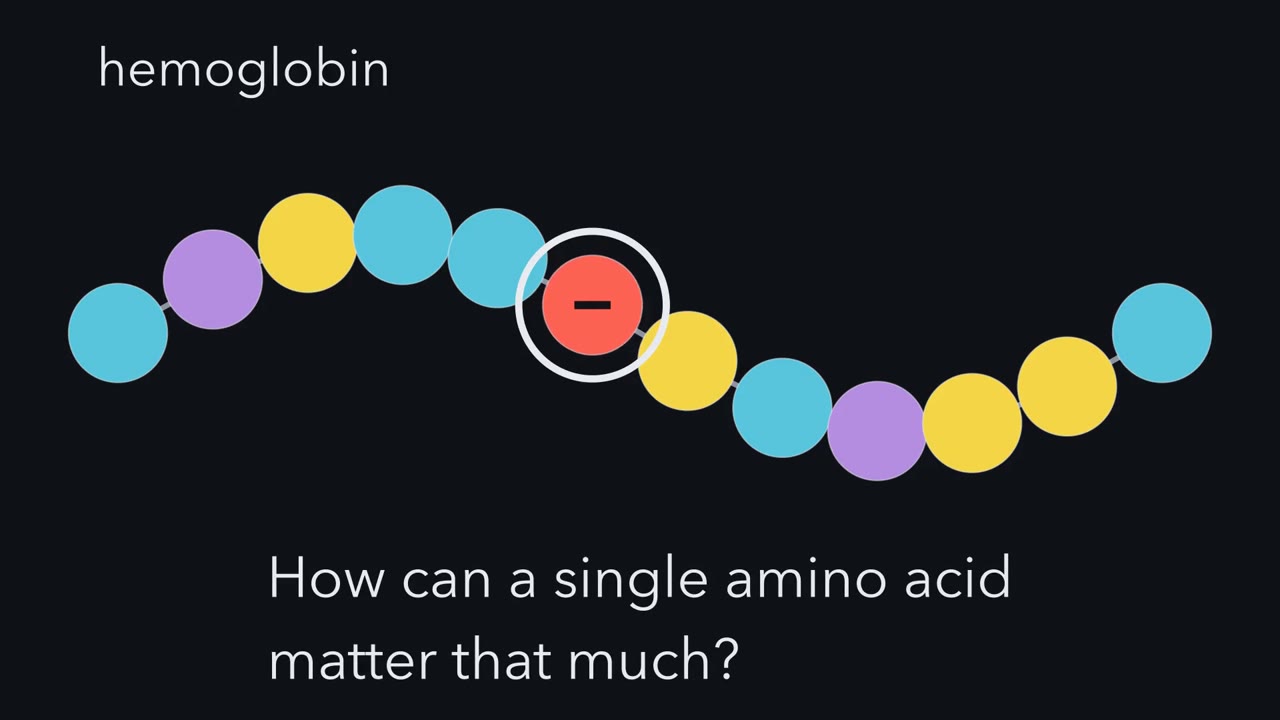
Burial does not stop at one chain. Folded chains can bury oily surface against each other. That assembly is quaternary structure. Hemoglobin is two alpha and two beta subunits, working as one. Now return to sickle cell. Valine puts an oily residue on the surface, where a charged one was. That makes a new sticky patch. Once oxygen is released, the patch fits an oily pocket on a neighbouring hemoglobin. Sickle cell is an unwanted contact between whole hemoglobins, built by the same rule. One more surprise. A folded protein is only marginally more stable than the unfolded coil. The chain gives up a lot of freedom to fold. Its contacts and freed water only just pay for it.
So heat can undo a fold. The melting temperature is where half the molecules are unfolded. Here is the test. A buried leucine becomes aspartate. Or a surface lysine becomes arginine. Which one melts lower? The buried aspartate. It is charged, with no water to bond with, and it breaks up the oily packing. The surface swap trades one positive charge for another, still in water. Stability barely changes. Water pushes oil inward. That burial builds the core and the interfaces.
One sequence, one working shape. Change a single letter and the shape, and the job, can break.
Continue in the lesson: Protein Three-Dimensional Structure: The Sequence Sets the Shape →
3:19 · Free, with captions and a transcript. The lesson has the full text, the questions and the sources.
More films from this lesson
How this film was made. Narration: an AI narrator voice (Kokoro, af_heart) reading narration written from this lesson's text. Animation: AI-generated in code (Manim) by Claude, a schematic with no drawn molecular structures. Captions come from the narration script. See something wrong? Report it.