Two Hinges per Residue
Read the transcript of “Two Hinges per Residue”
Film transcript: Two Hinges per Residue
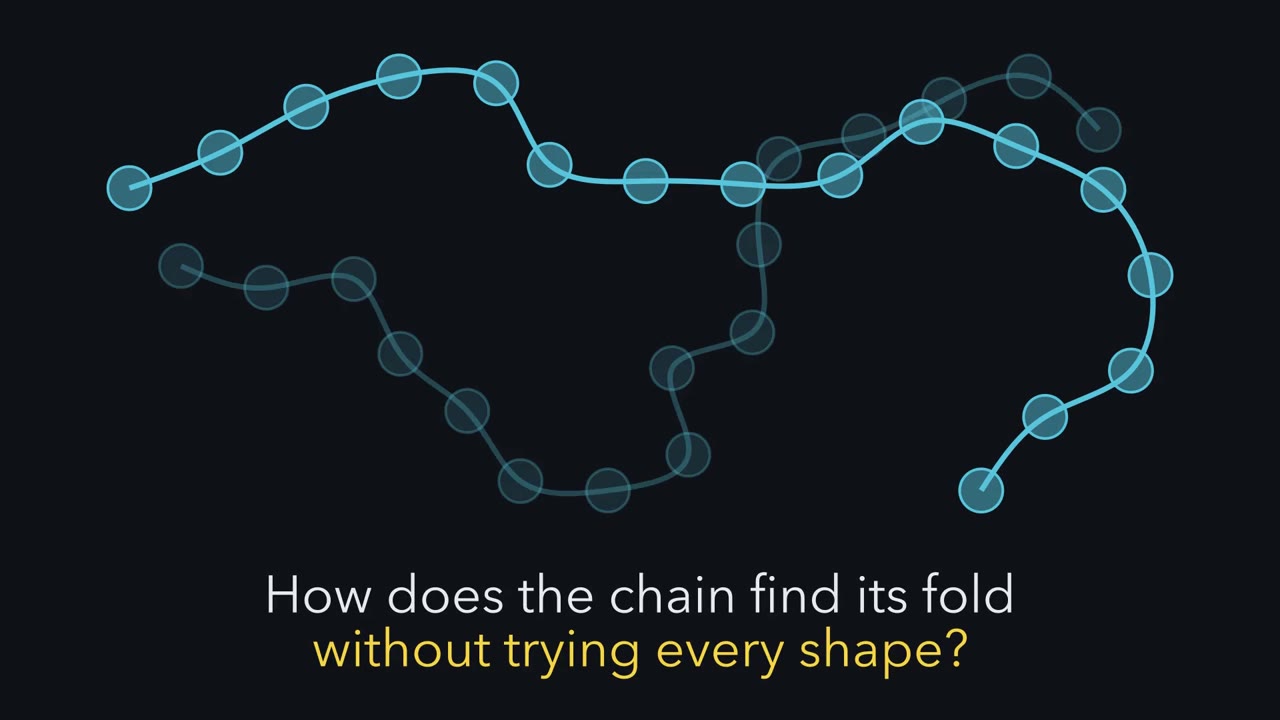
A chain of a hundred residues looks as if it could bend any way at all. Can it? The answer starts with the bond that joins one residue to the next. It is the peptide bond. It joins the carbon of one residue's C=O group to the nitrogen of the next residue's N–H group. Chemists can draw this bond two ways. In one drawing, carbon and oxygen share a double bond. The bond from carbon to nitrogen is single. In the other, oxygen carries a negative charge. Carbon and nitrogen share a double bond, and nitrogen carries a positive charge. The real bond is a blend of both. So the bond from carbon to nitrogen is partly double. That makes it short, about 1.32 Å.
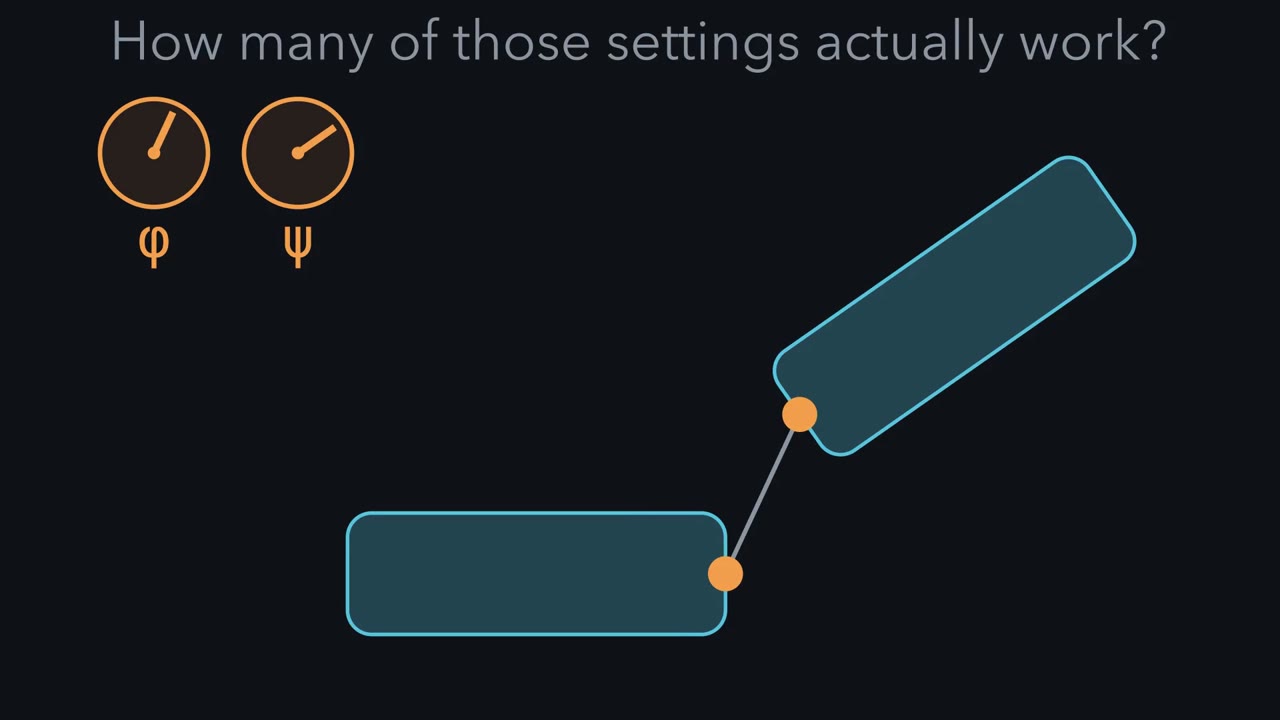
A double bond cannot twist without losing its overlap. So the peptide bond does not rotate. Six atoms are locked in one flat plane. The Cα of the first residue. Its C and O. The N and H of the next residue. And that residue's Cα. Almost always, the two alpha carbons sit on opposite sides of the bond. That is the trans form. The cis form, with both on the same side, is rare. It is more common when the next residue is proline. So picture the backbone as a string of flat, rigid cards. One card for each peptide bond. The cards are joined at each Cα. Watch what can move. Each residue has three backbone bonds. The peptide bond is frozen. Only two can turn, one on each side of the Cα.
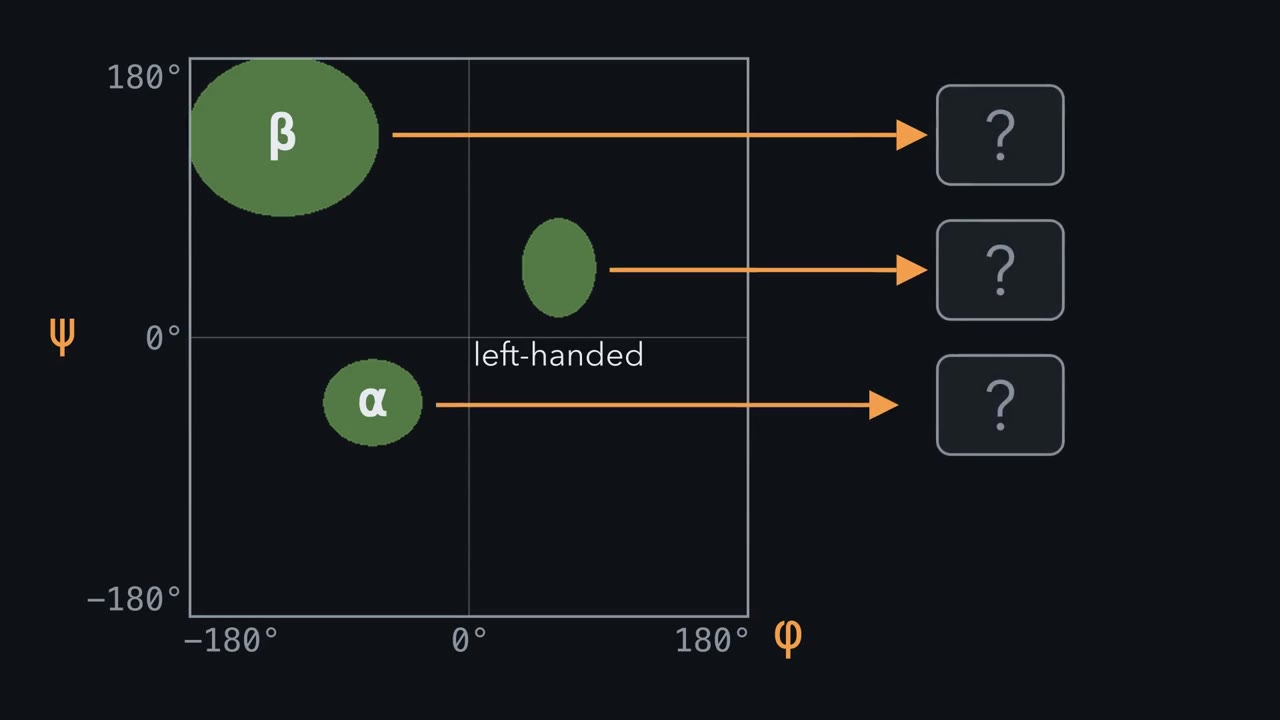
Watch one hinge turn. It is the rotation about the bond from nitrogen to the Cα. It is called phi. Now the other. It is the rotation about the bond from the Cα to the next carbon. It is called psi. Two angles per residue, repeated down the chain. Together they set the path of the whole backbone. Two free angles sound like freedom. Next, we see how much freedom they really give. The peptide bond is flat and rigid. Each residue turns on just two hinges.
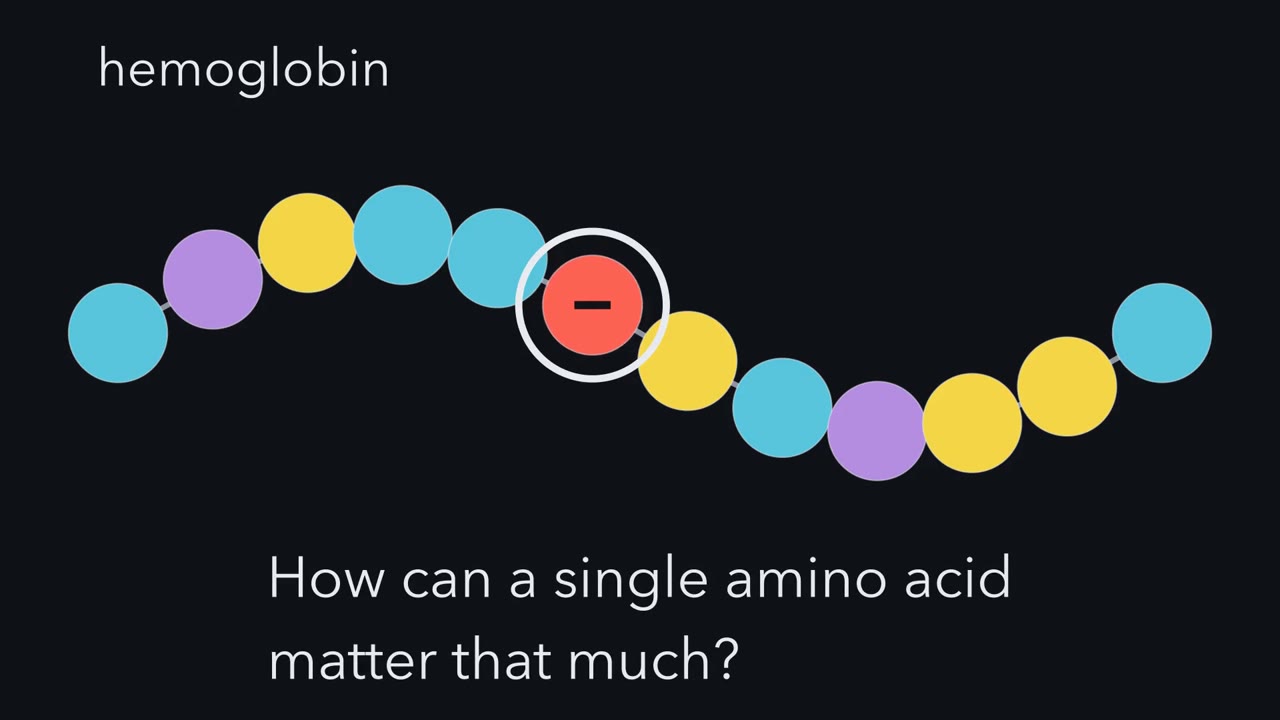
One sequence, one working shape. Change a single letter and the shape, and the job, can break.
Continue in the lesson: Protein Three-Dimensional Structure: The Sequence Sets the Shape →
2:31 · Free, with captions and a transcript. The lesson has the full text, the questions and the sources.
More films from this lesson
How this film was made. Narration: an AI narrator voice (Kokoro, af_heart) reading narration written from this lesson's text. Animation: AI-generated in code (Manim) by Claude, a schematic with no drawn molecular structures. Captions come from the narration script. See something wrong? Report it.