Downhill, Not Random
Read the transcript of “Downhill, Not Random”
Film transcript: Downhill, Not Random
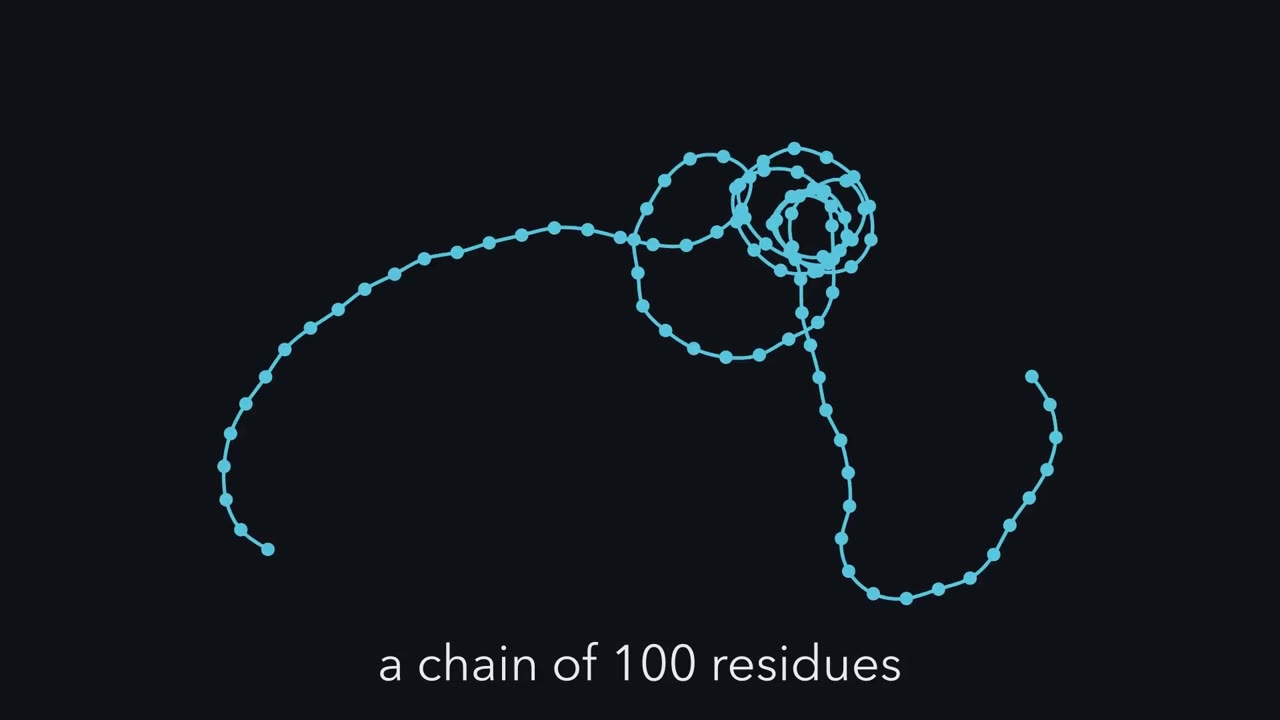
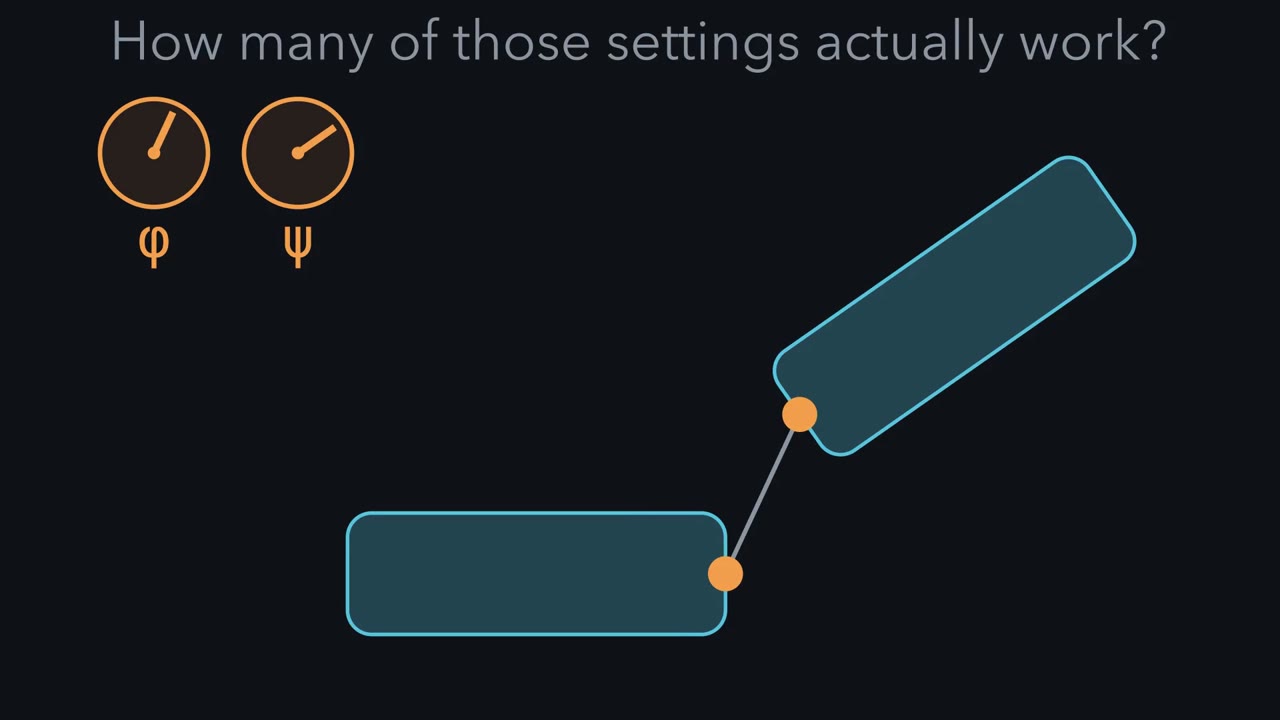
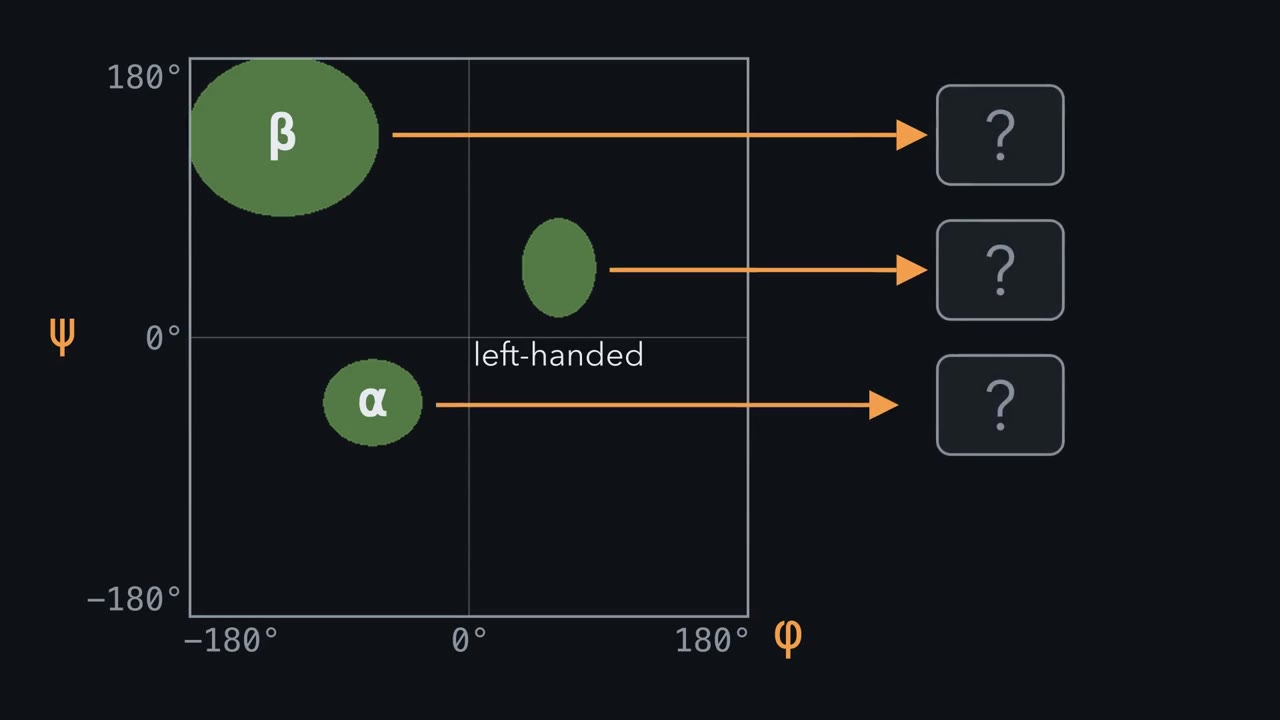
Water picks the fold. But how does the chain find it, without trying every shape? Count the options. Give each residue of a 100-residue chain just three backbone shapes. One comes from each island of the map. Helix-like, strand-like, or left-handed. That gives about 5 × 10⁴⁷ shapes. with 47 zeros. Suppose the chain tried a new shape every tenth of a trillionth of a second. That is about as fast as a bond can turn. Trying them all would take far longer than the universe has existed. Yet small proteins fold in microseconds to seconds. That gap is Levinthal's paradox. You know the Ramachandran plot forbids most backbone angles. Does that solve the paradox?
No. The count already used it. Three shapes per residue is what the filter left behind. Now give each residue only two shapes. The search still takes billions of years. A filter on each residue makes each factor smaller. But there are still a hundred factors. So the answer is not fewer shapes. It is that the residues do not choose blindly. Picture a flat golf course with one hole. Every wrong shape is as good as every other. The ball rolls at random and almost never drops in. That is a random search. Now tilt the ground toward the hole from every side. Each roll tends to carry the ball downhill. This sloping landscape is the folding funnel. Its width stands for the many unfolded shapes.
Its depth stands for how favorable the contacts are. The native fold sits at the bottom. What makes the slope? The same forces that make the fold stable. Two oily side chains meet in the core. Some water is freed, and the energy drops a little. A stretch of backbone makes its first helical hydrogen bonds. It drops a little more. Partly correct shapes tend to last. Wrong contacts tend to break apart again. The chain needs only to keep more of what is right. A small preference at each step is enough. For small proteins, the first few contacts climb a small hill. Once a core forms, the rest runs downhill. Real funnels have dips, called kinetic traps.
Chaperones stop half-folded chains from clumping while they search. Chaperones do not choose the destination. The sequence, in its environment, still does. The rule bends in places. Disordered proteins have too few oily residues to pay for a core. Prions take one sequence to a second fold, rich in beta sheet, that aggregates. And membrane proteins sit in lipid, not water, so their surface flips. Greasy residues face the lipid. Folding is downhill, not random. Native-like contacts tilt the landscape toward the fold.
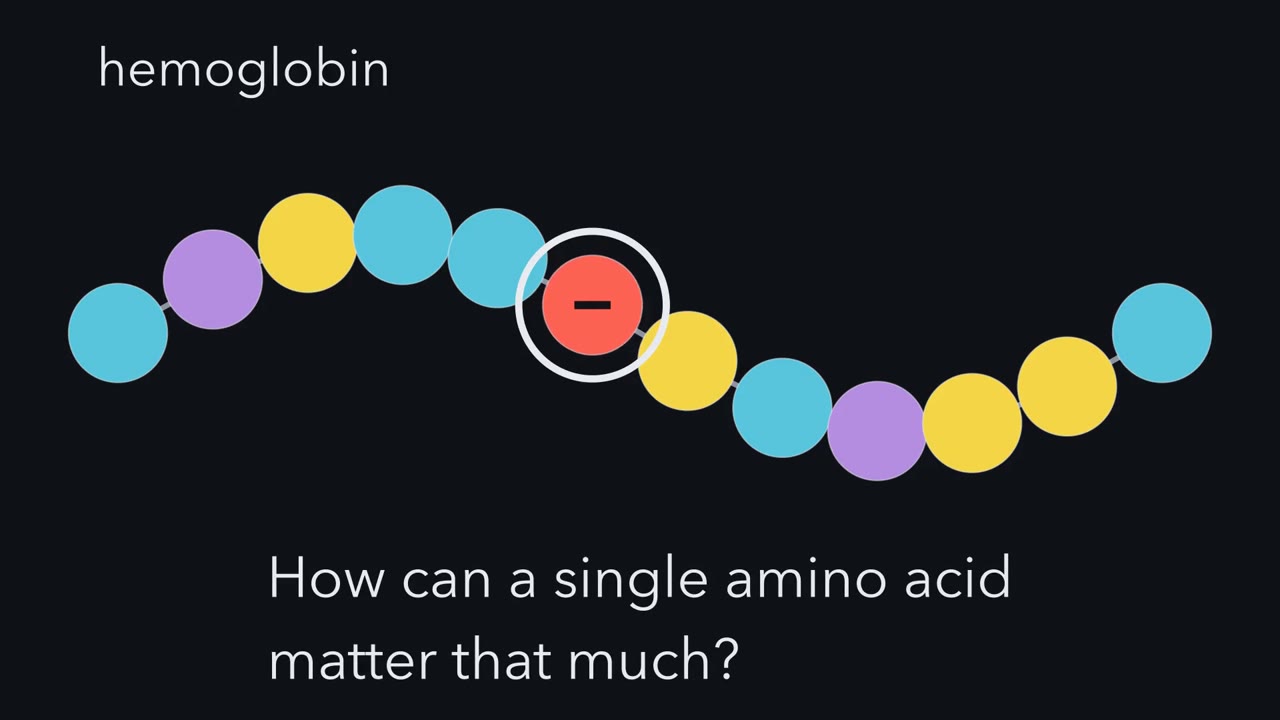
One sequence, one working shape. Change a single letter and the shape, and the job, can break.
Continue in the lesson: Protein Three-Dimensional Structure: The Sequence Sets the Shape →
3:19 · Free, with captions and a transcript. The lesson has the full text, the questions and the sources.
More films from this lesson
How this film was made. Narration: an AI narrator voice (Kokoro, af_heart) reading narration written from this lesson's text. Animation: AI-generated in code (Manim) by Claude, a schematic with no drawn molecular structures. Captions come from the narration script. See something wrong? Report it.