One String, One Shape
Read the transcript of “One String, One Shape”
Film transcript: One String, One Shape
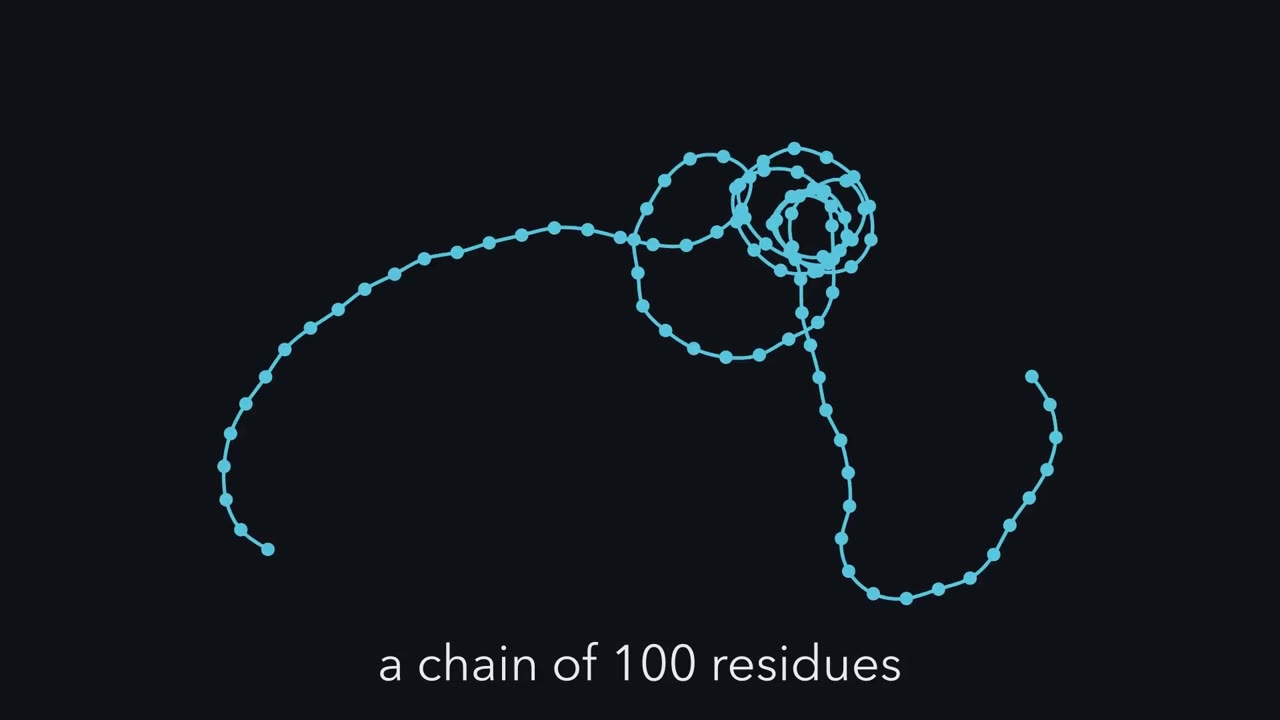
One changed letter can break a protein. How can a single amino acid matter that much? In sickle cell anemia, one amino acid in hemoglobin is swapped. Glutamate at position 6 of beta-globin becomes valine. A charged residue on the surface becomes an oily one. Once the hemoglobin releases its oxygen, it sticks together into long fibers. One letter changed the shape, and the shape changed the job. So the shape must be stored somewhere, and stored precisely. But where? Start with the chain. Its primary structure is the order of its amino acids, linked end to end by peptide bonds. That order is exact, not random. Insulin, for example, is 51 residues in one defined order.
Christian Anfinsen tested where the shape lives. He used ribonuclease, an enzyme with four disulfide bonds. Tube one holds the working enzyme. Its activity is full. In tube two, he added urea and a reducing agent. The reducing agent broke the disulfide bonds. Urea pulled the chain apart. Activity fell to zero. The enzyme was now a loose, random coil. In tube three, he washed the chemicals away. No other proteins were there. Just the chain, a buffer, and air. Here is the test. If the cell's machinery stored the shape, what would tube three show?
The enzyme refolded on its own, back to full activity. No helper guided it, only its own sequence, in that buffer. Look at the disulfides. Eight cysteines can pair up in 105 different ways. Random pairing would get them right less than one time in a hundred. Yet the chain found its correct partners. Anfinsen's conclusion was this. The fold is set by the amino acid sequence, in a given environment. For most small proteins, the fold is the lowest free energy state the chain can reach. Free energy here is a trade. The chain gives up freedom. In return, it gains favorable contacts and freer water. Keep those words in mind: in a given environment.
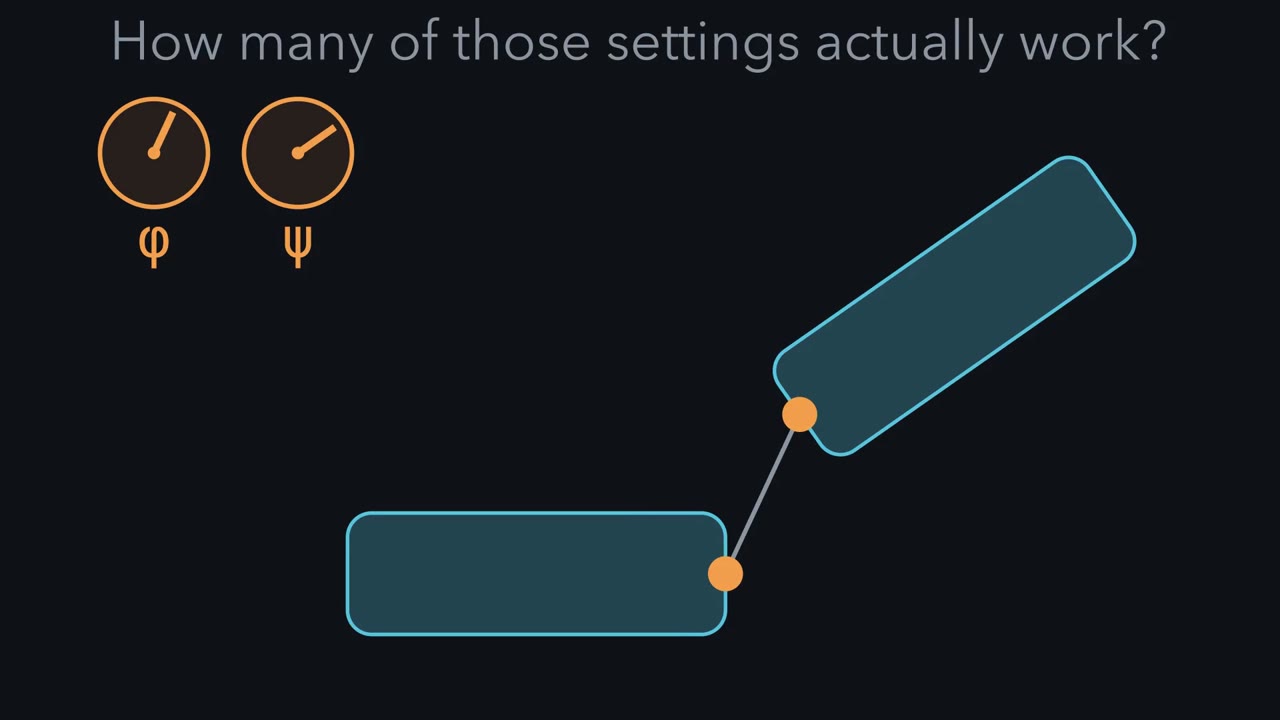
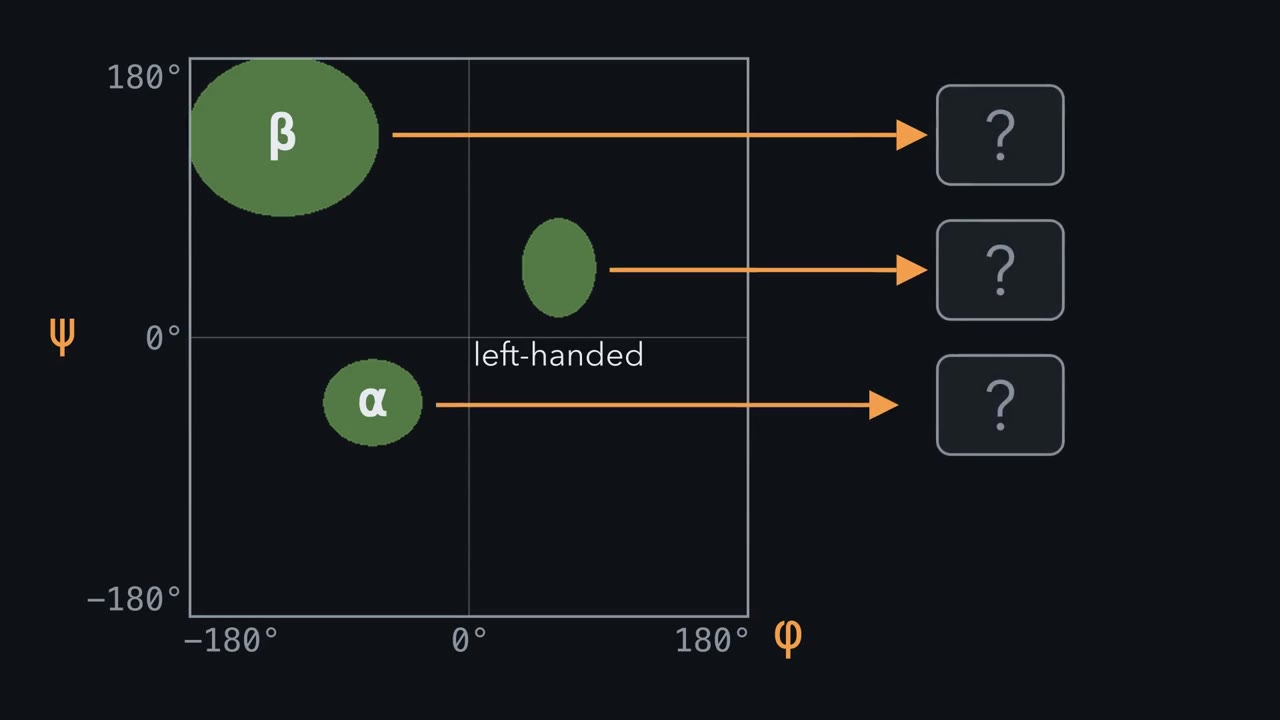
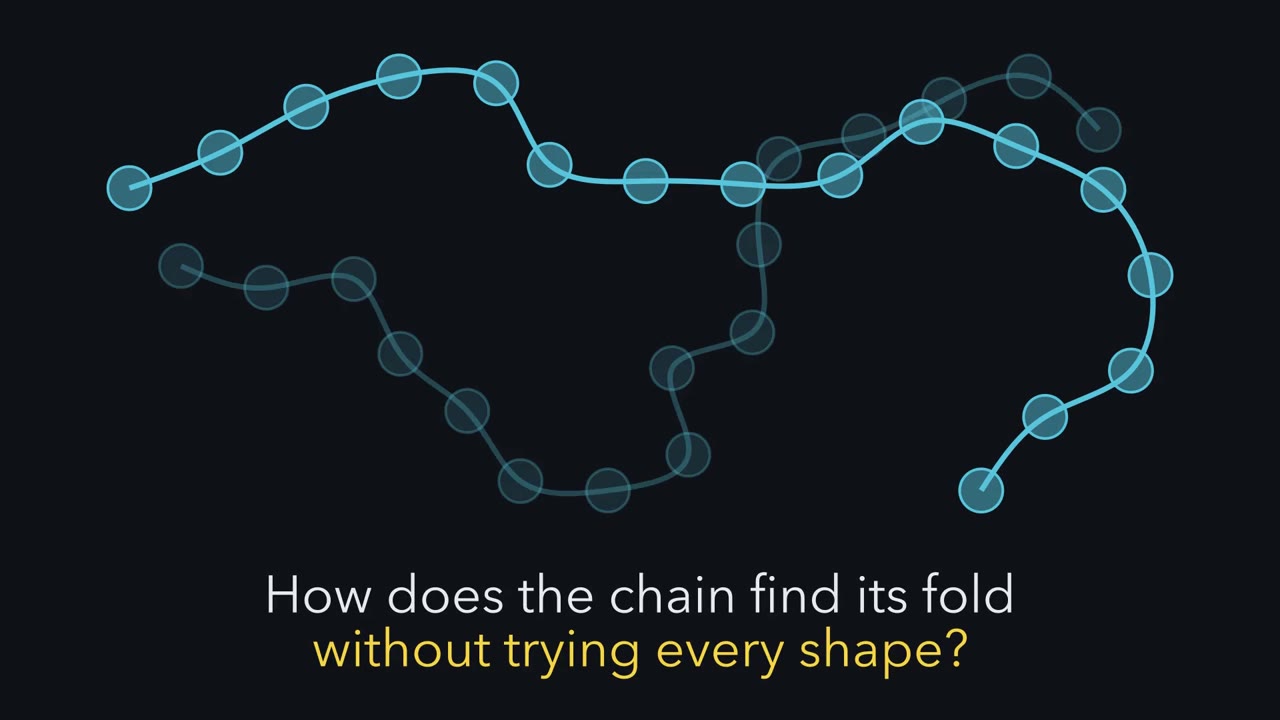
They will matter later. Three questions remain. Which shapes are possible? What picks one? And how is it found so fast? One rule will answer the first two. Geometry allows the shapes. Water drives the choice. The third question needs one more idea. The shape of a protein is written in its sequence.
One sequence, one working shape. Change a single letter and the shape, and the job, can break.
Continue in the lesson: Protein Three-Dimensional Structure: The Sequence Sets the Shape →
2:59 · Free, with captions and a transcript. The lesson has the full text, the questions and the sources.
More films from this lesson
How this film was made. Narration: an AI narrator voice (Kokoro, af_heart) reading narration written from this lesson's text. Animation: AI-generated in code (Manim) by Claude, a schematic with no drawn molecular structures. Captions come from the narration script. See something wrong? Report it.