Tug of War: Why the Voltage Goes Where It Goes
Read the transcript of “Tug of War: Why the Voltage Goes Where It Goes”
Film transcript: Tug of War: Why the Voltage Goes Where It Goes
At the peak of a spike, the inside of the axon turns positive. What could pull it there? Start with a voltage scale. At the left is potassium's equilibrium potential, minus −77 mV. At the right is sodium's, plus +50 An equilibrium potential is the voltage where an ion has no net push. A marker on the scale shows the membrane potential. Each ion's rope pulls it toward that ion's end. Each rope's pull is that ion's current. It depends on two things. First, conductance: how open the ion's path is. More open channels make a thicker rope. Second, the distance from the marker to the ion's own end. The farther the marker, the harder that rope pulls.
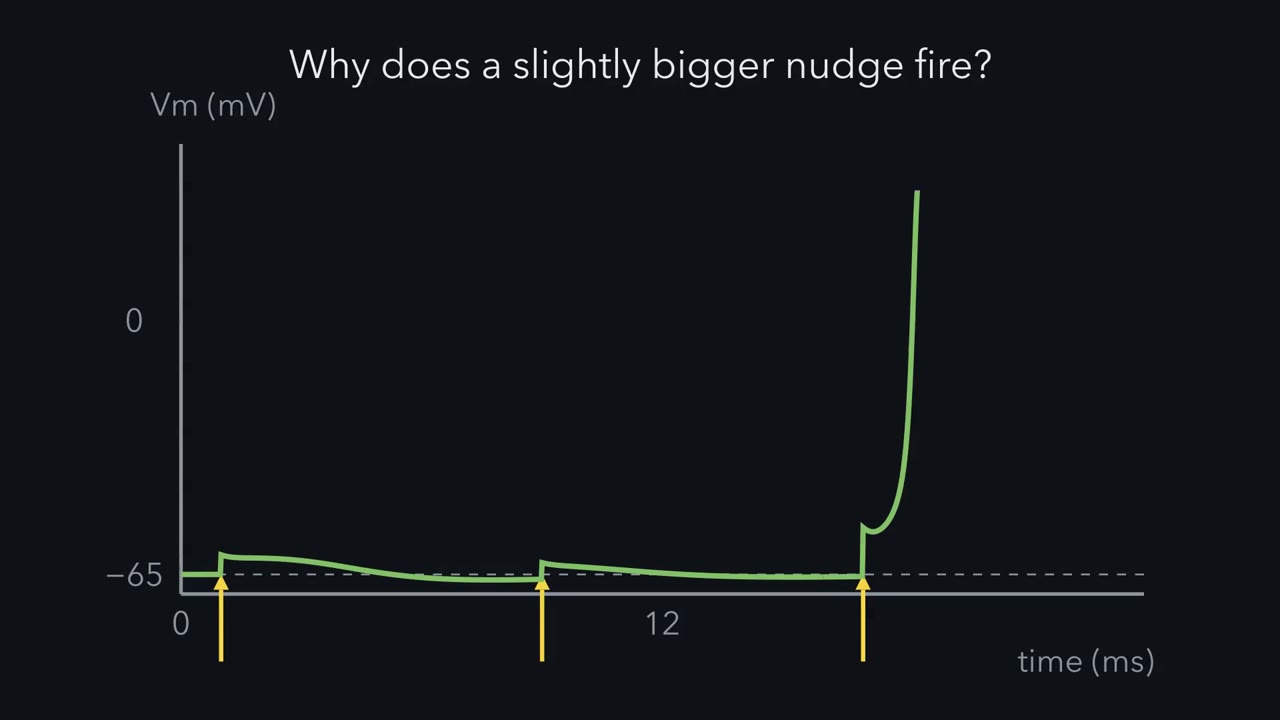
So current equals conductance times driving force, and the driving force is that distance. Try it at 0 mV, with equal conductances. Sodium's end is 50 mV away. Potassium's is 77 away. So potassium pulls harder. The marker slides until the pulls cancel. That spot is the balance point, where the voltage holds still. The balance point is an average of the equilibrium potentials. Each one is weighted by its conductance. The more open an ion's channels, the closer the point sits to its end. When a conductance changes, the balance point jumps at once. The voltage chases it, a moment behind. At rest, potassium has the largest conductance. So the balance point sits near potassium's end, at about minus −65 That is about 12 mV above potassium's end, mainly because of leak, a path that is always open.
In the squid model, leak conductance nearly matches resting potassium's, and leak's equilibrium potential is about minus −54 Now a question. Suppose sodium conductance rises far above potassium's. Where does the balance point go?
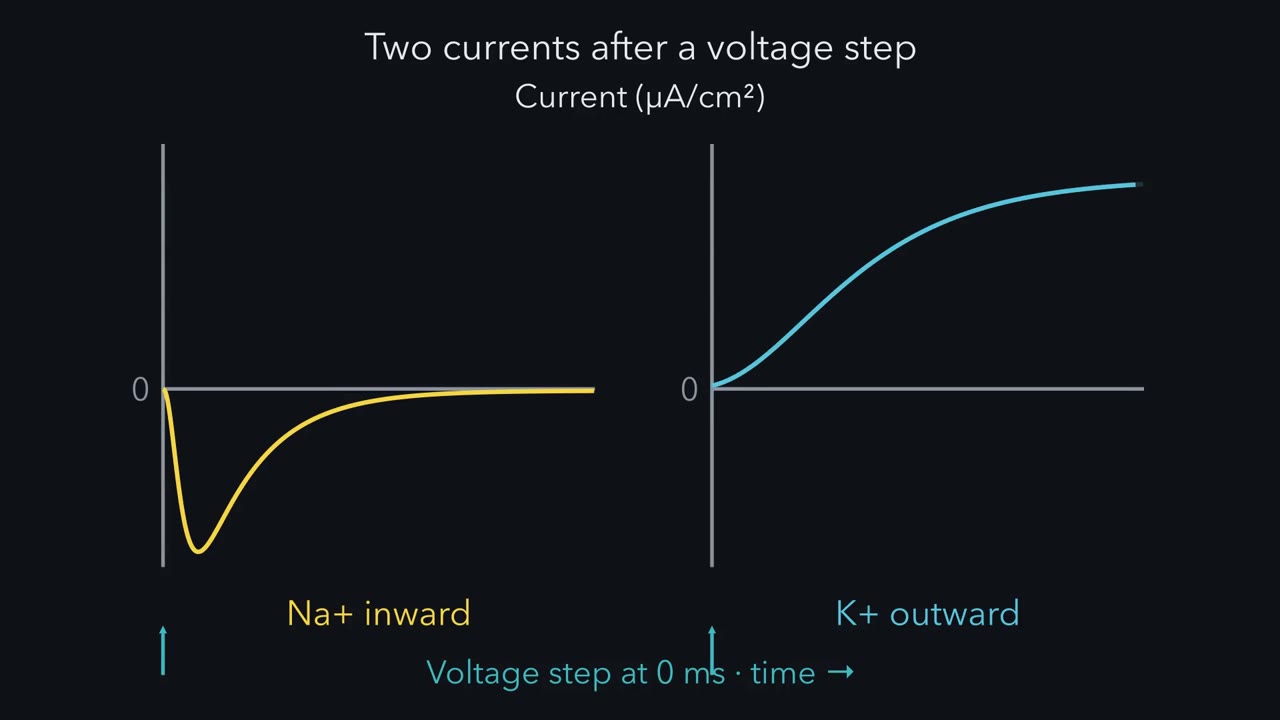
It slides toward plus +50 With enough sodium, it passes zero, and the voltage follows it positive. if potassium conductance rose above rest? The point would drop below rest, toward minus −77 That is the rule for this whole lesson. With no stimulus pushing on it, the voltage moves toward the balance point. In this squid model, a big, brief rise in sodium conductance makes the overshoot. potassium conductance staying above rest makes the undershoot. So the conductances change, fast and briefly. What makes them change? And why only for a moment? The voltage chases a balance point, set by the conductances. Change a conductance, and the point moves.
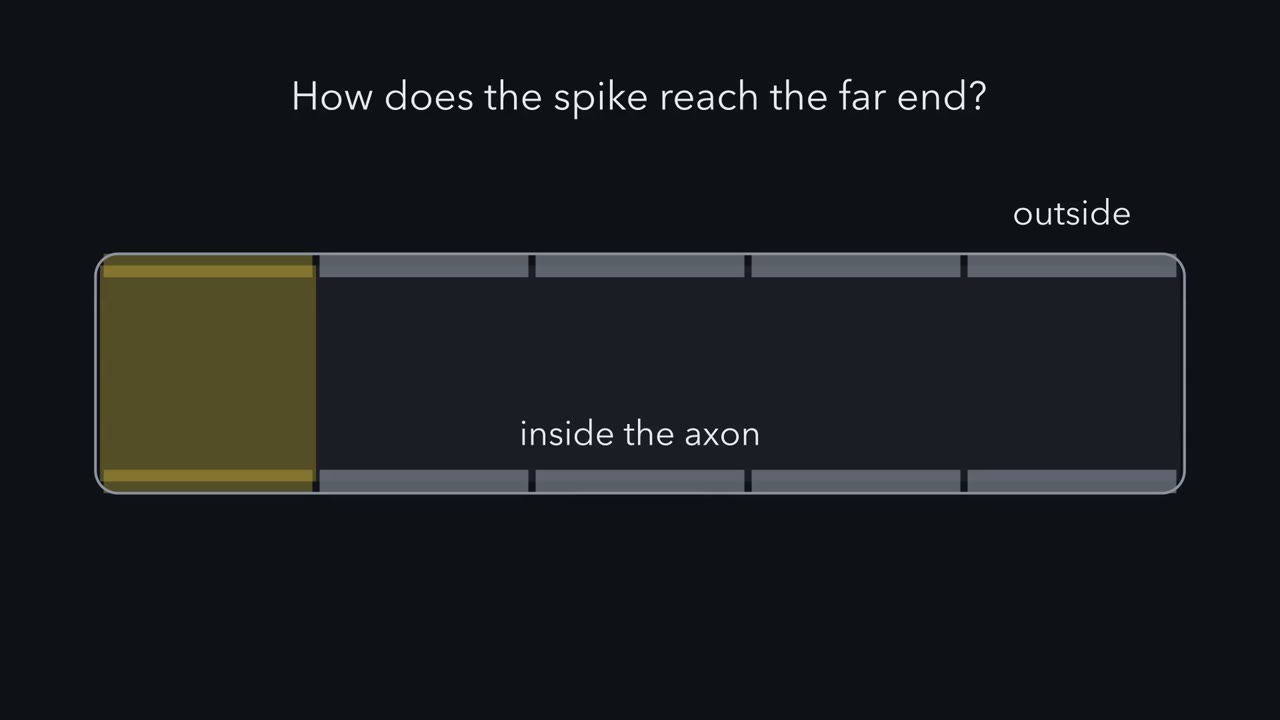
At the peak of a squid axon's impulse the inside turns positive. What lets charge in faster than it leaks out?
Continue in the lesson: The Action Potential and Conduction →
3:09 · Free, with captions and a transcript. The lesson has the full text, the questions and the sources.
More films from this lesson

How this film was made. Narration: an AI narrator voice (Kokoro, af_heart) reading narration written from this lesson's text. Animation: AI-generated in code (Manim) by Claude, a schematic with no drawn molecular structures. Captions come from the narration script. See something wrong? Report it.