Threshold and Refractoriness
Read the transcript of “Threshold and Refractoriness”
Film transcript: Threshold and Refractoriness
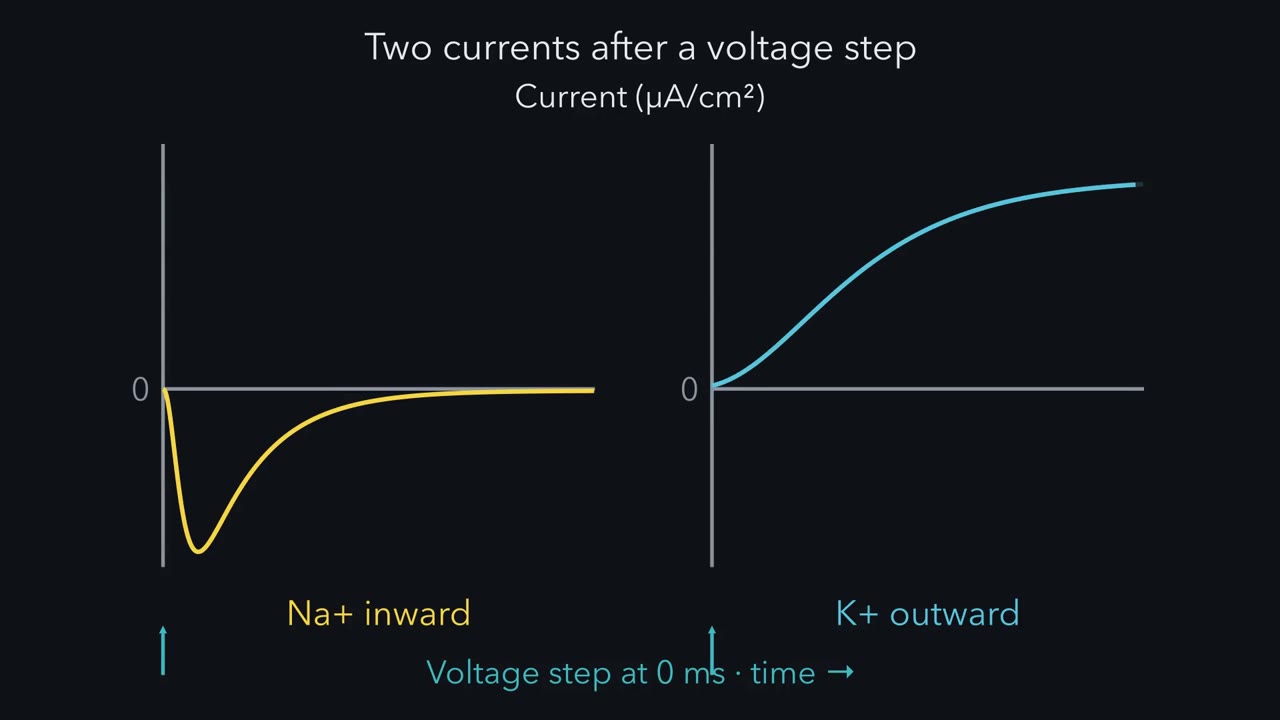
Why does a small nudge fade, while a slightly bigger one fires a full spike? Nudge the membrane 5 mV, to minus −60 A few sodium channels open, and a little sodium flows in. Potassium current flows out. Leak is still inward here, below its equilibrium potential. Together they give more outward current. Net current is outward, so the voltage drifts back. Nothing happens. Now nudge it 12 mV, to minus −53 More sodium channels open, and inward current beats outward. The voltage rises, which opens still more sodium channels. Inward current grows faster than potassium and leak can oppose it. That is threshold. Past it, sodium feedback sustains itself, and the rise runs away.
Inward current at one instant is not enough. What matters is whether sodium keeps outgrowing the opposing currents. So threshold is not a fixed voltage. A slow depolarization inactivates sodium channels and opens potassium channels, raising it.
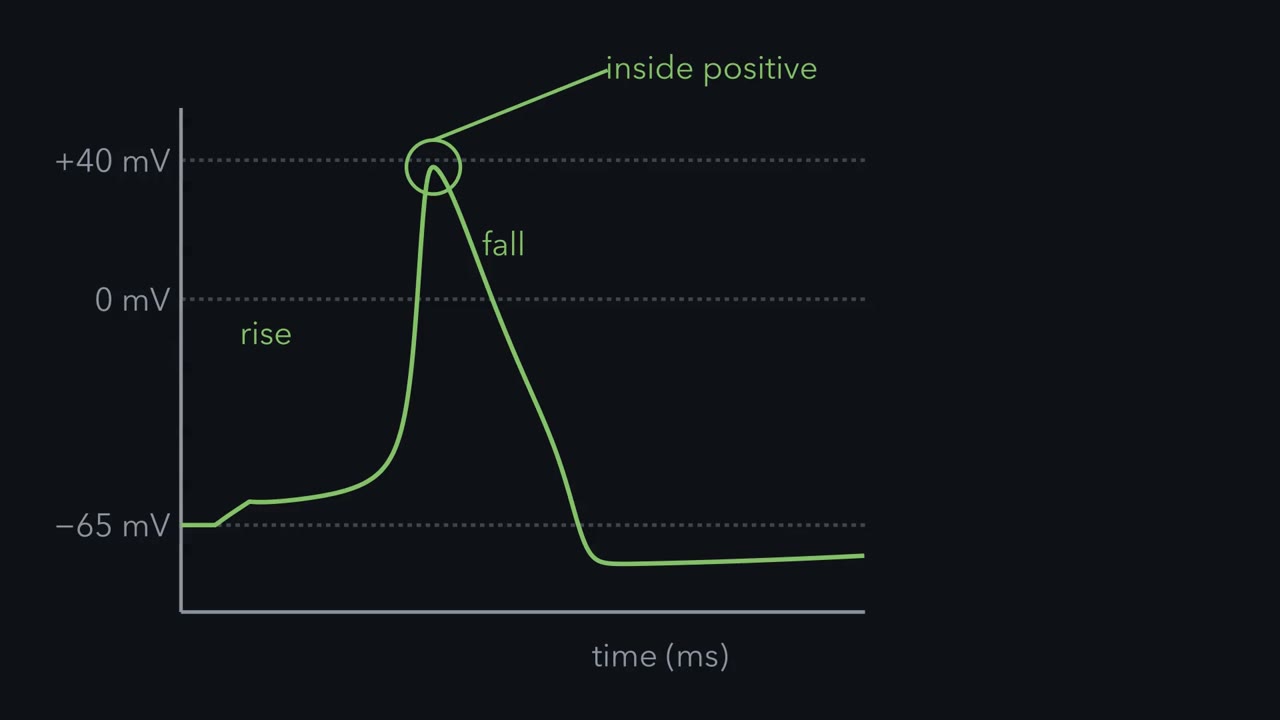
Once the rise sustains itself, the spike runs its course. Its size is set by the channels and the equilibrium potentials. With brief pushes from rest, a bigger push brings the spike sooner. Its size stays essentially the same. That is all-or-none. Right after a spike, most inactivation gates are shut. No stimulus, however strong, fires a second spike. That is the absolute refractory period.
As those gates reopen, a stronger stimulus can fire a spike, often a smaller one. That is the relative refractory period. A stronger push is needed then, because some sodium channels are still inactivated and potassium conductance is still raised. At long intervals, the second spike is full size again. One more question. Block the potassium channels with TEA. What happens to the falling phase?
From the same starting voltage, the rise is little changed. The fall is slower, relying on inactivation and leak, so the spike broadens. The undershoot is shallower too, because it comes from raised potassium conductance. Threshold is sodium feedback that sustains itself. Inactivation makes refractoriness. Blocking potassium broadens the spike.
At the peak of a squid axon's impulse the inside turns positive. What lets charge in faster than it leaks out?
Continue in the lesson: The Action Potential and Conduction →
2:45 · Free, with captions and a transcript. The lesson has the full text, the questions and the sources.
More films from this lesson
How this film was made. Narration: an AI narrator voice (Kokoro, af_heart) reading narration written from this lesson's text. Animation: AI-generated in code (Manim) by Claude, a schematic with no drawn molecular structures. Captions come from the narration script. See something wrong? Report it.