Three Gates, One Spike
Read the transcript of “Three Gates, One Spike”
Film transcript: Three Gates, One Spike
Sodium conductance turns on fast, then shuts itself off. Potassium turns on slowly and stays on. What channel does that? It takes three processes: fast sodium activation, slower sodium inactivation, and slow potassium activation. Picture them as gates. A sodium channel has two gates in a row, like two doors in one hallway. The fast gate, for activation, is shut at rest and snaps open on depolarization. The slow gate, for inactivation, is open at rest and shuts several times more slowly. Sodium passes only while both are open: a brief window before the slow gate shuts. The squid's delayed potassium channel behaves as if it has one slow gate.
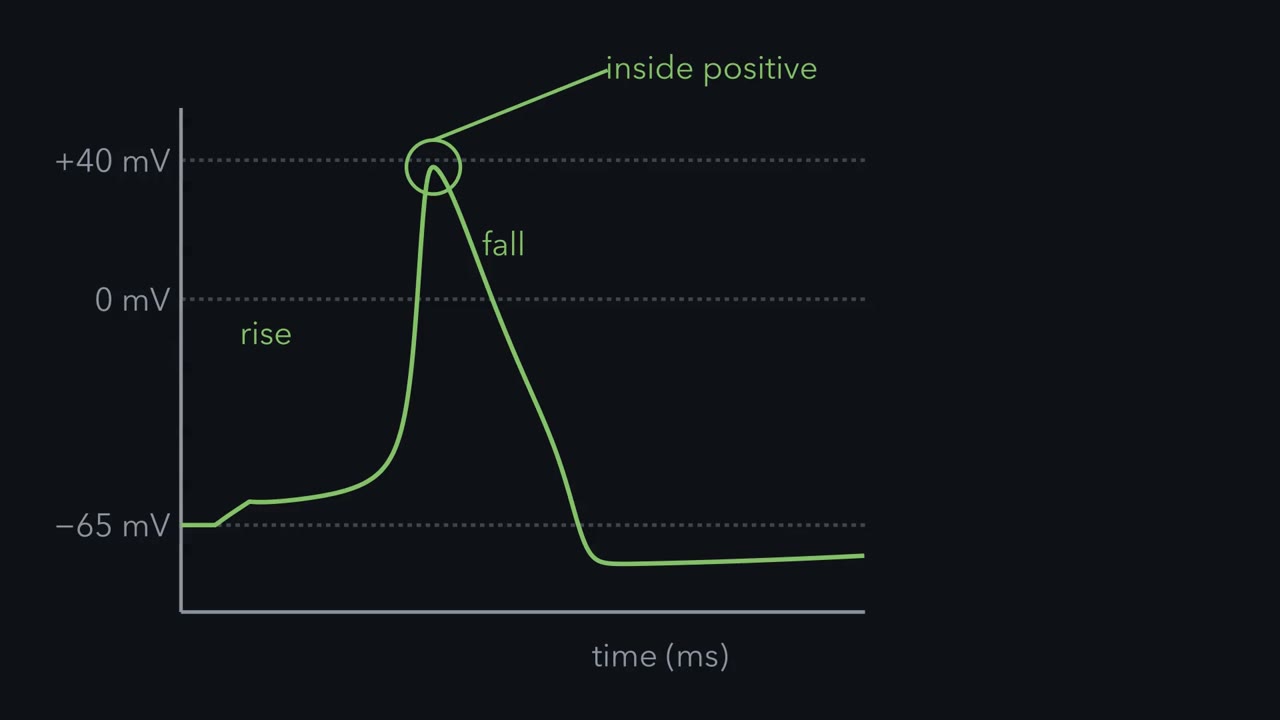
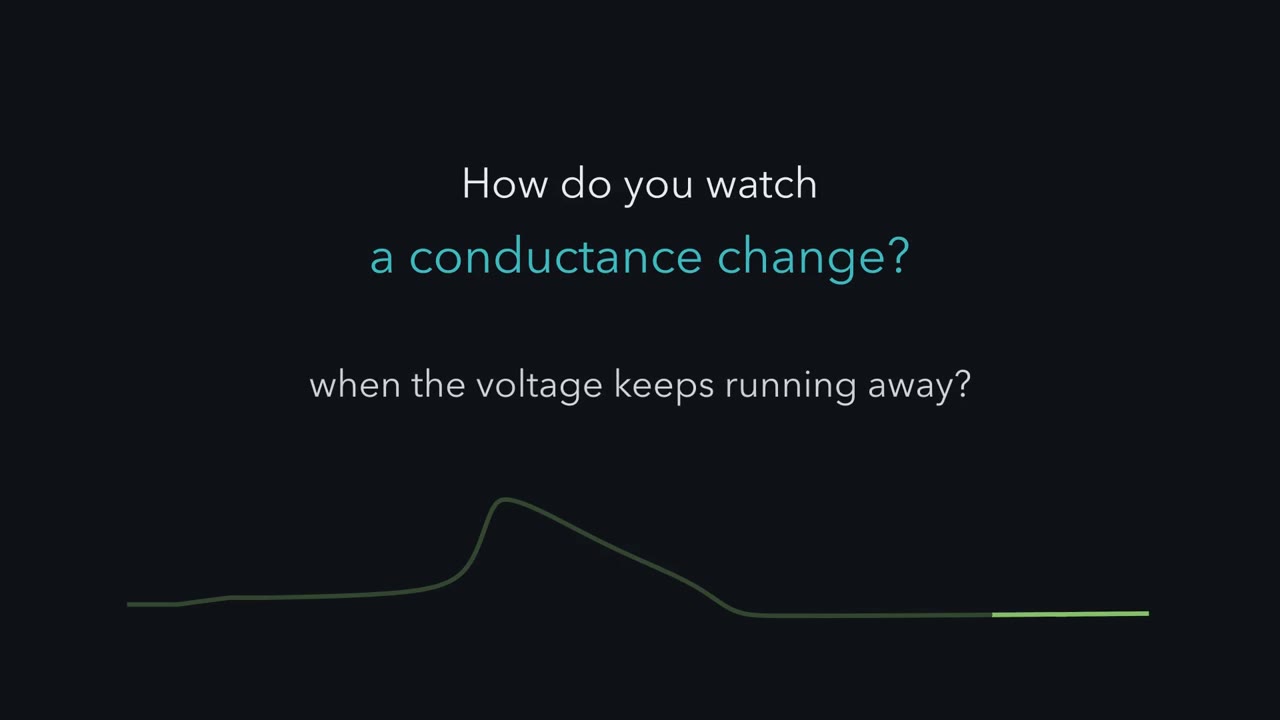
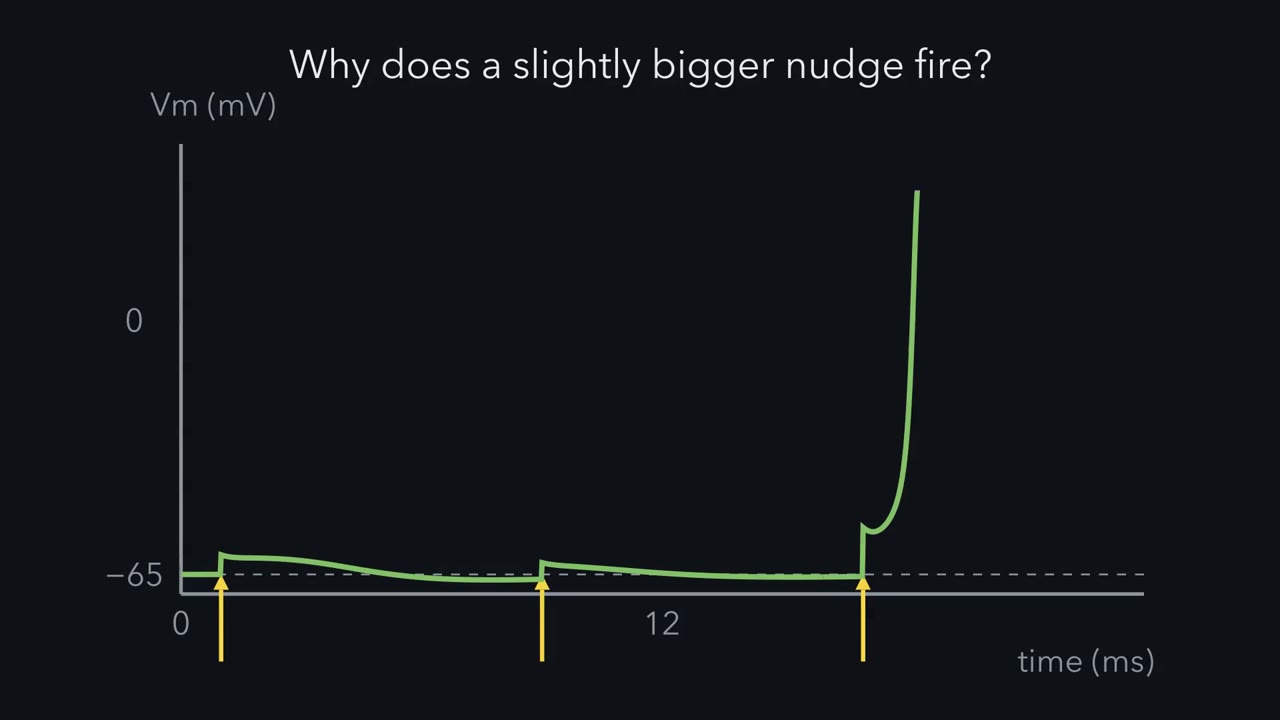
This is a cartoon. The 1952 equations track the three processes with variables called m, h and n. Their powers were fitted to the data, not counted from gates. Now let the axon run free. A ghost marker shows the balance point. Moment one, the rise. Activation gates open, sodium flows in, and the inside gets more positive. That opens more gates. This is positive feedback. Sodium conductance soon dwarfs potassium's. The balance point leaps toward plus +50 and the voltage races after it. Even during the rise, the slow processes begin. Inactivation is already developing, and potassium gates start to open. Here is a question. Why does the spike stop short of plus +50 mV?
The voltage stops where it meets the balance point. There, inward sodium current equals outward potassium and leak current. Sodium still has about 12 times potassium's conductance. But its pull is weak, because the voltage is near its end. Potassium and leak keep the balance point below plus +50 During the rise, inactivation lowers sodium conductance, and potassium conductance climbs. In the model, the risen potassium conductance matters most. The peak is about plus +40 Moment three, the fall. Sodium conductance collapses as inactivation closes channels, while potassium conductance keeps rising. The balance point drops below the voltage, so the voltage falls.
At first, sodium may still have the larger conductance. Soon potassium becomes the largest, and the balance point sinks toward potassium's end. This is negative feedback. The same depolarization that started the spike also ends it, a little later. Moment four, the undershoot. Potassium conductance stays above rest, because its gates close slowly. The balance point and voltage dip toward minus −77 Fast sodium activation makes the rise. Slower inactivation and potassium activation end it.
At the peak of a squid axon's impulse the inside turns positive. What lets charge in faster than it leaks out?
Continue in the lesson: The Action Potential and Conduction →
3:25 · Free, with captions and a transcript. The lesson has the full text, the questions and the sources.
More films from this lesson

How this film was made. Narration: an AI narrator voice (Kokoro, af_heart) reading narration written from this lesson's text. Animation: AI-generated in code (Manim) by Claude, a schematic with no drawn molecular structures. Captions come from the narration script. See something wrong? Report it.