The Spike and Its Puzzles
Read the transcript of “The Spike and Its Puzzles”
Film transcript: The Spike and Its Puzzles
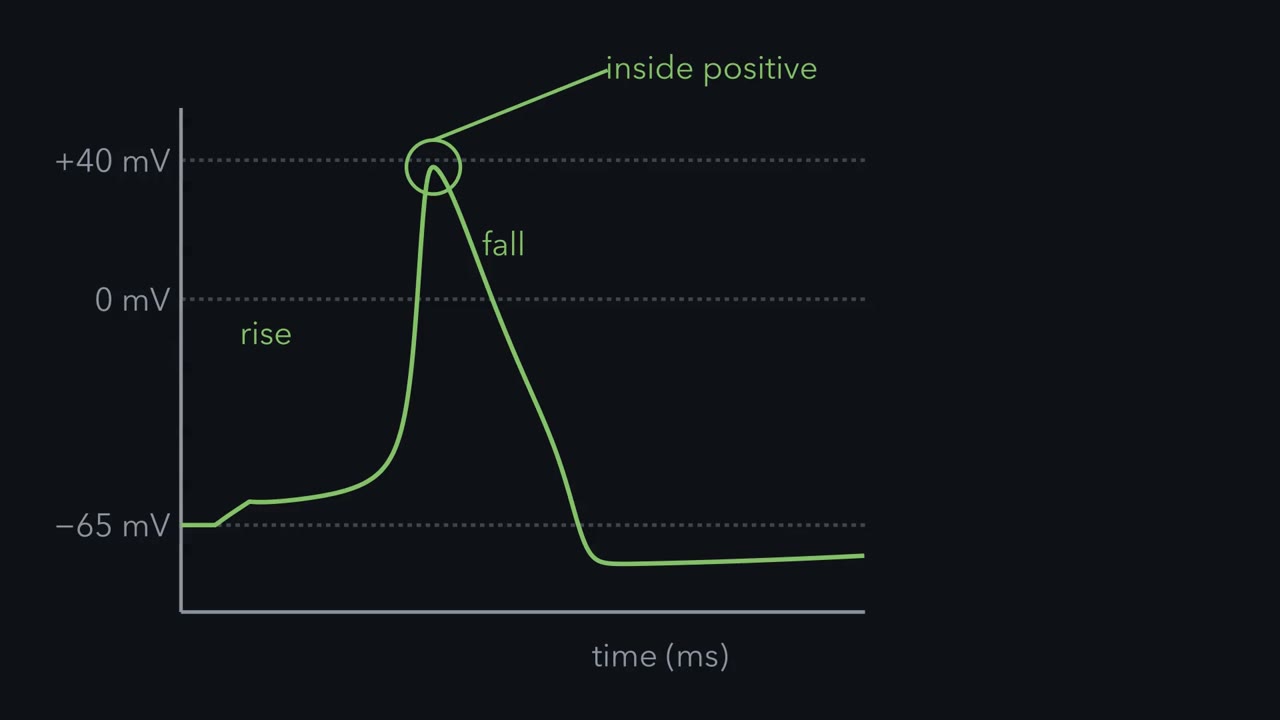
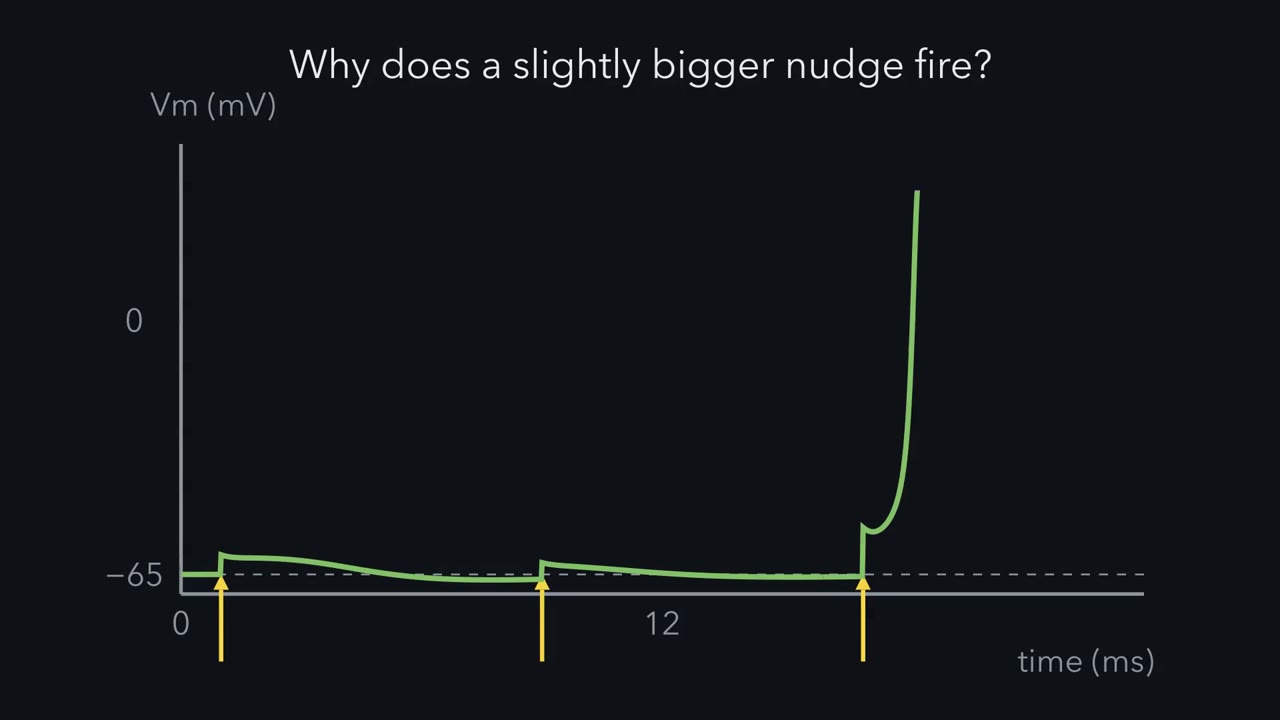
What does a nerve signal look like, and what makes it? Here is the membrane potential of a model squid giant axon, over a few milliseconds. The trace starts flat. This is rest, at about minus −65 mV. Now we nudge it. A small nudge dies away. So does another. A slightly bigger nudge crosses a line. For this stimulus, that line is threshold. Past it, the voltage keeps rising on its own. It shoots up in a fraction of a millisecond. This is the rising phase. It crosses zero and keeps going. At the peak the inside is positive, about plus +40 mV. Going past zero is the overshoot. Then the falling phase brings it back down, past rest. It dips below rest for several milliseconds.
That is the undershoot. Then it settles back. The whole event is an action potential, or spike. It lasts a few milliseconds. In 1939 Alan Hodgkin and Andrew Huxley recorded this from inside a squid giant axon. The overshoot was a surprise. The leading theory said the voltage should stop near zero. It did not.
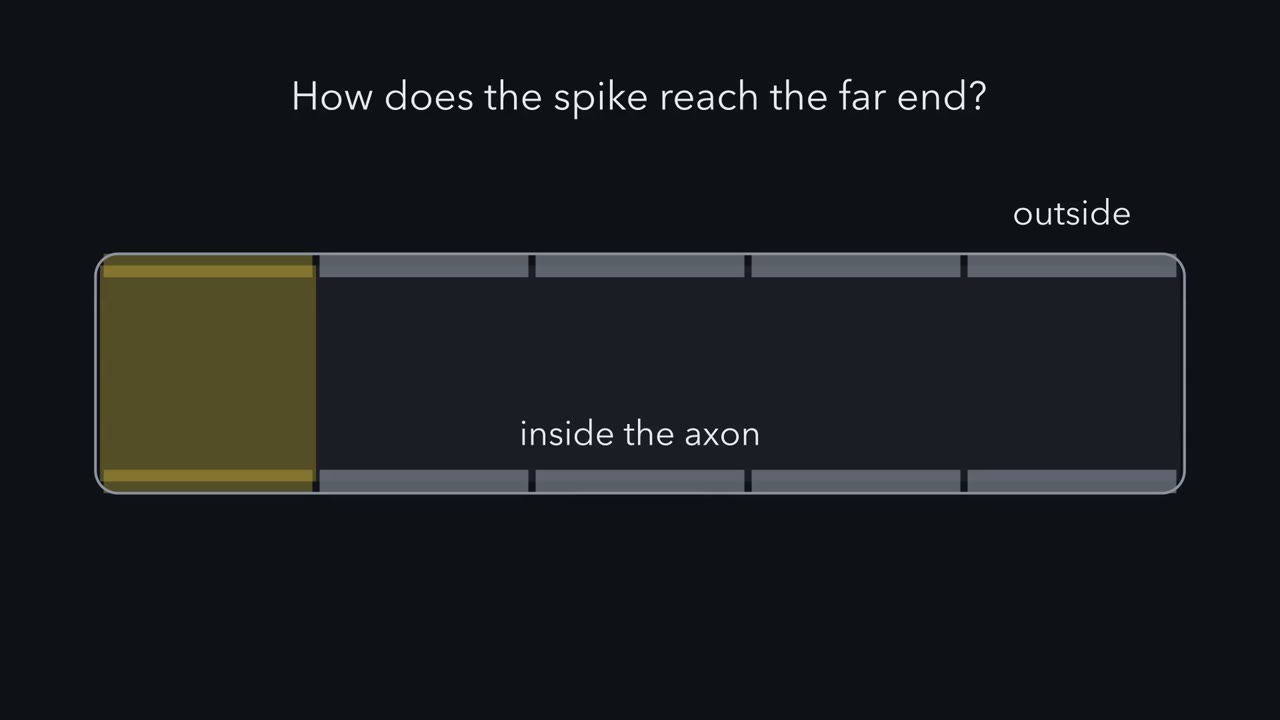
A question to hold. If we push much harder, will the spike be bigger? No. It comes sooner, but it is essentially the same size. With brief pushes from rest, the height barely changes. This is all-or-none. Now two pushes close together. The first fires. The second fails. This is refractoriness. So we have puzzles. Why the overshoot? Why a threshold? Why all-or-none? Why refractoriness? And why does the spike travel along the axon without turning back? One rule, three gates and a little cable theory answer all five. A spike is all or none. It has a threshold. And it needs a rest before the next one.
At the peak of a squid axon's impulse the inside turns positive. What lets charge in faster than it leaks out?
Continue in the lesson: The Action Potential and Conduction →
2:20 · Free, with captions and a transcript. The lesson has the full text, the questions and the sources.
More films from this lesson
How this film was made. Narration: an AI narrator voice (Kokoro, af_heart) reading narration written from this lesson's text. Animation: AI-generated in code (Manim) by Claude, a schematic with no drawn molecular structures. Captions come from the narration script. See something wrong? Report it.