Life Science · Skim version
Helping Ecosystems Recover
Read the full lesson → Skim the whole course →
The guiding idea
How did Virginia go from 33 pairs of nesting bald eagles in 1977 to more than 1,000 in 2016?
Remove the harm, protect what remains, and help ecosystems recover over time.
From the film: What Let the Eagles Return?
- DDE from DDT made many bald eagle eggshells thin, so few young were raised.
- Banning most DDT uses and protecting eagles and nests reduced known harms.
- Young eagles need years to become breeding pairs, so recovery takes time.
- Remove the harm, protect what remains, and help ecosystems recover over time.
From the film: When Stopping Harm Is Not Enough
- Suitable water was not enough because almost no eelgrass remained to make seeds.
- Scientists supplied the missing starter by spreading eelgrass seeds in plots.
- A recovering ecosystem can improve without becoming exactly like the past.
- Remove the harm, protect what remains, and help ecosystems recover over time.
-
Explore: bring the eagles back
-
Explain: changes start chains of effects
-
Explain: what the eagle survey can show
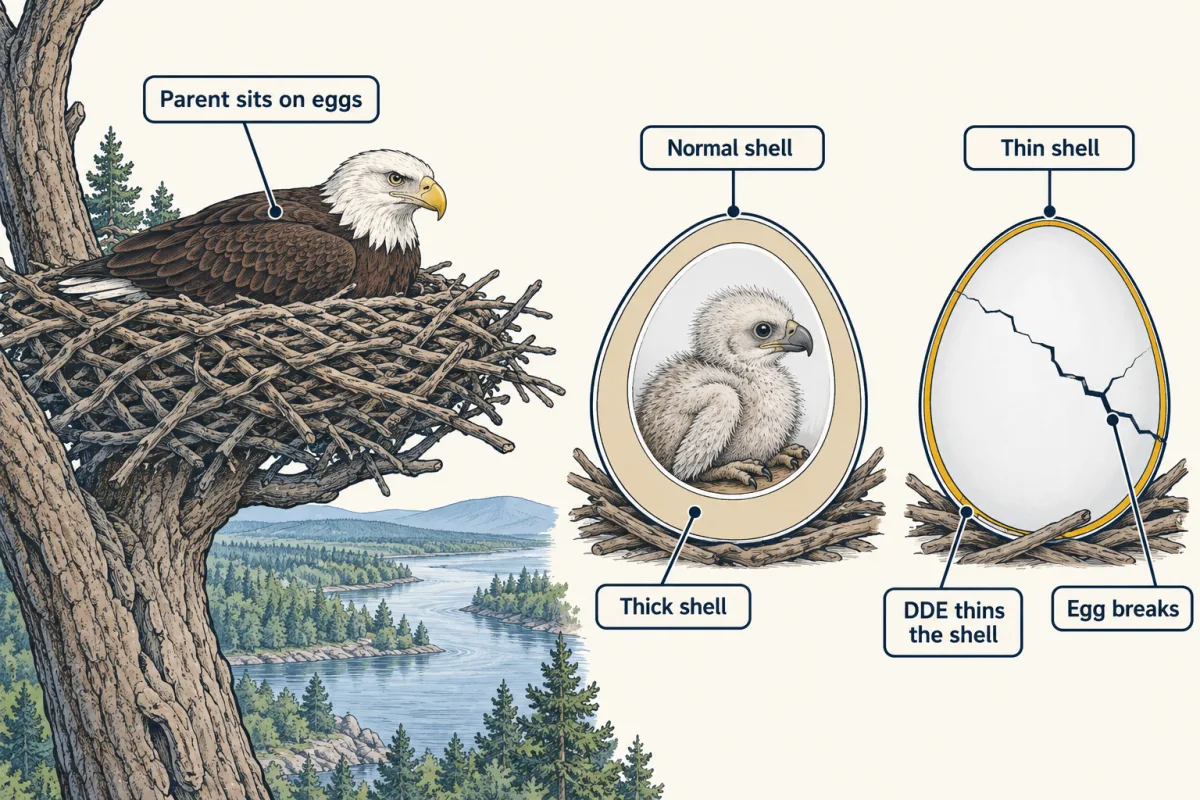
DDE, which forms when DDT breaks down, made many bald eagle eggshells thin. Thin shells often broke while the parents sat on them, so few young were raised. AI-generated illustration -
Explain: from nearby changes to global effects
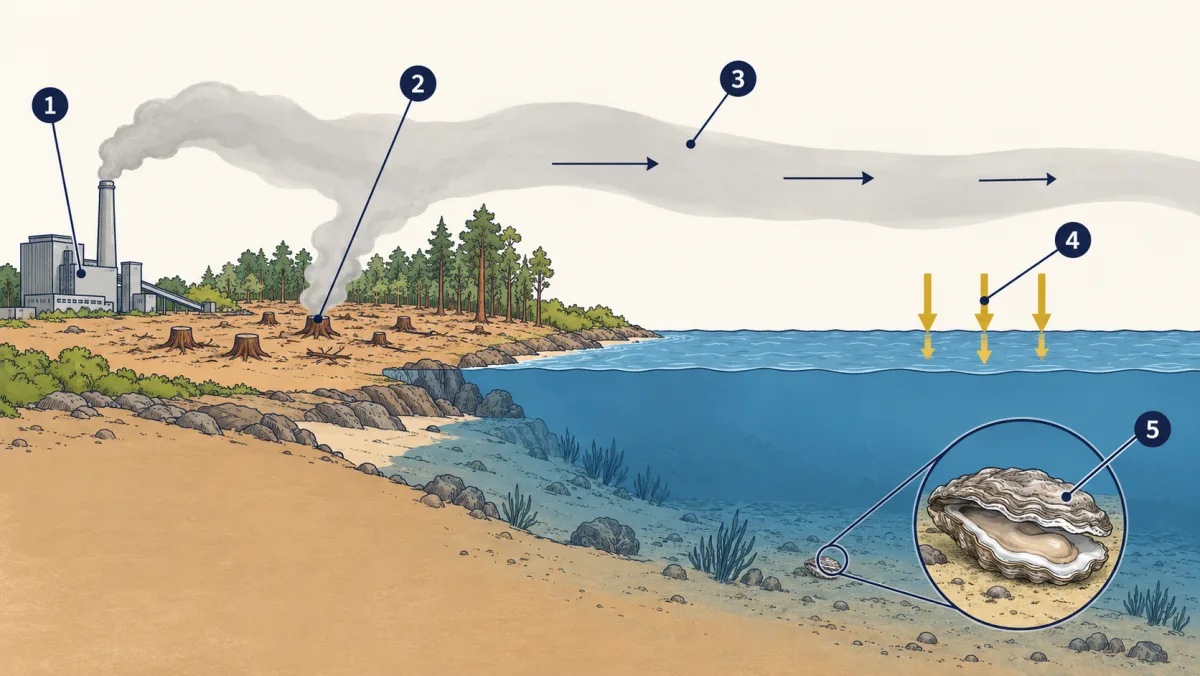
- power plant
- deforestation
- carbon dioxide
- ocean acidification
- oyster
-
Explain: helping a damaged place heal
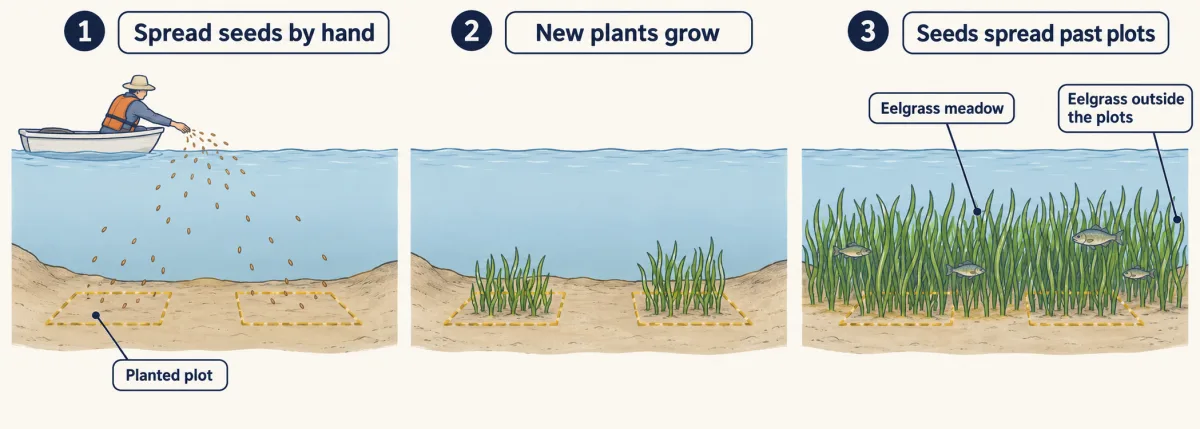
Eelgrass restoration supplied missing seeds; new plants then made seeds that spread beyond the planted plots. AI-generated illustration -
Elaborate: test a sustainable practice
-
Evaluate: check your thinking
-
Going deeper
Where this lesson fits
Before thisReview first
- People Change HabitatsThis course · Lesson 25
The lesson builds on habitat loss and invasive species from there and adds other ways people change ecosystems.
- Big Changes: Dead Zones, Storms and ClimateThis course · Lesson 24
Nutrient runoff, algae and oxygen loss from there are used when it discusses wastewater and restoring damaged places.
- The Carbon and Water CyclesThis course · Lesson 14
You need to know how burning fossil fuels moves carbon from underground into the air to follow the climate section.
After thisStudy next
- Extinction and SurvivalThis course · Lesson 34
It shows what happens when a species is lost, which is what conservation and restoration try to prevent.
- The Chesapeake Under PressureOne level up · Biology
This lesson takes the idea further, tracing how upstream fertilizer harms the Bay and how fixes could help.
Elsewhere on the siteFilms, simulations and method films in other courses
- Why Growth BendsFilm · Biology
It shows how a recovering population grows and then levels off, as the eagle counts do.
Suggested by an AI model from the lessons themselves, then checked. How we use AI