Life Science · Skim version
Partners in Energy
Read the full lesson → Skim the whole course →
The guiding idea
Why does the oxygen in a quiet Virginia creek go up and down over a single summer day?
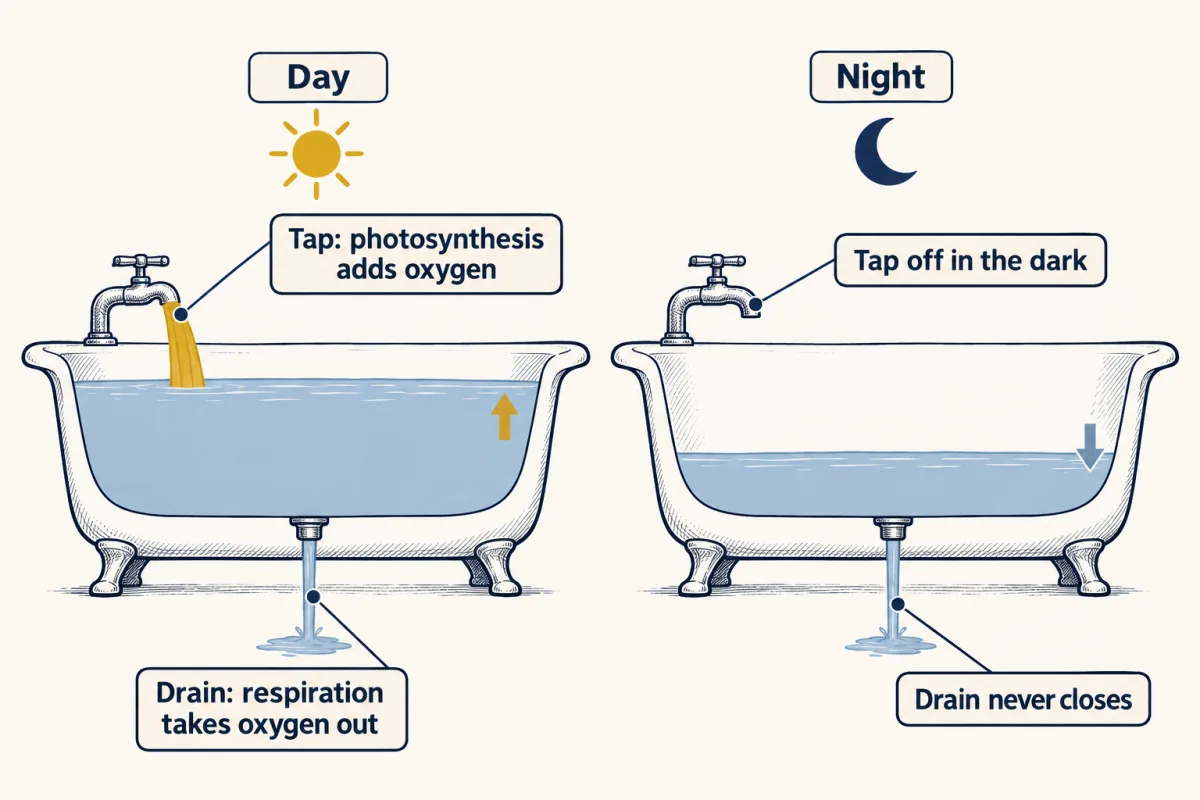
Photosynthesis adds oxygen in light; respiration uses oxygen day and night.
From the film: Two Jobs in One Green Cell
- Photosynthesis adds oxygen in light; respiration uses oxygen day and night.
- A green leaf cell has chloroplasts for photosynthesis and mitochondria for cellular respiration.
- The products of either process can supply reactants for the other.
- Matter can be used again, while energy flows one way and some leaves as heat.
From the film: Why Creek Oxygen Rises and Falls
- Photosynthesis adds oxygen in light; respiration uses oxygen day and night.
- Oxygen rises when photosynthesis adds it faster than respiration uses it, and falls when respiration uses it faster.
- After dark, photosynthesis stops adding oxygen while respiration continues.
- The smooth line is a model, not a promise about every hour.
-
One leaf cell, two energy jobs
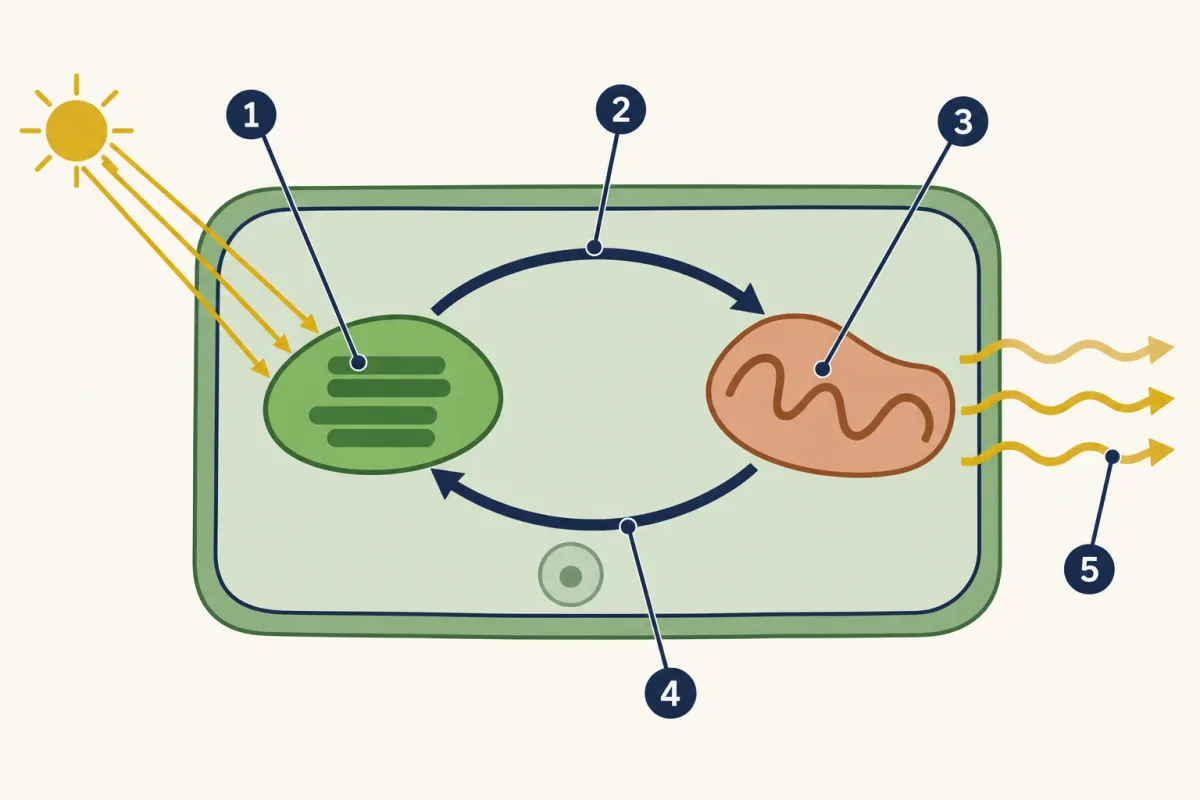
- chloroplast
- sugar and oxygen
- mitochondrion
- carbon dioxide and water
- heat
-
What one process makes, the other can use
-
Explore: run a day and a night in a Bay tank
-
Why a real creek is bumpier than the model
Creek oxygen rises and falls with what living things add and use, but tides, air and temperature can change it too. AI-generated illustration -
Evidence: a real day in Taskinas Creek
-
Going deeper
Where this lesson fits
Before thisReview first
- Photosynthesis Feeds the WorldThis course · Lesson 9
It teaches how photosynthesis makes sugar and oxygen, which this lesson uses as one half of the oxygen story.
- Releasing Energy from FoodThis course · Lesson 10
It teaches how cells use oxygen to release energy from sugar, the other half used here.
- Inside a CellThis course · Lesson 2
You need to know chloroplasts and mitochondria as cell parts to place each process in the leaf cell.
After thisStudy next
- Big Changes: Dead Zones, Storms and ClimateThis course · Lesson 24
Low oxygen in deep water comes from respiration using oxygen faster than it is added, as in the creek.
- The Carbon and Water CyclesThis course · Lesson 14
The carbon dioxide and sugar passed between the two processes here become a loop through whole ecosystems.
- Food Webs and EnergyThis course · Lesson 12
Producers make the sugar and oxygen here that food webs depend on, and energy flows one way.
Elsewhere on the siteFilms, simulations and method films in other courses
- A cell’s energy budgetSimulation · Biology
It shows how cells spend and rebuild ATP, the energy side of respiration that runs day and night.
- Where the Bay's Oxygen GoesFilm · Biology
It follows oxygen use by bacteria and algae in the Bay, which links to creek oxygen changes.
Suggested by an AI model from the lessons themselves, then checked. How we use AI