Life Science · Skim version
Inherited or Acquired?
Read the full lesson → Skim the whole course →
The guiding idea
If a parent gets a scar, why is a baby not born with it—and why can matching hydrangea cuttings bloom different colors?
Gene-coded traits can pass on; ordinary changes gained during life, such as scars and learned skills, cannot.
From the film: What Can Cross a Generation?
- Gene-coded traits can pass on; ordinary changes gained during life cannot.
- In people and many animals, offspring receive genes through sex cells.
- A scar or exercise-built muscle changes body cells, not sex-cell genes.
- Genes set which phenotypes are possible; the environment helps decide which appears.
From the film: Dominant Is Not Popular
- Dominant tells how an allele shows, not how common it is.
- A dominant allele shows its trait even when only one copy is present.
- A recessive allele shows its trait only when both copies are recessive.
- How common an allele or trait is in a group is separate from dominance.
-
Explore: grow a garden of genes and soil
-
Explain: what can be passed on
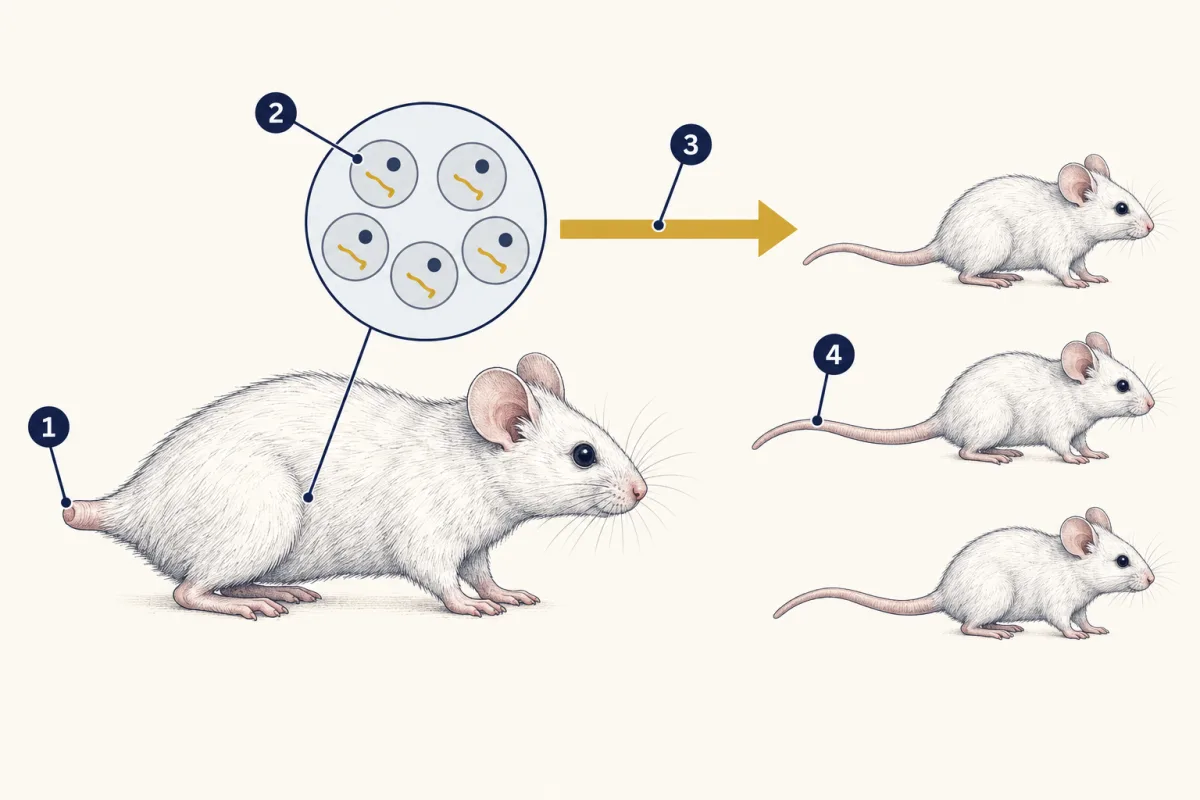
- cut tail
- sex cells
- genes pass to the young
- young with full tails
-
Explain: genes and environment work together
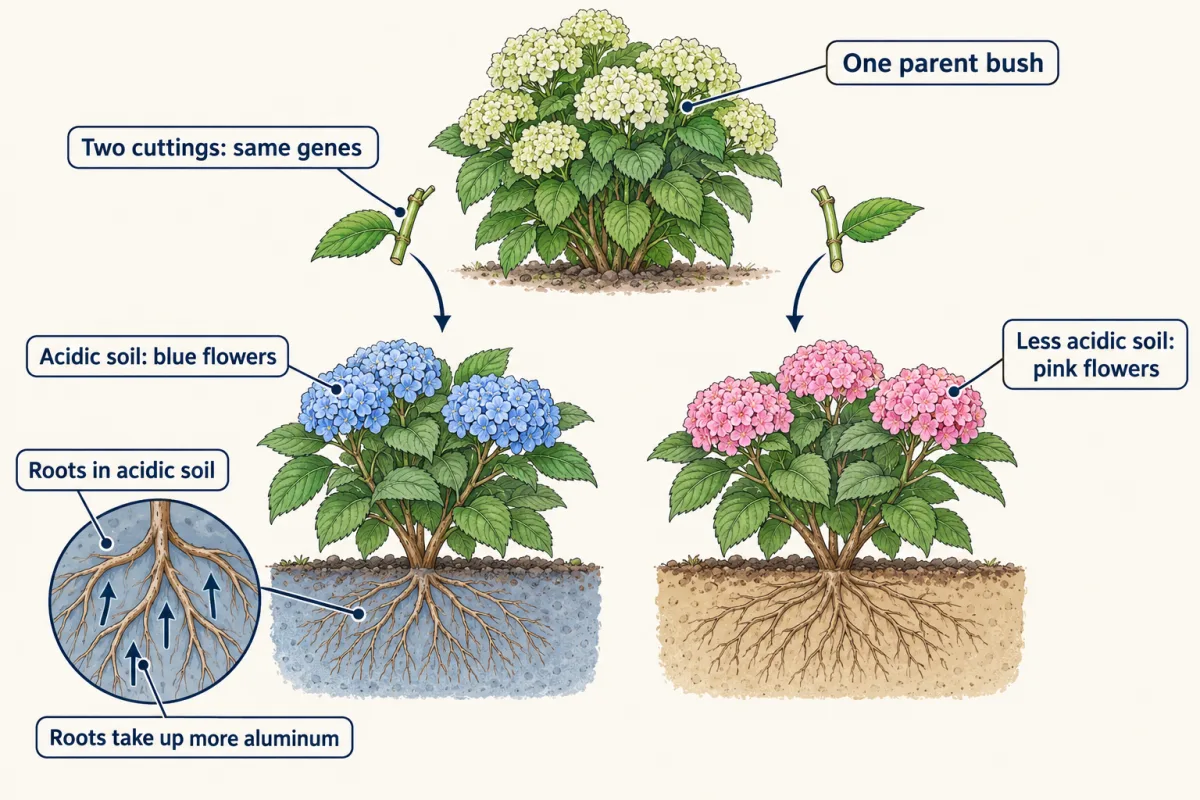
The same genes can produce different flower colors when the soil differs. AI-generated illustration -
Explain: dominant does not mean common
-
Elaborate: cut tails and counted traits
-
Evaluate: check your thinking
-
Going deeper
Where this lesson fits
Before thisReview first
- Predicting Traits with Punnett SquaresThis course · Lesson 29
You need alleles, genotype, phenotype and dominant versus recessive from there to explain the extra-finger counts and the hydrangea colors.
- Reproduction and MeiosisThis course · Lesson 28
You need to know that sex cells carry the genes passed to offspring, so body changes like scars stay behind.
- DNA: The Code of LifeThis course · Lesson 27
You need to know that genes are coded in DNA to see why only gene-coded traits can pass on.
After thisStudy next
- Mutations and VariationThis course · Lesson 31
It shows which changes in DNA reach offspring, because they happen in sex cells, and so create new inherited variation.
- Natural Selection in ActionThis course · Lesson 32
It uses inherited variation, not acquired change, to explain how a population shifts over generations.
Elsewhere on the siteFilms, simulations and method films in other courses
- Set Up: Like Their Parents, Not the SameFilm · Biology Together
A child sees that offspring look like their parents but are not exactly the same.
- Cross and countSimulation · Biology
You can test how a dominant allele shows with one copy and how often it appears in offspring.
Suggested by an AI model from the lessons themselves, then checked. How we use AI