Biology · Skim version
Domains and Kingdoms
Read the full lesson → Skim the whole course →
The guiding idea
One drop of pond water can hold organisms from all three domains of life. Which questions would you ask to tell them apart?
Classify by ordered traits; where looks fail, use molecular evidence.
From the film: The First Split
- Classify by ordered traits; where looks fail, use molecular evidence.
- A nucleus places an organism in Eukarya; no nucleus makes it a prokaryote.
- Looks alone may not separate Bacteria from Archaea.
- Ribosomal RNA sequences and cell chemistry can separate the prokaryote domains.
From the film: Build the Classification Path
- Ask traits in order; stop where your evidence runs out.
- Cell number, wall material, tissues and feeding separate the eukaryotic kingdoms.
- In this six-kingdom scheme, protists are the eukaryotes outside plants, animals and fungi.
- A key works only for the organisms and traits built into it.
-
Explore: classify the unknown
-
The first split: three domains
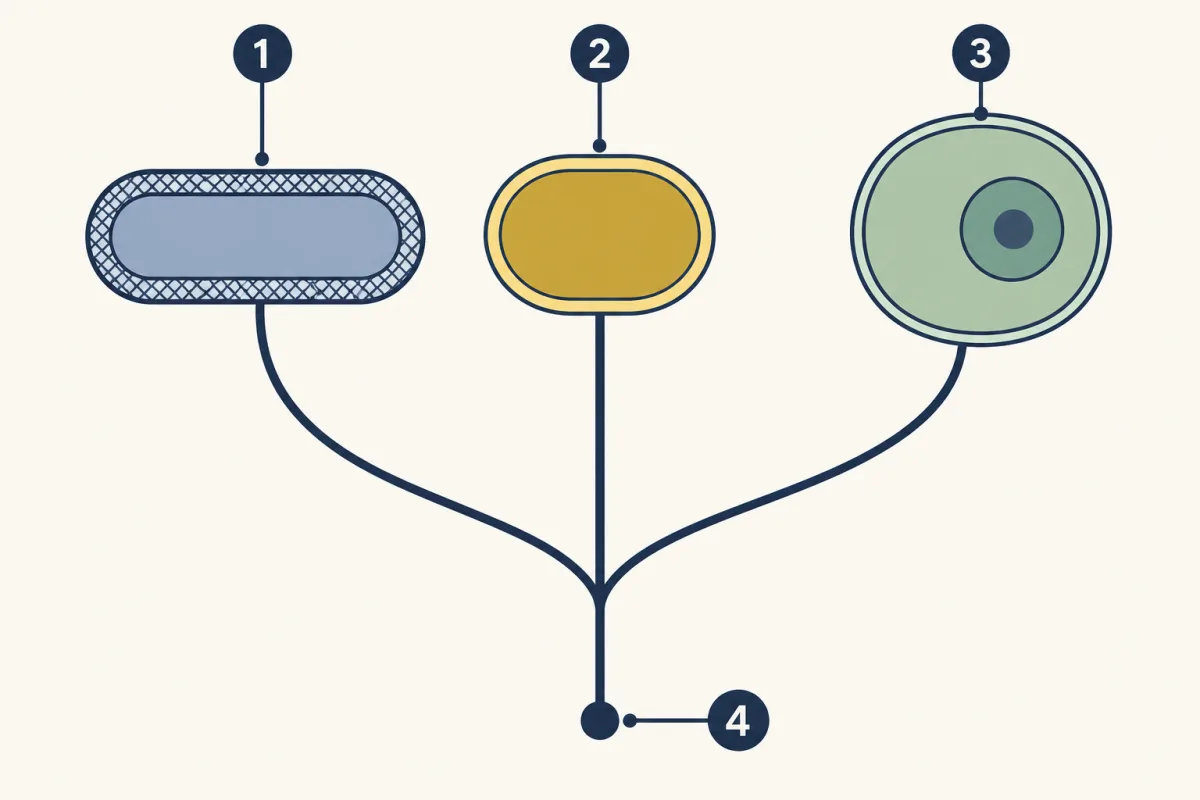
- Bacteria
- Archaea
- Eukarya
- shared root
-
Finish the path: six kingdoms
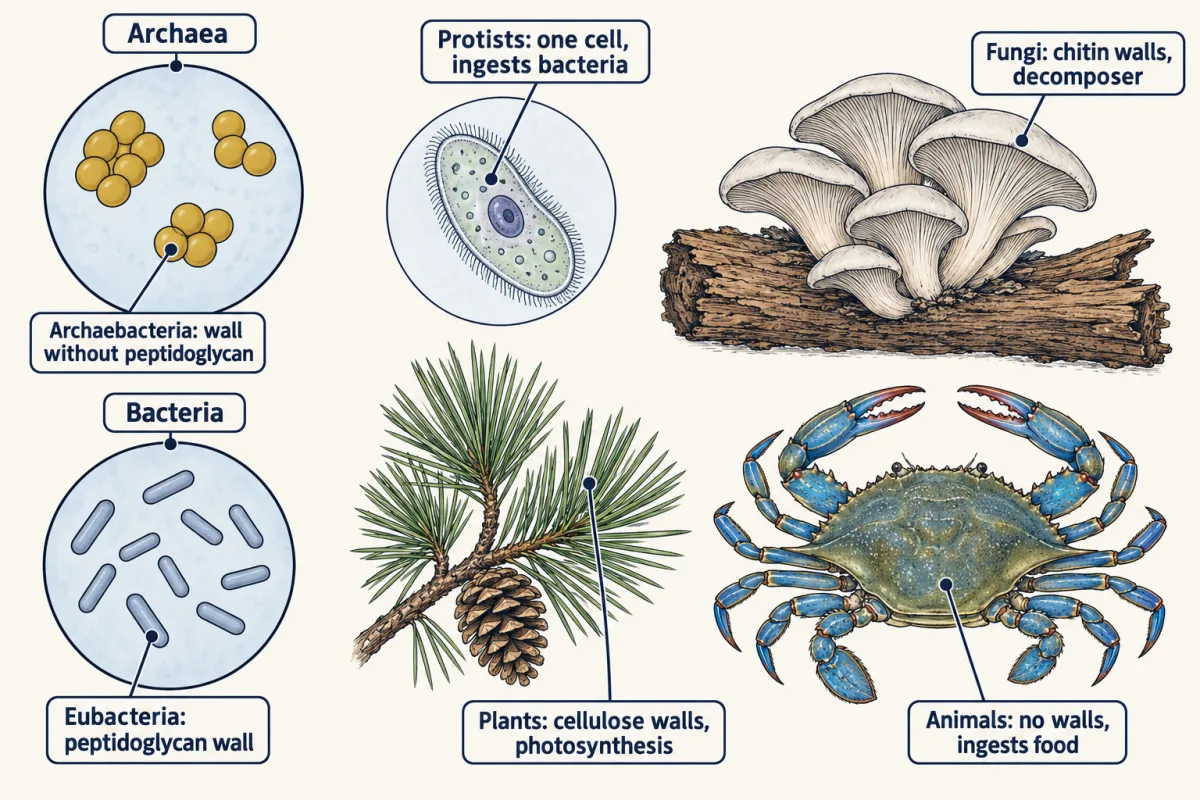
Six organisms from this lesson's table, one per kingdom, each labelled with the trait that places it; drawings are not to scale. AI-generated illustration 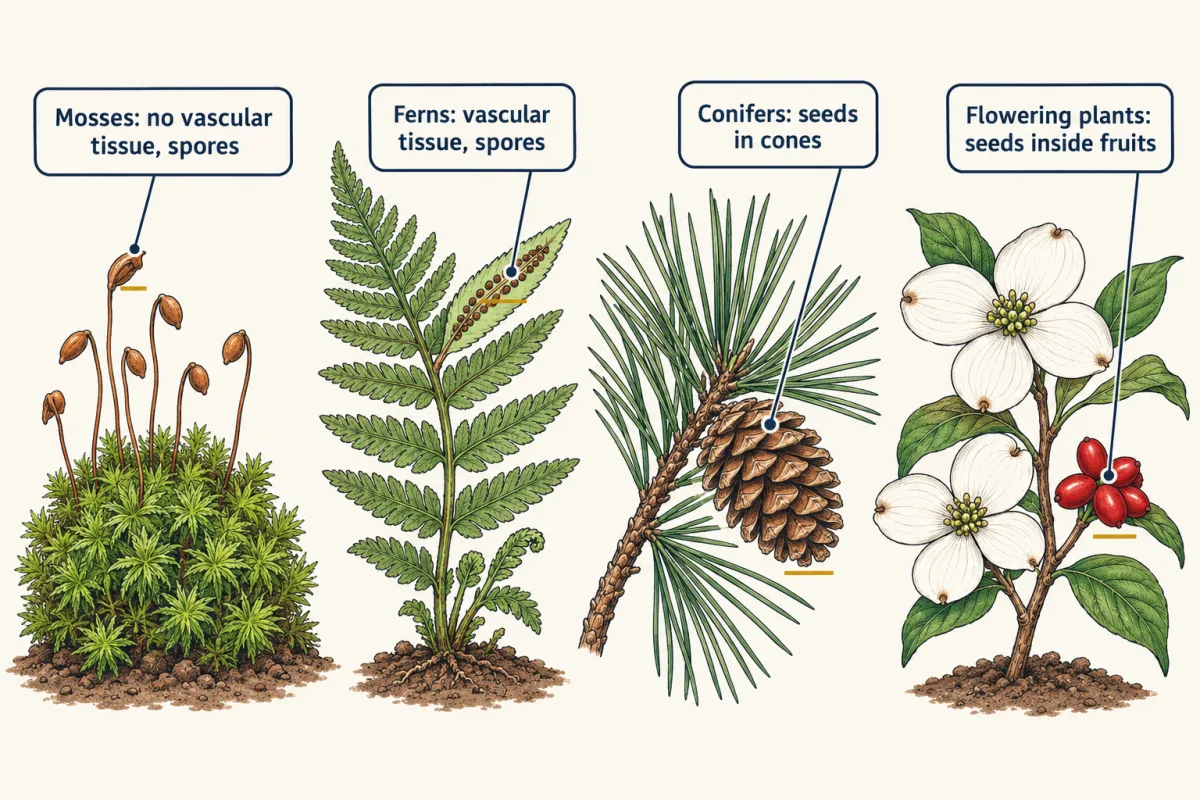
The four plant divisions this course uses: mosses and ferns spread by spores, conifers carry seeds in cones, and flowering plants hold seeds inside fruits. AI-generated illustration -
Use the key and write the name
-
Test the path: seven real organisms
-
Going deeper
-
Evaluate: check your thinking
Where this lesson fits
Before thisReview first
- Building a Tree of LifeThis course · Lesson 23
It teaches how shared traits and sequences build a tree, which this lesson uses to sort the domains.
- Living or Not? Viruses and BacteriaThis course · Lesson 12
It introduces bacteria as cells without a nucleus, the first split used here.
- Organelles as a SystemThis course · Lesson 7
It shows the nucleus and other organelles that separate eukaryotic from prokaryotic cells.
After thisStudy next
- Classification ChangesThis course · Lesson 25
It shows how ribosomal RNA evidence redrew the tree, taking the domain split further.
Elsewhere on the siteFilms, simulations and method films in other courses
- Eight Boxes and a NameFilm · Life Science
It shows how scientists nest species into levels and write the scientific name, which you practise here.
- A working dichotomous keySimulation · Life Science
The working dichotomous key lets you practise the key-based sorting used in this lesson.
- Climbing the Evidence LadderFilm · Life Science
It shows how new evidence like DNA can move a living thing to a different group.
Suggested by an AI model from the lessons themselves, then checked. How we use AI