Biology Together · Unit 8: Virginia and Chesapeake nature
Creek Critters
Rewritten on : new text and film. Your notes and highlights stay, but the text around them may have moved.
Is a creek just water? A strainer, a white tray and a few turned rocks show what lives in it.
Three real-life stories behind this activity, about 2 minutes aloud, or read them below.
The film, 4 minutes, and the safety notes, for the grown-up to look at before the activity.
The hands-on part, done with a child: about 40 minutes, then a few quick looks later.
Pause when the reading reaches a film, and offer to play it. Saved on this device.
Watch the film now, or keep listening
That is the end of the reading
This idea at other levels
An activity for ages 5 to 10 about creek animals as clues. Next, for an older child: Land and Water Ecosystems (grade 7).
See every levelHide the levels
This lesson also teaches one more idea; its ladder is below.
Creek animals as clues to water health
The kinds of small animals living in a creek are a clue to how healthy the water is for wildlife.
Two levels here: ages 5 to 10 and grade 7. The lesson at grade 7 was picked by hand for this lesson.
Grade 7 · the level you chose
Land and Water Ecosystems · also at this level, picked for this lesson
Life Science · about 40 min · Virginia LS.7 a
Ages 5 to 10 · the level you chose
Creek Critters · this lesson
Count what lives under rocks: mayfly and stonefly young need clean, oxygen-rich water.
Biology Together · about 40 min · film 3:45 · Virginia 3.5 a, 3.8 a, 4.8 a, 4.8 b, 2.5 a, 4.7 c
Next door to creek animals as clues
- Watersheds and dead zonesFertilizer and sewage use up oxygen in creeks, which removes the animals that need clean water.Nearest lesson: A Watershed in a Pan (ages 5 to 10)
- Erosion (soil washing away)Soil washed into a creek buries the stones where its small animals live.Nearest lesson: Roots Hold the Soil (ages 5 to 10)
Ecosystems: living and nonliving parts
An ecosystem is the living things in a place together with the nonliving things around them, such as water, soil and sunlight.
Taught at two levels: ages 5 to 10 and grade 7.
Grade 7 · the level you chose
Oysters need salt: sort a river's living and nonliving parts, then read salinity.
Life Science · about 40 min · film 3:10 · Virginia LS.7 a
Ages 5 to 10 · the level you chose
Creek Critters · this lesson
Turn over creek rocks and sort what lives there, from mayfly young to crayfish.
Biology Together · about 40 min · film 3:45 · Virginia 3.5 a, 3.8 a, 4.8 a, 4.8 b, 2.5 a, 4.7 c
Next door to ecosystems
- HabitatsEvery animal in an ecosystem lives in a place that gives it food, water, shelter and space.Nearest lesson: Backyard Habitat Hunt (ages 5 to 10)
- Food webs and energy flowThe living things in an ecosystem are linked by who eats whom.Nearest lesson: Who Eats Whom? (ages 5 to 10)
Short versions inside this lesson
The grade 7 version · about 1 minute to read
In grade 7 Life Science, children compare land, freshwater and saltwater ecosystems. They follow the James River from fresh water toward the salty mouth of the Chesapeake Bay and use real salinity numbers to explain why different living things live in different places. The living and nonliving parts your child sorts here become the building blocks of that comparison.
The plainest version · about 1 minute to read
A creek is a home for many small animals. Lots of them are baby insects that live underwater before they grow wings and fly. They hide under rocks. Many eat bits of leaves and tiny plants, and some eat other small animals. Some of them can only live where the water is clean. So when we find them, the creek is telling us something about its water.
Find an idea: every idea, searchable
Which lessons teach an idea, and the notes on each level, were written by AI models from the lessons and checked by a second model. A person has not yet read every one. How we use AI
About this activity what is in it
Builds on:Who Eats Whom? (read)Backyard Habitat Hunt (read)Why these?
Rewritten on : new text and film. Notes and highlights stay, but the text around them may have moved.
Before you start
- Hands-on time
- About 40 minutes, plus checking the creek and the weather a day or two before you go
- Where
- Outdoors
- Ages
- 5 to 10, with an easier and a harder version below
- Grown-up
- Stay within arm’s reach of your child the whole time they are in or beside the water. You choose the spot, decide if the water is safe, and check rocks before anyone lifts them.
What you need
- A kitchen strainer or small aquarium net
- A white plastic tray, dishpan or large white tub lid
- A plastic spoon and a small clear plastic cup (no glass) for moving animals
- A hand lens (optional)
- A white ice-cube tray or a clean, unused egg carton for sorting (optional; skip egg cartons if anyone has an egg allergy)
- Closed-toe water shoes or old sneakers for everyone
- Soap and a jug of clean water for washing up
- Waterproof bandages (latex-free if needed), a towel, sunscreen, insect repellent, a hat and drinking water from home
- A pencil and the printed observation sheet below
Virginia science standards SOL 3.5 aSOL 3.8 aSOL 4.8 aSOL 4.8 bSOL 2.5 aSOL 4.7 c
The main idea. At a shallow, slow creek in a public park, you and your child catch small animals from under rocks with a kitchen strainer, look at them in a white tray, sort them by how they move, and put every one back.
The film
 ▶ Watch Creek Critters: Parent Guide · 3:45
Read the transcript of “Creek Critters: Parent Guide”
Film transcript: Creek Critters: Parent Guide
What lives under a rock in a shallow creek? Lift one, and tiny animals scramble into view. You and your child will look closely, sort what you find, and check a guess together. You do not need a science background to lead this trip. Your child practices slowing down, looking closely at tiny clues, and sorting what they find. They also practice making a guess and checking it against real evidence. Pack a kitchen strainer, a white plastic tray, a plastic spoon, and closed-toe water shoes. Bring soap, clean water, sunscreen, insect repellent, and a clear plastic cup. Choose a shallow, slow riffle in a public park where collecting is allowed. Check posted water advisories.
Go when water is low and clear, at least three days after heavy rain. Stay within arm’s reach in or beside the water. Children under five stay on the bank with a second adult. Wade only in slow, clear water up to your child’s ankles. Wear closed-toe shoes for slippery rocks and hidden glass. Never drink creek water or taste wild plants, berries, or mushrooms. Keep tiny animals and small objects away from children under four. Call nine one one if choking. Fill the shaded tray with two to three centimeters of creek water. Ask your child, "What do you think lives under this rock?" Look for snakes before reaching. Lift the rock yourself and check underneath.
Gently put the rock back if you see a crayfish, hellgrammite, or another animal that can pinch, bite, or sting. At a safe rock, have your wading child hold the strainer flat just downstream. Then gently rub the underside for about thirty seconds. Tip the strainer into the white tray. Try three or four rocks, then give the mud a minute to settle. Watch for specks that crawl or dart. Ask, "Why do you think they hide under rocks?" Use the spoon, never fingers, to sort crawlers, swimmers, and animals that stay still. You have sorted the animals by how they move. Now look at which kinds you found. If your tray held several kinds of mayfly and stonefly young, what might that suggest about the water?
Several kinds can be a good sign. Most stonefly young and many mayfly young need cool, clean water with plenty of oxygen. Mayfly young usually have three tails and side gills. Stonefly young have two tails. Caddisfly young often live in sand or stick cases. Mostly worms, leeches, or tiny red larvae may suggest less healthy water. A creek is a connected food web, and its hidden animals give clues to water health. Ask, "What do you think this one eats, and what might eat it?" Many eat leaf bits, and fish eat them. One visit is a clue, not a final answer. Pour the tray back slowly at the water’s edge near the rocks you sampled. Set each rock back as it was.
Empty any containers before leaving. Wash hands with soap and water, wash the gear, and check everyone for ticks. The mix you found gives you a clue about the creek.
Before you start
- Hands-on time
- About 40 minutes, plus checking the creek and the weather a day or two before you go
- Where
- Outdoors
- Ages
- 5 to 10, with an easier and a harder version below
- Grown-up
- Stay within arm’s reach of your child the whole time they are in or beside the water. You choose the spot, decide if the water is safe, and check rocks before anyone lifts them.
What you need
- A kitchen strainer or small aquarium net
- A white plastic tray, dishpan or large white tub lid
- A plastic spoon and a small clear plastic cup (no glass) for moving animals
- A hand lens (optional)
- A white ice-cube tray or a clean, unused egg carton for sorting (optional; skip egg cartons if anyone has an egg allergy)
- Closed-toe water shoes or old sneakers for everyone
- Soap and a jug of clean water for washing up
- Waterproof bandages (latex-free if needed), a towel, sunscreen, insect repellent, a hat and drinking water from home
- A pencil and the printed observation sheet below
Virginia science standards SOL 3.5 aSOL 3.8 aSOL 4.8 aSOL 4.8 bSOL 2.5 aSOL 4.7 c
The big idea
Turn over a rock in a shallow creek and small animals scramble off the bottom. Most children — and most adults — have never noticed them. In 40 minutes, your child practices looking closely, sorting what they see, and checking a guess against real evidence.
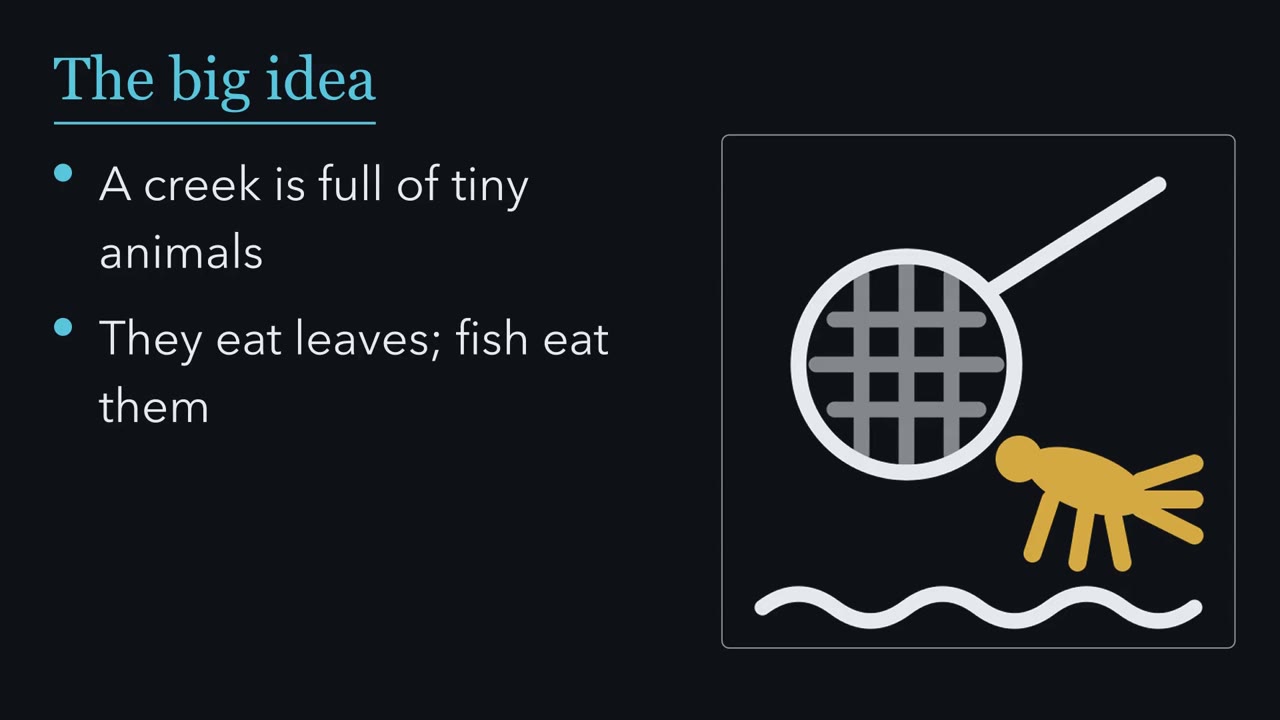
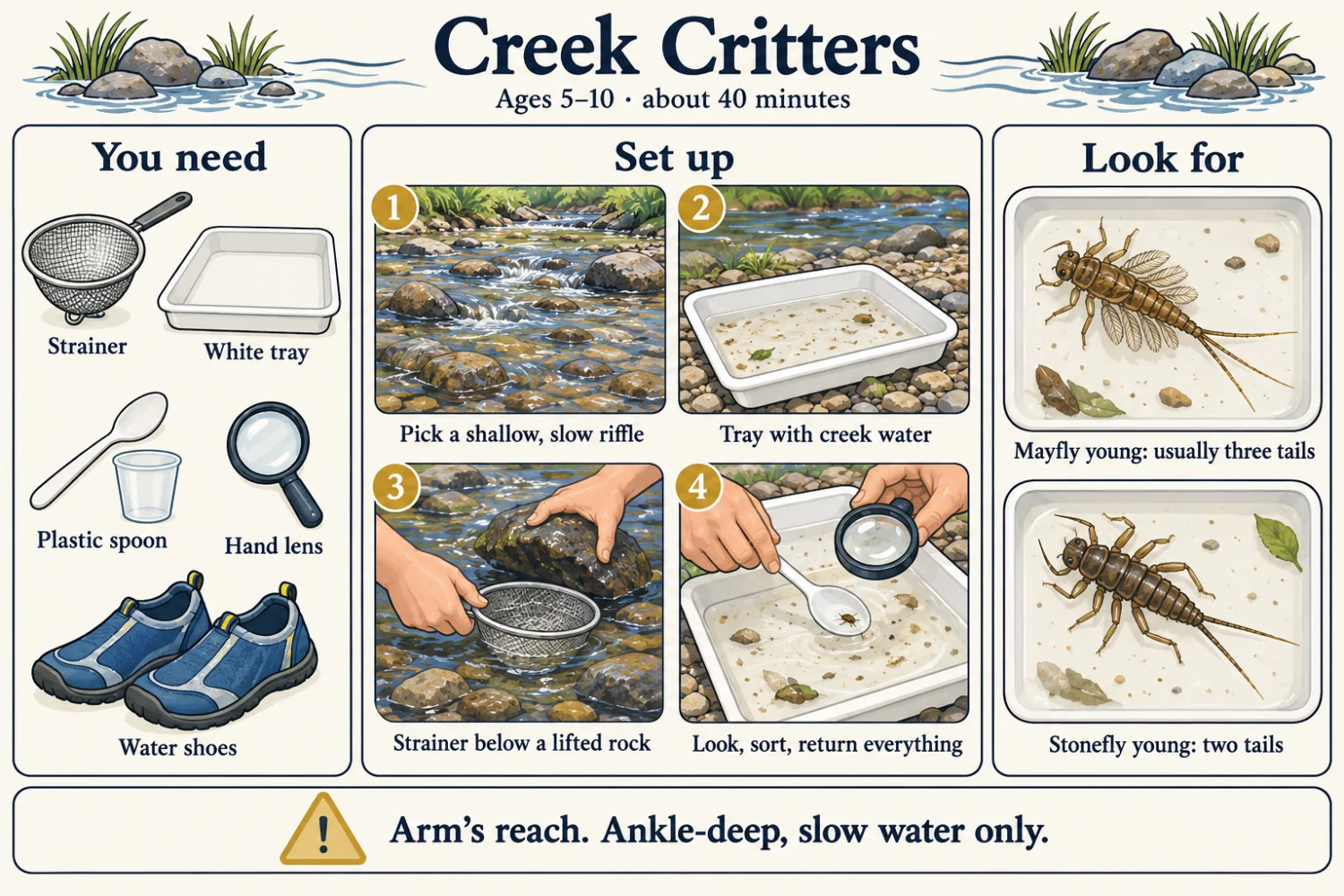
Say it together: “A creek is more than water. Tiny animals hide under the rocks, eat bits of leaves, and feed the fish. Some live only in clean water, so they are clues to how healthy the creek is.”
A creek is an ecosystem: living things together with nonliving things they need, like water, rocks, sunlight and air. Many rock-dwelling animals are the young of insects — mayflies, stoneflies and caddisflies — that live underwater for months or years before growing wings to fly away. Snails, crayfish and worms live there too.
They depend on one another: many eat fallen leaf bits and tiny plants, some eat other small animals, and many fish depend on them for food. Because some need clean, oxygen-rich water while others tolerate dirtier water, the mix you find is a clue to creek health. Virginia Save Our Streams volunteers sample creeks this way, and the state uses their counts.
What to do
- Choose the spot and day. Pick a public park creek with a riffle: shallow water rippling over fist-sized rocks. Late spring to fall is warm enough to wade. Some stonefly young are scarce in midsummer, so finding none then does not mean the creek is unhealthy. Go when water is low and clear, at least three days after heavy rain.
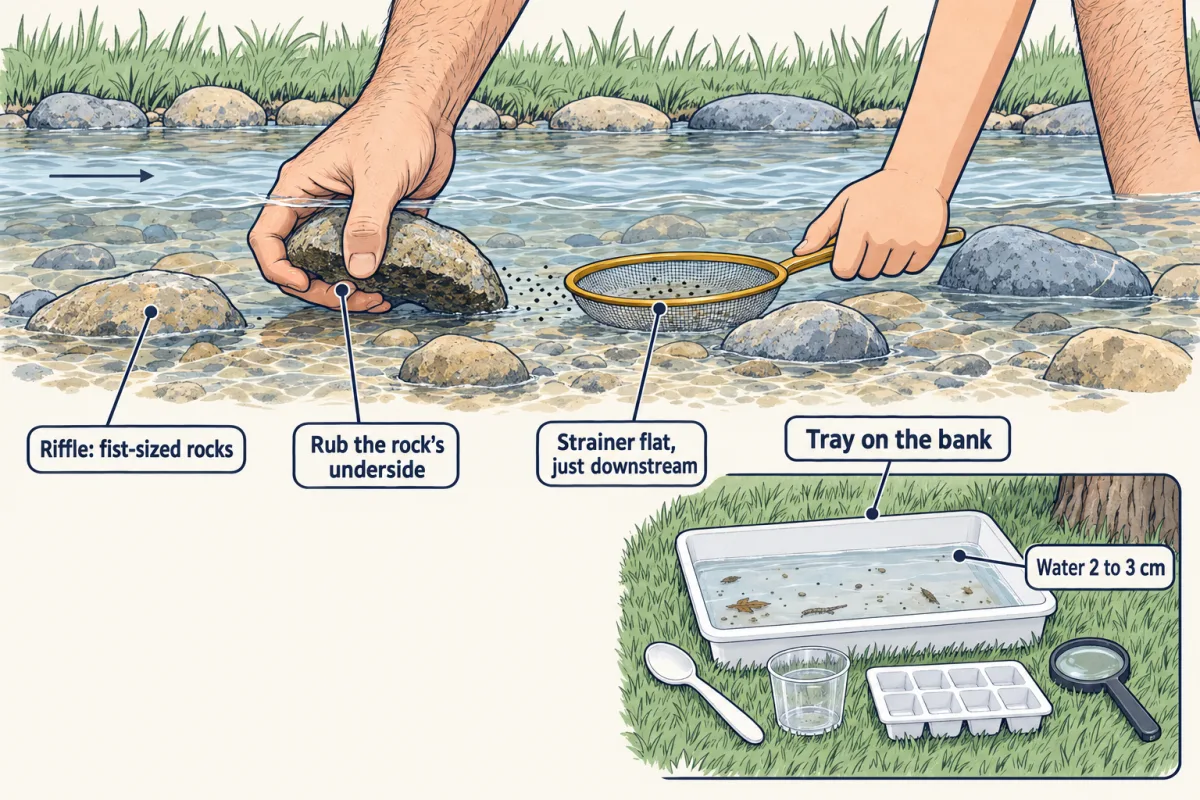
- Set up on the bank. Staying within arm’s reach, fill the white plastic tray with 2 to 3 cm of creek water. Keep it in the shade so it stays cool.
- Predict first. Before anyone touches a rock, hand over the pencil and sheet. Say: “What do you think lives under these rocks? Draw your guess before we check.”
- Catch together. Stay within arm’s reach. Your child holds the strainer flat on the creek bed just downstream of a rock. Look before reaching. Lift the rock and check underneath before rubbing. If you see a crayfish, hellgrammite or another animal that can pinch, bite or sting, gently put the rock back and try another. Otherwise, gently rub the underside for about 30 seconds so loose animals wash into the strainer. Tip the strainer into the tray. Try three or four rocks.
- Wait, notice and check. Say: “Hold still one minute while the mud settles, and watch the specks.” What your child will notice: specks that looked like dirt start to dart, wiggle or crawl. Compare what moves against your child’s drawing. Then use the hand lens and check one body clue at a time:
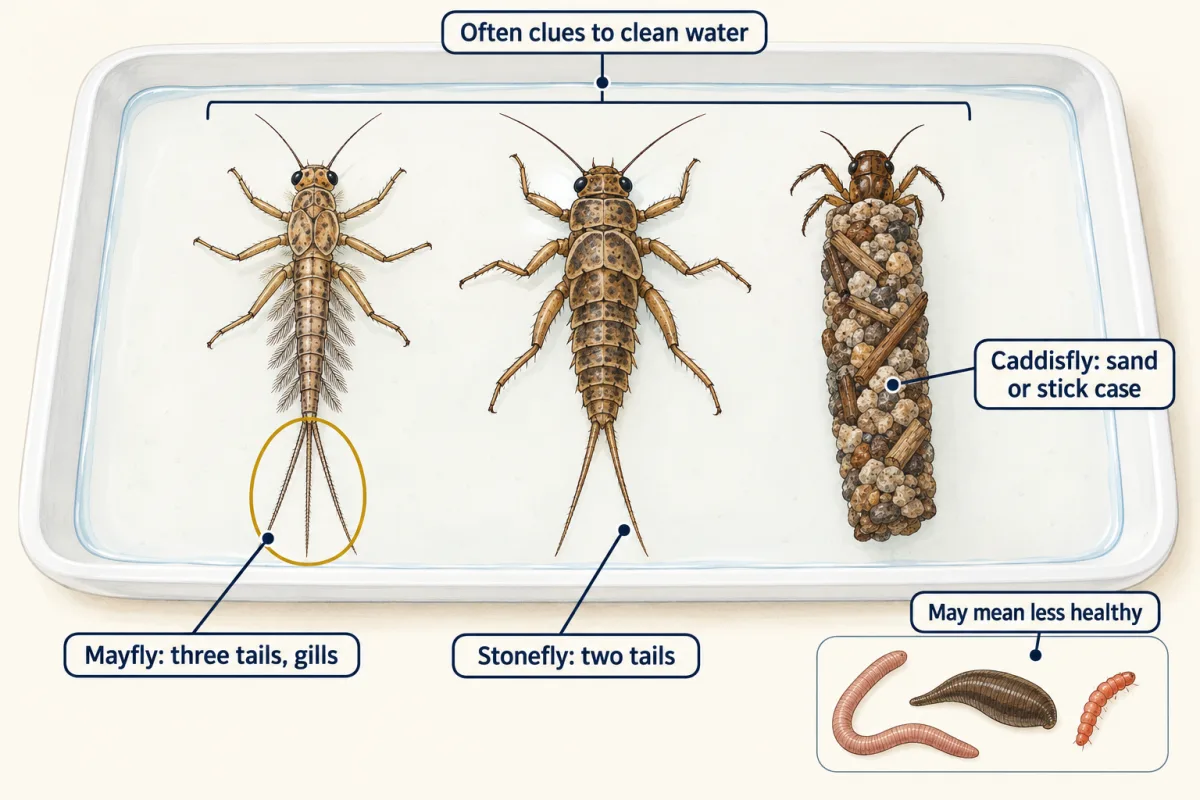
- Mayfly young: usually three tails and feathery gills along their sides.
- Stonefly young: two tails and no gills along the sides of their belly.
- Caddisfly young: often live in little cases of sand or sticks.
- Sort by movement. Introduce one sorting rule first. Use the plastic spoon (not fingers) to move animals into the ice-cube tray. Ask: “Does this one crawl and cling, swim, or stay stuck?” Group them: crawlers and clingers, swimmers, and ones that stay still or stuck.
- Read the clues. Connect the food web first. Ask: “What do you think this one eats, and what might eat it?” Then check the mix. Several kinds of mayfly, stonefly or caddisfly young usually signal a healthy creek. Tolerance varies even within mayflies and caddisflies (see For older children), so many kinds tell you more than one. Mostly worms, leeches or tiny red wiggly larvae may mean less healthy water. One visit is a clue, not a final answer.
- Return everything and debrief. Pour the tray back slowly at the water’s edge near where you caught the animals. Put rocks back as they were, and wash hands with soap. Close with two quick questions that return to the “Say it together” idea:
- “What surprised you most under the rocks?”
- “What do those animals tell us about this creek’s water?”
Questions to ask while you do it
Let your child guess first, then check.
- “What do you think we will find under this rock?”
- “I wonder why so many animals live under the rocks and not on top.”
- “What do you think this one eats? How could we find out?”
- “If a fish lived here, which of these animals might it eat?”
- “Can you draw an arrow from what one animal eats to the animal, and then to what eats it?”
- “Which things in the tray are living, and which are not living?”
- “What do you think would happen to these animals if mud from a building site washed into the creek?”
What children often think
-
A child might say “The creek is just water.”
You could try Ask your child to guess how many animals one rock holds, then count together. Point out living things (insects, snails, plants) and nonliving things (water, rocks, sunlight). Living things depend on one another and on the nonliving things around them.
-
A child might say “Bugs in the water mean it’s dirty.”
You could try Ask, "Do you think every bug likes the same water?" Look for mayfly or stonefly young. Many live only in clean water, so finding them is good news. Which kinds you find tells you more than how many.
-
A child might say “Fish are the only animals in a creek.”
You could try Tally every animal in the tray that is not a fish. Most creek animals are small. Many hide under rocks, in leaves or in mud. Many fish depend on them for food.
-
A child might say “That worm thing is gross. Let’s squish it.”
You could try Ask, "What do you think it does for the creek?" Creek worms eat bits of dead leaves and mud. Many creek animals break fallen leaves into smaller bits that other animals eat. Each belongs to the food web, so we look and put it back.
Why it works
Scientists call these animals benthic macroinvertebrates: animals without backbones, big enough to see, living on the bottom. They stay in one stretch for months and cannot easily escape pollution. A single water test shows one moment; the animals show what the creek has been like over time.
Most stonefly young, and many mayfly and caddisfly young, need cool water with plenty of dissolved oxygen, taken in through gills or skin. Mud can smother rocks. Too much fertilizer feeds growth and decay that use up oxygen, and some other pollution harms them directly. Worms, leeches and some midge larvae survive with much less oxygen. A healthy creek usually holds many kinds, while a creek with only a few tolerant kinds may have a problem. Sensitivity varies between species within each group, so trained volunteers count and identify carefully before drawing conclusions.
Easier and harder
For younger children (ages 5 to 7)
Skip naming. Sort animals into “has legs” and “no legs,” or “fast” and “slow.” Count tails on one animal together and draw one large on the sheet. Keep the visit to 20 minutes, with your child holding the strainer while you check and lift rocks.
For older children (ages 8 to 10)
Make a tally table for mayflies, stoneflies, caddisflies, worms and leeches, snails, and others. Compare a riffle with a slow stretch, or visit the same spot in two seasons. Wade only in water that is ankle-deep for your child. Sample a deeper pool only from a firm, low bank while you stay within arm’s reach. Skip any pool you cannot reach safely.
Use a multi-clue key: “Three tails or two? Side gills along its belly? Does it live in a case?” Some mayflies have two tails with side gills, and damselfly young have three flat, leaf-like tails, so check every clue. Net-spinner caddisflies and some small mayflies also live in dirtier water — another reason many kinds tell more than one. Ask what the counts suggest and what else they would want to know.
You can also compare Step 6’s groups with ocean life: Virginia’s grade 4 standard groups ocean animals as floating, swimming or fixed to the bottom. Ask how their creek groups match up.
If it doesn’t go as planned
If you find almost nothing, try another rocky riffle with slow, ankle-deep water, rub the rocks longer or come back in another season. With no safe creek nearby, try a pond. The adult collects a cup of water and leaves from the edge while standing on firm ground. With permission, the adult can also tie a mesh onion bag of dead leaves to a riffle rock and lift it out three to four weeks later. Do this only in ankle-deep, slow water at least three days after heavy rain.
Observation sheet
Worked example (first row) · Animal: draw a slim insect with three tails and side gills · How many? make a tally mark for each one you see · Crawls, swims or stays still? circle “Crawls” if that is what you saw · Clean-water clue? leave this blank if all you know is that it is a mayfly. Consider the whole mix when you finish.
Observation sheet
Creek critters
NameDate
Draw each animal you find. Count how many. Circle how it moves.
| Animal (draw it) | How many? | Crawls, swims or stays still? | Clean-water clue? (yes or no) |
|---|---|---|---|
Nonliving things in the creek:
I think this creek is:
stemhop.com · Biology Together
The three stories, told aloud Side Hops: three stories that go with this lesson Side Hops
Three playful ways to talk about creek critters
1:45 · Narration: an AI narrator voice (Kokoro, af_heart).
Read the transcript
Hi there. Before you head out to the creek with your kitchen strainer and white tray, here are three fun ways to talk about what you find under the rocks. First, if your child spots three thin tails and little gills along the sides of the bug's belly, try telling them, "Some mayfly babies spend two or three years underwater. A winged adult may live for only about a day." Many mayfly babies crawl on rocks. See those little gills? They take in oxygen from the water. Sometimes years in the creek, and maybe just a day as a grown-up. That's a surprise in one tiny bug. Second, if you spot a tiny tube of twigs or sand grains that suddenly starts walking across the tray, compare it to a sleeping bag you crawl around in. Many caddisfly babies glue sticks, bits of plants or tiny pebbles into cases they carry as they crawl. Some twig cases look like tiny log cabins. Ask your child what they would build their own creek camper from. Third, when your child asks why many stonefly babies live in clean, flowing water, tell them that moving water brings them oxygen. When oxygen runs low, many stonefly babies do tiny push-ups to move fresh water over their bodies and gills. You can stand on dry grass a few steps back from the water and do two goofy push-ups together. Then point at the white splashes tumbling over the rocks. All that churning mixes oxygen from the air into the water. Have fun out there, stay within arm's reach, and put every critter gently back where you found it.
The idea underneath them. At a shallow, slow creek in a public park, you and your child catch small animals from under rocks with a kitchen strainer, look at them in a white tray, sort them by how they move, and put every one back.
Your notes
Select any text in the lesson to highlight it or add a note to it. Your highlights and notes are saved in this browser and collected in your notebook.
This browser is not letting the site save anything (a private window or strict privacy settings), so highlights and notes will be lost when you leave the page.
Where this lesson fits
Before thisReview first
- Who Eats Whom?This course · Lesson 21
Your child uses the idea of who eats whom to guess what the creek animals eat and what eats them.
- Backyard Habitat HuntThis course · Lesson 19
Your child already practised close looking for small animals in one patch, which this lesson repeats in a creek.
After thisStudy next
- Food Webs and EnergyOne level up · Life Science
This takes the creek's chain of leaf-eaters, predators and fish further, following how energy passes along it.
- Producers, Consumers and DecomposersOne level up · Life Science
This takes further the idea that leaf-eating creek animals break down fallen leaves while others eat them.
Elsewhere on the siteFilms, simulations and method films in other courses
- Two Sides of Every EcosystemFilm · Life Science
It shows how the water's conditions decide which animals can live in it, like the clean-water clues here.
Suggested by an AI model from the lessons themselves, then checked. How we use AI
Those are the stories. The idea under them is the one the lesson builds.
That is the film. The rest of the activity is the fun part.
The rest of the activity is here when you want it.
Finish line
Test yourself
4 questions
Questions to talk over together.
That's the last lesson
Back to all lessons
Pick another topic, or revisit one you want to firm up.
All lessons →Before you move on: review the questions you missed .
Rewritten on : new text and film. Notes and highlights stay, but the text around them may have moved.