Two Sides of Every Ecosystem
Read the transcript of “Two Sides of Every Ecosystem”
Film transcript: Two Sides of Every Ecosystem
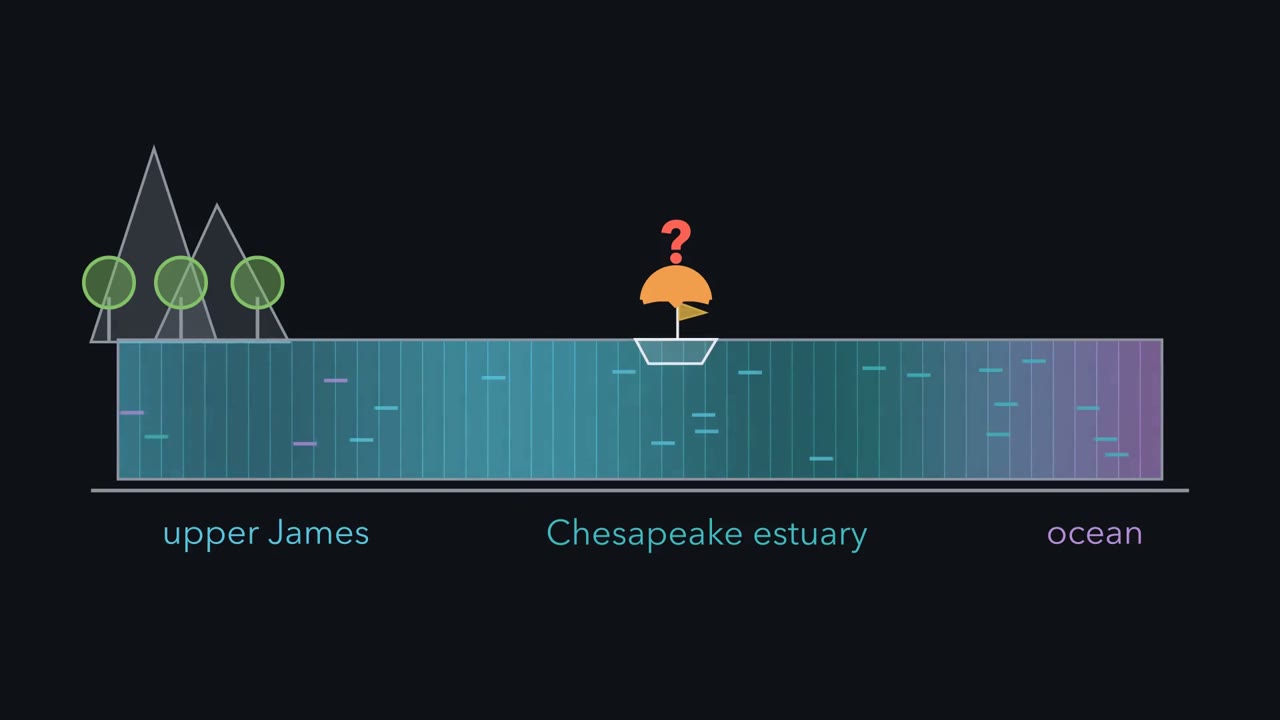
Why can oysters live in the lower James River but not near Richmond? Follow one Virginia landscape from mountain forest to salty Bay, and look for both kinds of clues. Some clues are alive. Others are parts of the surroundings.
An ecosystem includes all living things in a place and their nonliving surroundings. The living side includes plants, animals, fungi, microorganisms, and their interactions. Watch a deer eat acorns while fungi spread through a fallen log. These relationships are biotic factors. The nonliving side includes climate, sunlight, water, soil, air, and nutrients. These are abiotic factors. Rain darkens the soil while sunlight shifts under the tree canopy. Both sides share one place, and changes on either side can matter. Now the forest canopy grows thicker, but everything else stays the same. Less sunlight reaches the forest floor. What do you predict will happen to the small plants below?
The shaded plants grow poorly or disappear from the picture. Light is one condition that can limit where plants survive. Deep or muddy water can block light too. That helps explain why few plants grow on some underwater floors. Climate is the usual pattern of temperature and rainfall over many years. Earth's tilt changes sunlight angle and day length as Earth travels around the sun.
Latitude, elevation, land shape, and human actions also shape climate. Climate is part of the abiotic side. Carry the same paired view across Virginia. A forest is a terrestrial ecosystem on land. A mountain stream is freshwater, with very little salt.
Ocean water is marine and salty. Between them, an estuary mixes fresh river water with salty ocean water. These labels describe surroundings, not empty containers. Organisms must handle those conditions while also finding food and meeting other living things. Living interactions and nonliving conditions help decide what can live where. That rule may explain the oyster puzzle, but we need evidence along the river. No single factor tells the whole story. A suitable condition does not prove an organism was present. A range match is a clue, not a complete answer. Ecosystems also change as conditions, populations, and species change. The next step is to test one condition along the James.
Why can oysters live in the brackish lower James River but not in its fresh water near Richmond?
Continue in the lesson: Land and Water Ecosystems →
3:10 · Free, with captions and a transcript. The lesson has the full text, the questions and the sources.
More films from this lesson
How this film was made. Narration: written from this lesson's text and read by an AI narrator voice (Kokoro, af_heart). Animation: AI-generated in code (Manim) by Claude, a schematic with no drawn molecular structures. Captions come from the narration script. See something wrong? Report it.