When GABA Pushes Up
Read the transcript of “When GABA Pushes Up”
Film transcript: When GABA Pushes Up
Can one GABA input hold back excitation, and then help it a few milliseconds later? The shunt was tied exactly at rest. But the GABA rope's end depends on the chloride gradient. Suppose it is tied at minus −55 mV. That is above rest, but below threshold at minus −50 A 10 nS GABA rope opens in our resting cell. Where does the marker settle?
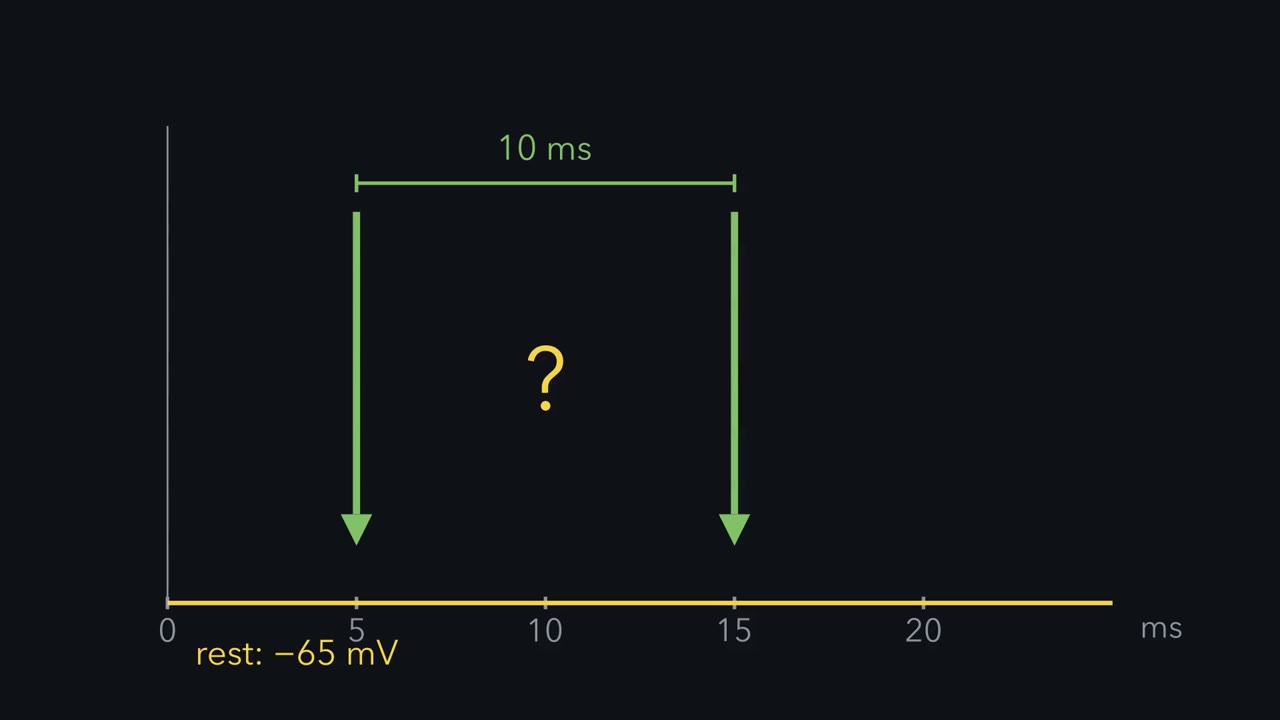
At minus −60 halfway, because the two ropes are equally strong. This GABA input depolarized the cell. Now strong excitation drives the voltage above minus −55 toward threshold. Which way does the GABA rope pull? Down, back toward minus −55 And its conductance enlarges the bottom line. So it opposes further depolarization. Then the GABA conductance closes. Excitation arrives a few milliseconds later. Does it start nearer threshold, or farther?
Nearer. The conductance has gone, but the depolarization it left decays with τ. The later input starts higher up. At each moment, an open synapse pulls the voltage toward its own reversal potential. So this GABA current depolarizes while the voltage is below its end. It hyperpolarizes once the voltage is above it. Current direction alone does not say whether GABA helps firing. For that, compare the whole response with and without it. With steady inputs, it can never carry a cell sitting below threshold past threshold. The new balance point stays between the old one and minus −55 Brief inputs are different. In a model of our cell, one fast EPSP alone stopped just short of threshold.
With the GABA conductance already open, it started from minus −60 and just crossed. The open GABA conductance made the EPSP itself smaller. But the 5 mV head start won. Gulledge and Stuart studied this in layer 5 pyramidal neurons, in cortex slices from rats three to four weeks old. GABA responses depolarized the cells from rest, though the GABA reversal potential was below threshold. GABA at the cell body inhibited excitation arriving at the same time. It made later excitation more likely to fire the cell. GABA on the dendrites was excitatory, whatever its timing. The balance point offers a reading of the timing result. Likely, the conductance had closed while some depolarization remained.
This does not make GABA excitatory in adult cortex in general. In that preparation, its sign depended on timing and site. The rope's end can also move. When chloride enters faster than transporters can remove it, the GABA reversal potential creeps upward. GABA pulls the voltage toward its reversal potential. Whether that helps or hinders firing depends on timing, site and the other inputs.
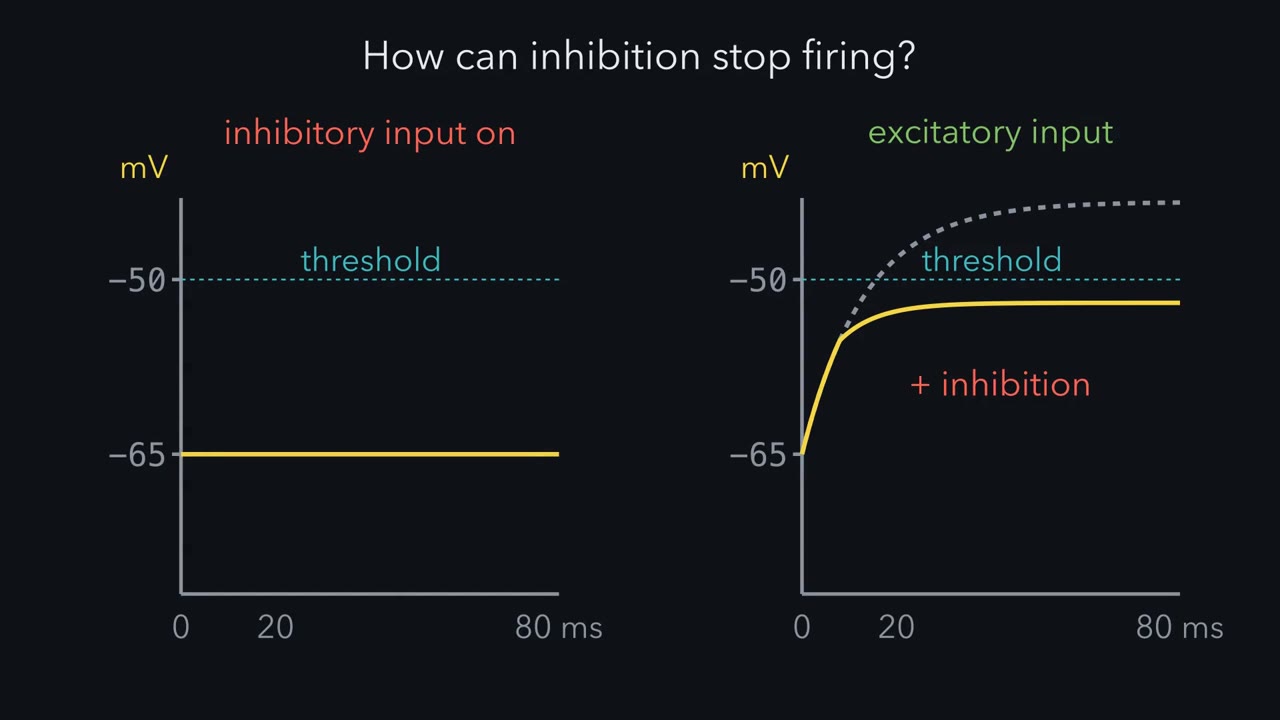
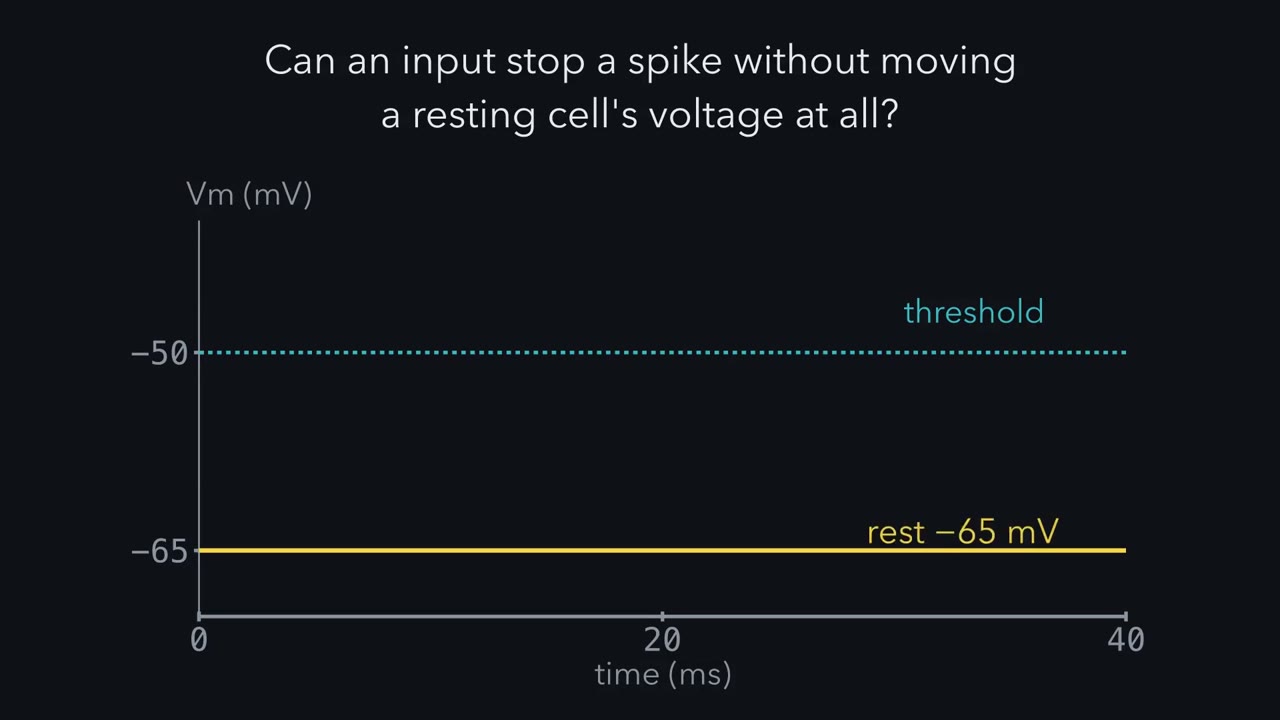
An inhibitory input can leave a resting cell's voltage unchanged and still stop it from firing. How?
Continue in the lesson: Integration, Inhibition and Neuromodulation →
3:24 · Free, with captions and a transcript. The lesson has the full text, the questions and the sources.
More films from this lesson
How this film was made. Narration: an AI narrator voice (Kokoro, af_heart) reading narration written from this lesson's text. Animation: AI-generated in code (Manim) by Claude, a schematic with no drawn molecular structures. Captions come from the narration script. See something wrong? Report it.