Life Science · Skim version
Producers, Consumers and Decomposers
Read the full lesson → Skim the whole course →
The guiding idea
Leaves fall in the forest every autumn, so why don’t the old ones just keep piling up?
A forest's leaf pile works like a bathtub: every autumn new leaves pour in, and decomposers drain it, sending much of each leaf into the air as carbon dioxide and water and its nutrients back to the soil, where producers use them again.
From the film: The Leaf Pile That Stops Growing
- Producers like the oak build leaves using energy from sunlight; consumers eat producers or other consumers.
- Decomposers such as fungi and bacteria break down dead leaves, dead animals and wastes.
- Decomposers send much of a dead leaf into the air as carbon dioxide and water; its nutrients go into the soil.
- In a simple model, the pile stops growing when the drain takes out as much as falls in each year, and the matter goes around again.
From the film: Weighing the Drain
- Researchers weighed sealed bags of dried leaves left on a West Virginia forest floor for two years.
- At the higher site, about 40 percent of the leaf mass was gone after one year and about half after two; year two was slower, so two years cannot tell how big a real pile gets.
- Part of the first month's loss was probably leaching, rain washing material out of fresh leaves, which needs no decomposers.
- Weighing measures all the mass loss together: it cannot split decomposers from leaching or bits lost through the mesh.
- The mesh kept worms out, so leaves on an open forest floor probably break down faster.
-
Explain: three jobs in an ecosystem
-
Explain: the drain in the bathtub
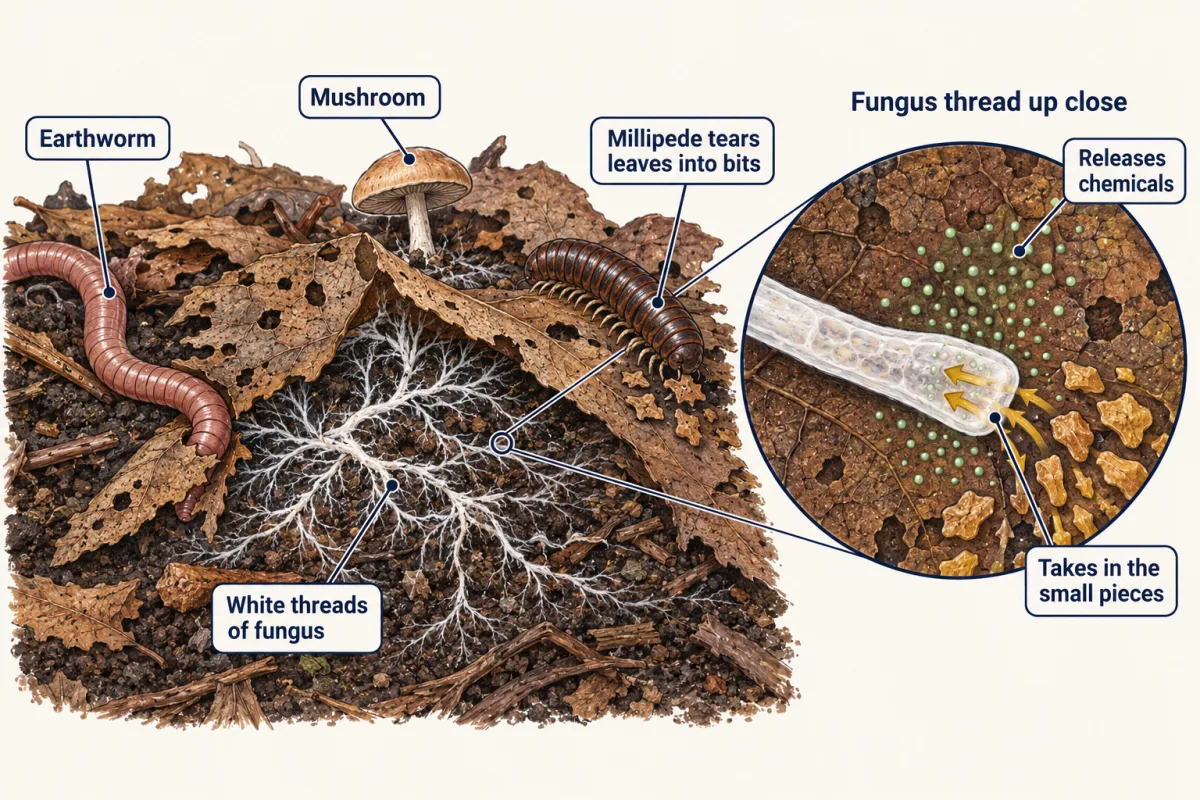
Fungi and bacteria break a leaf down outside their bodies and take in the small pieces. Worms and millipedes tear leaves into bits, which gives fungi and bacteria more surface area to work on. AI-generated illustration 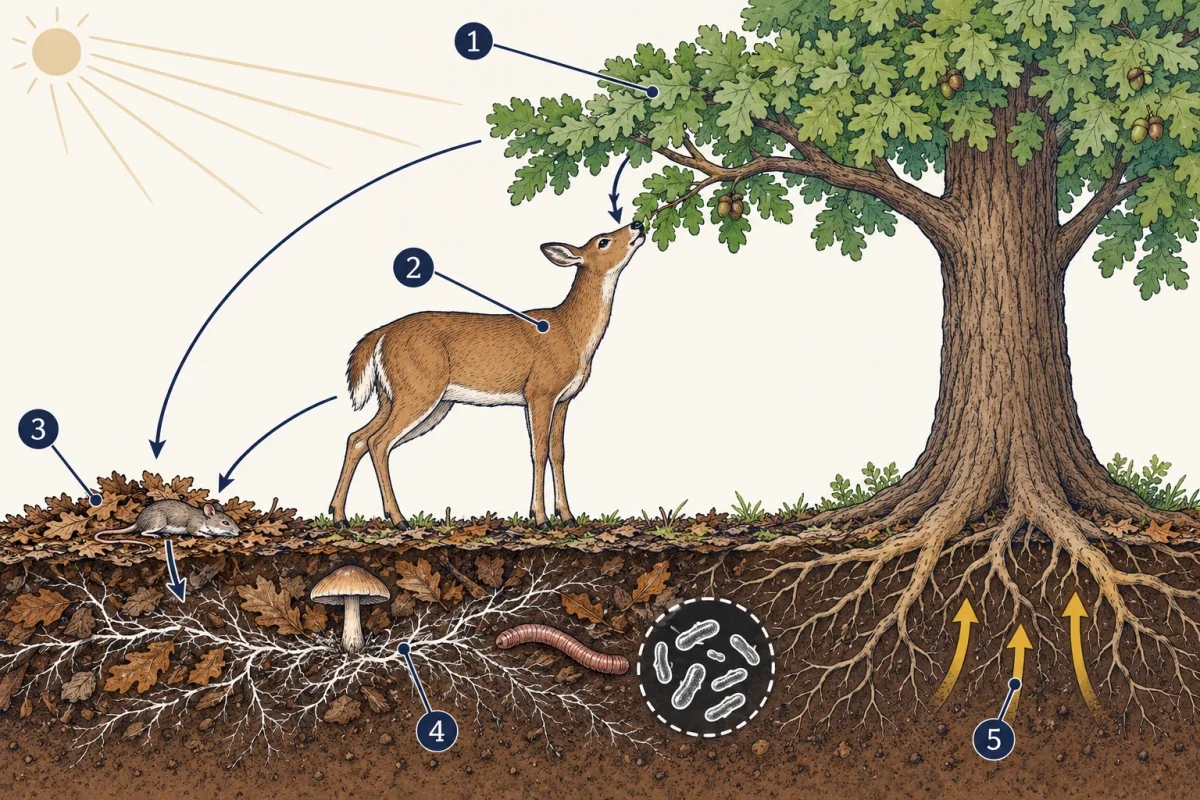
- producer
- consumer
- dead leaves and a dead animal
- decomposers
- nutrients
-
Explore: run a forest floor for five years
-
Explain: when one group changes
-
Elaborate: two years in a bag of leaves
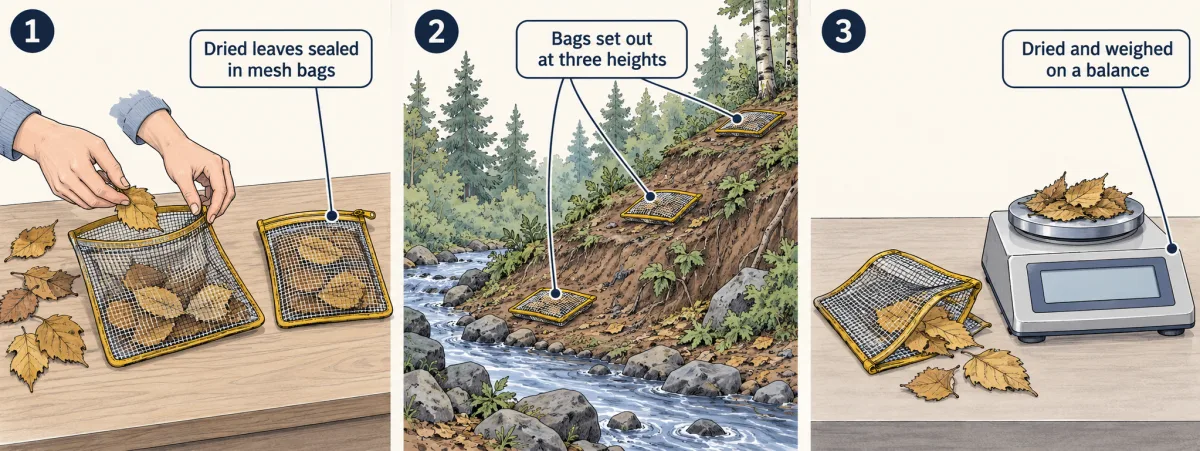
Weighing dried leaves in mesh bags over months on the forest floor shows how fast they lose mass. Decomposers do much of that, but rain washing material out and bits falling through the mesh count in the weighing too. AI-generated illustration -
Evaluate: check your thinking
-
Going deeper
Where this lesson fits
Before thisReview first
- Photosynthesis Feeds the WorldThis course · Lesson 9
You need to know producers build sugar from carbon dioxide and water using sunlight before you treat them as the tap.
- Releasing Energy from FoodThis course · Lesson 10
Decomposers send leaf carbon into the air through respiration, which this lesson uses without teaching again.
- Food Webs and EnergyThis course · Lesson 12
You need to know what consumers are and how they eat producers or other consumers before adding decomposers.
After thisStudy next
- The Carbon and Water CyclesThis course · Lesson 14
It follows the carbon that decomposers release from dead leaves as it moves through air, living things and soil.
- Nitrogen for LifeThis course · Lesson 15
It shows how nutrients returned by decomposers become nitrogen that producers can use again.
- Microbes in Bodies and EcosystemsOne level up · Biology
It takes the idea further by showing how bacteria and fungi do the breakdown and nutrient work in ecosystems.
Elsewhere on the siteFilms, simulations and method films in other courses
- Set Up: Rot DetectivesFilm · Biology Together
Sealed jars let you watch decomposers break down a rotting apple, the same job they do on leaves.
- Set Up: Soil ShakeFilm · Biology Together
Soil layers show the dead plant matter and nutrients that decomposers add back to the ground.
- Follow an atomSimulation · Biology
Following atoms between living things and the soil shows where decomposed matter goes next.
- Ecosystem mass and energy budgetsMethod film
The pile that stops growing is an ecosystem budget: matter falling in each year against matter drained out.
Suggested by an AI model from the lessons themselves, then checked. How we use AI