Life Science · Skim version
Predators and Prey
Read the full lesson → Skim the whole course →
The guiding idea
On an island where wolves hunt moose, why haven't the wolves eaten every last moose?
Wolves usually run short of food before the moose run out: when there are few moose for each wolf, wolves tend to catch moose less often, and if they get too little food, fewer wolves survive, so the moose can recover.
From the film: Why the Wolves Never Finish the Moose
- Moose are the wolves' food, so the number of moose for each wolf is a rough clue to how easily wolves find food.
- When there are many moose for each wolf, more wolves tend to survive and raise pups.
- When there are few, wolves tend to catch moose less often; if they get too little food, fewer wolves survive.
- Wolves usually run short of food before the moose run out, so the moose can recover.
- The rule fits a predator that eats mostly one kind of prey; a real island is messier than the model.
From the film: What the Island's Counts Show
- On Isle Royale, a drop to few moose for each wolf came before a drop in wolves in the late 1990s.
- Counts like these fit the rule but cannot prove the cause by themselves.
- In 2016 there were plenty of moose for each wolf, yet only 2 wolves: food is not the only limit.
- Weather, ticks, disease, inbreeding and people moving wolves also change the counts.
-
Explore: run an island with wolves and moose
-
Explain: populations, communities and food webs
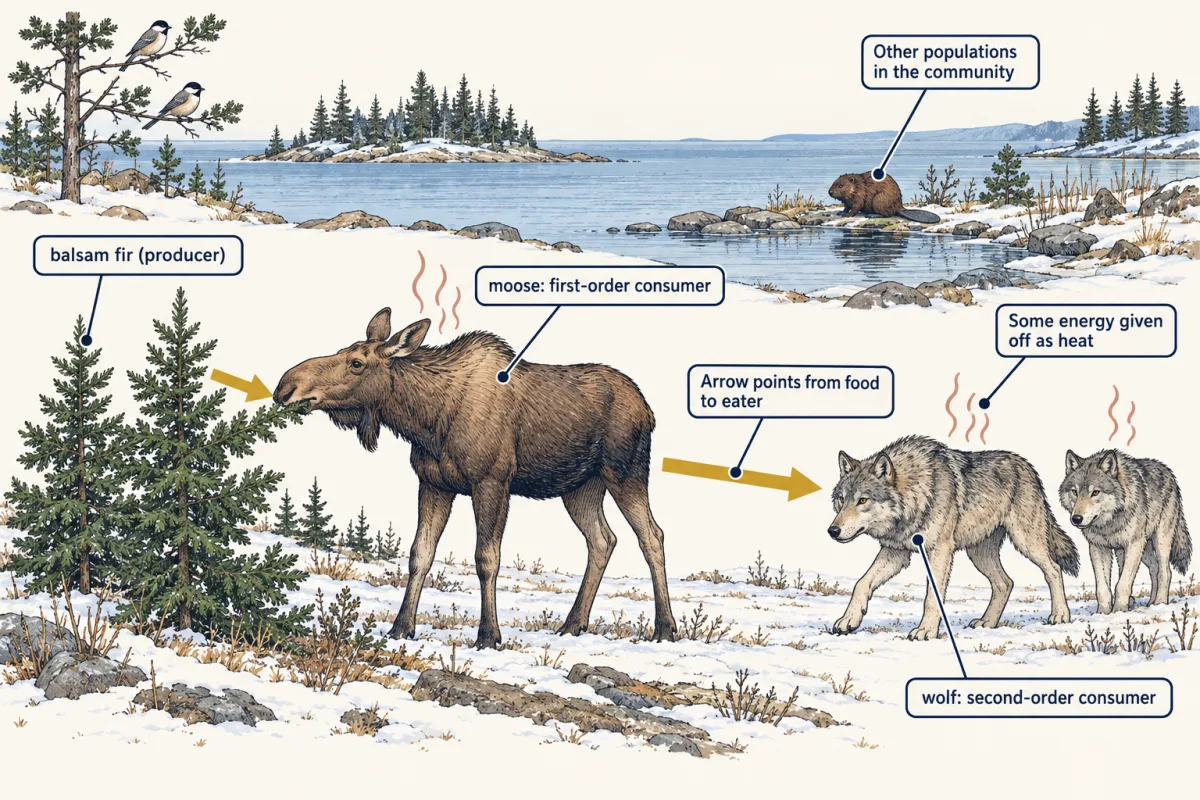
In the Isle Royale community, energy moves from balsam fir to moose to wolf, and every animal gives off some of its energy as heat. AI-generated illustration -
Explain: how predators and prey change each other’s numbers
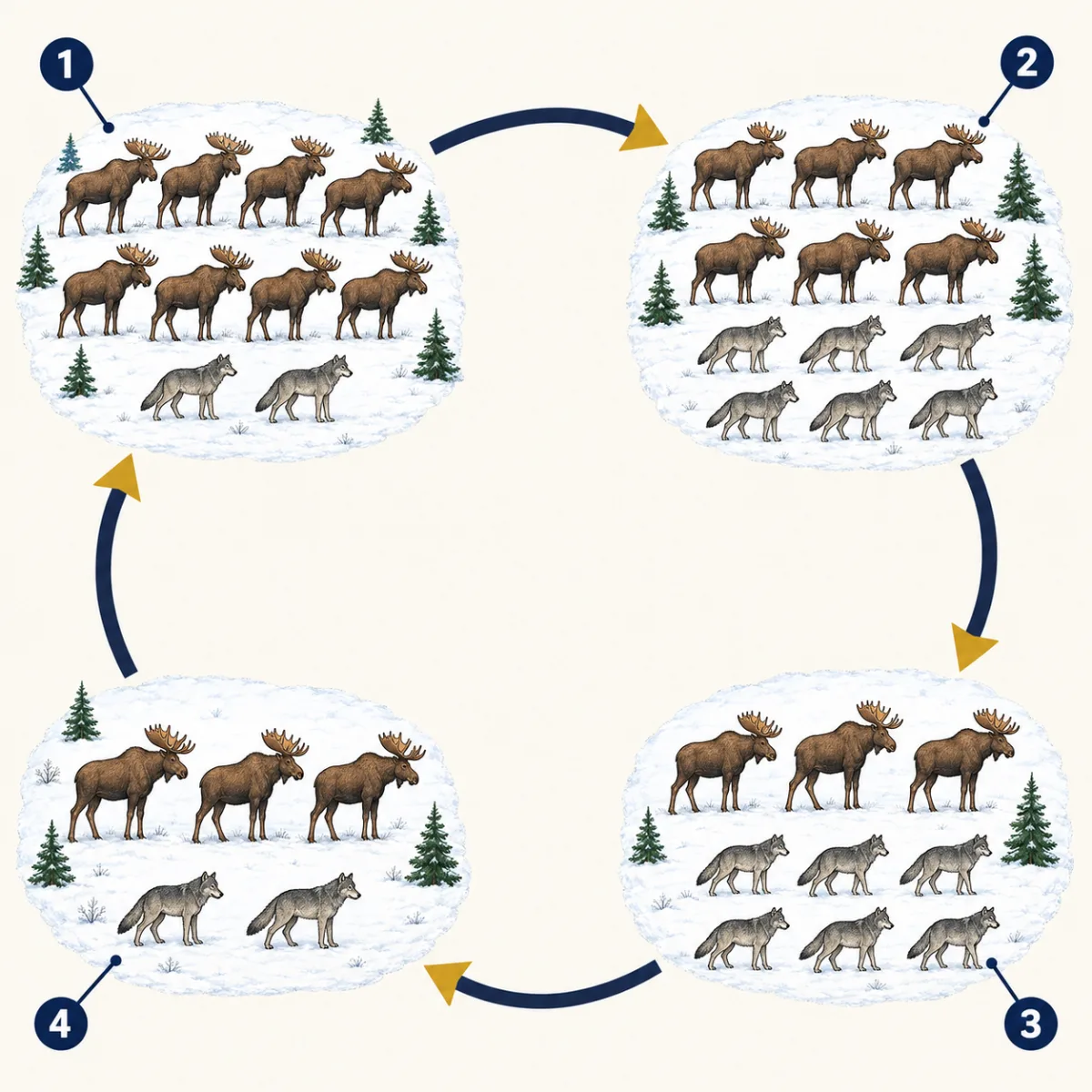
- many moose
- wolves increase
- fewer moose
- wolves decrease
-
Explain: herds and packs
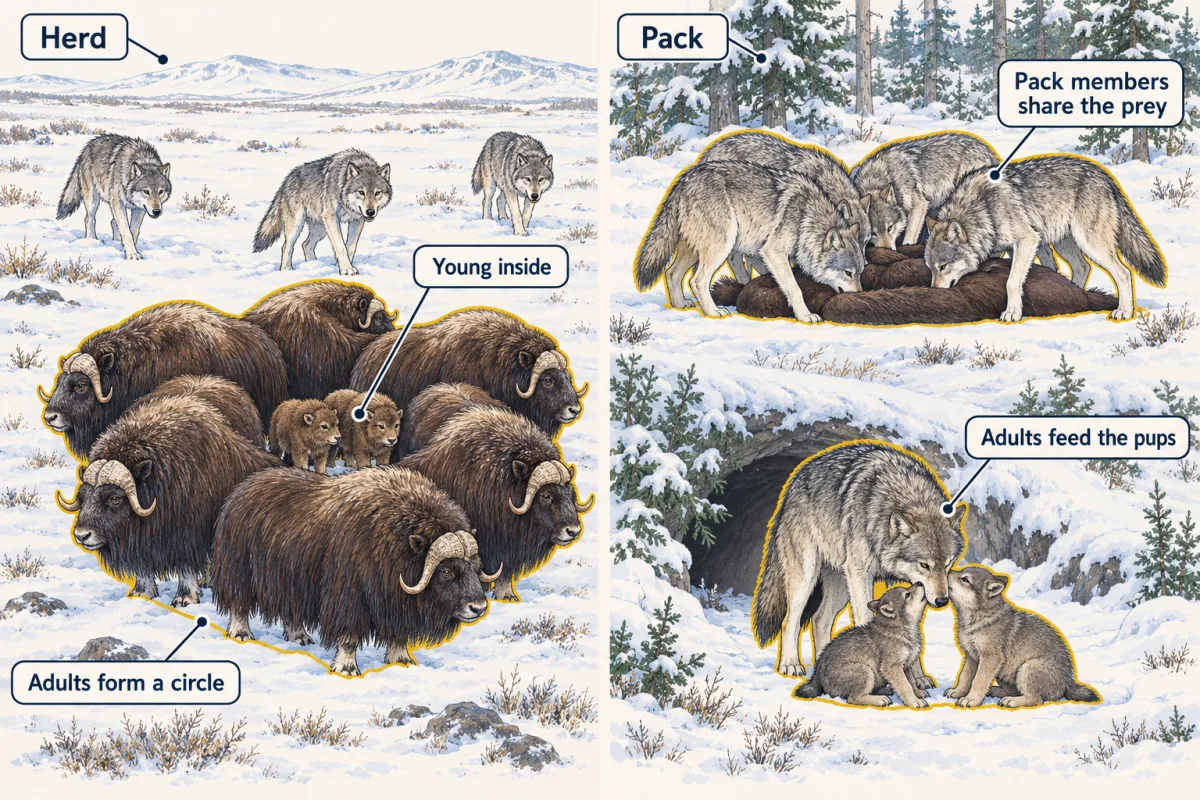
A herd can guard its young, and a pack hunts together, shares the prey and raises pups. AI-generated illustration -
Elaborate: read the Isle Royale counts
-
Evaluate: check your thinking
-
Going deeper
Where this lesson fits
Before thisReview first
- Food Webs and EnergyThis course · Lesson 12
You use food chains and consumer levels from there to see who eats whom and how little energy passes on.
- Producers, Consumers and DecomposersThis course · Lesson 13
You need the roles of producers and consumers from there to place moose and wolves in the community.
After thisStudy next
- Populations Rise and FallThis course · Lesson 23
It takes the rise and fall of predator and prey counts further, looking at what makes a population grow or crash.
- Competition and CooperationThis course · Lesson 17
It builds on the herd and pack ideas with other limits on populations, like shared food and space.
- Populations and Carrying CapacityOne level up · Biology
It takes the idea that food limits a population further, to the most animals a place can support.
Elsewhere on the siteFilms, simulations and method films in other courses
- Why Energy Pyramids NarrowFilm · Biology
It shows the arrows from food to eater that carry energy from moose to wolves.
Suggested by an AI model from the lessons themselves, then checked. How we use AI