Biology · Skim version
Natural Selection and New Species
Read the full lesson → Skim the whole course →
The guiding idea
Did a drought reshape the finches on one small island, or change which birds were left?
Inherited traits spread when their carriers leave more reproducing offspring.
From the film: The Drought Sorts a Population
- Inherited traits spread when their carriers leave more reproducing offspring.
- Natural selection needs variation, inheritance and unequal reproductive success.
- The drought did not reshape any beak; it changed which birds survived and bred.
- A trait helps only in a particular environment, so selection can change direction.
From the film: When One Population Becomes Two
- A barrier can start a split; interbreeding tests whether it is complete.
- A barrier reduces gene flow; mutation, selection and chance may then make the groups diverge, but they need not.
- Geographic separation alone does not make two species.
- If barriers prevent interbreeding, or allow only rare hybrids, the groups count as separate species.
-
How natural selection changes a population
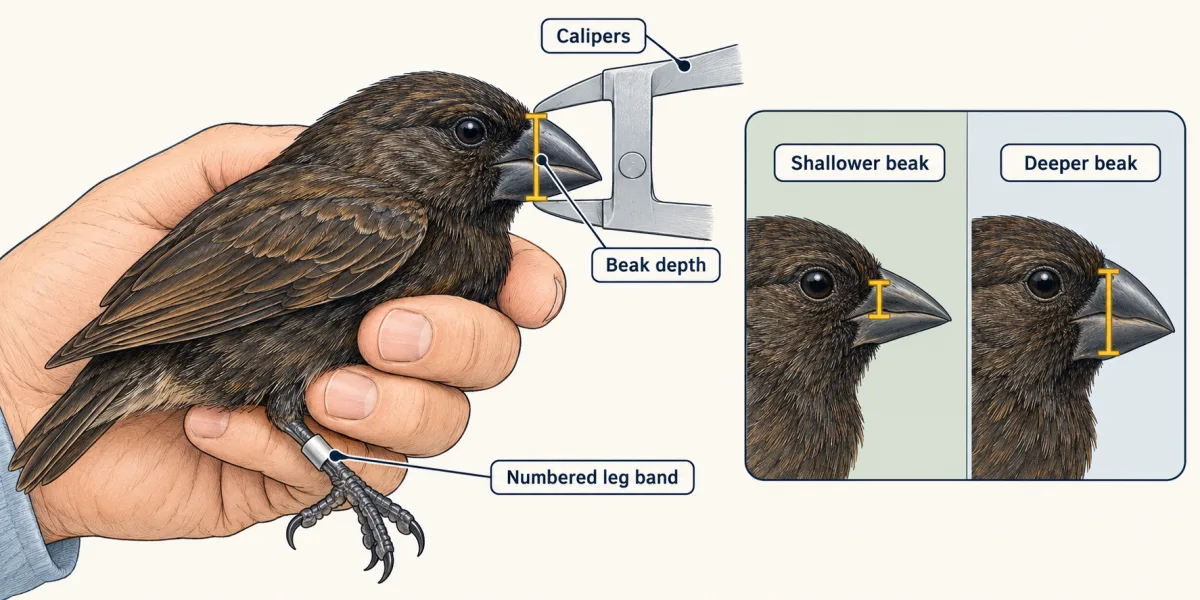
Beak depth is the height of the beak at its base. Measuring each banded bird before the drought made beak depth a testable predictor of survival. AI-generated illustration 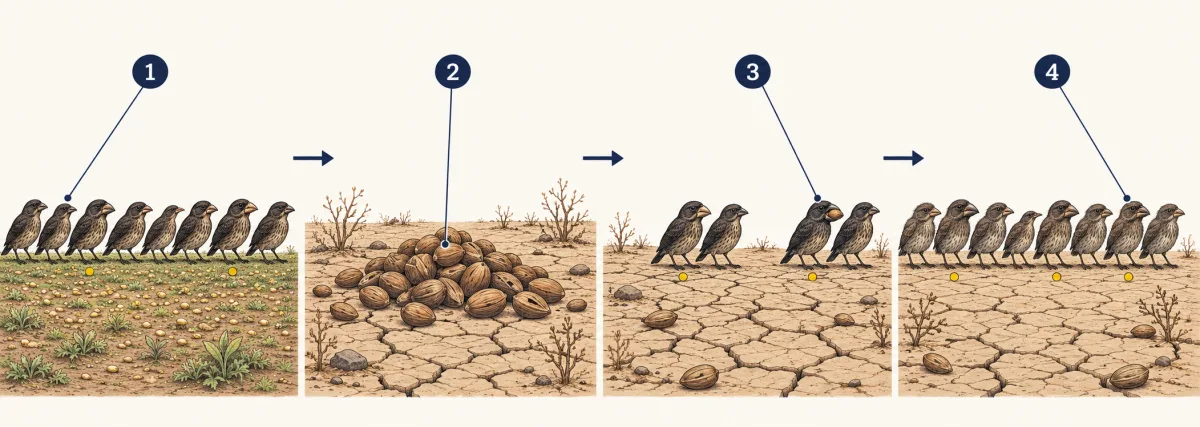
- a spread of beak depths
- large, hard seeds
- deep-beaked birds survive and breed
- the next generation
-
Explore: test the model
-
Read the drought data
-
From population change to a species split
-
What the simple split leaves out
-
Fast change, slow change and extinction
-
Check your thinking
Where this lesson fits
Before thisReview first
- Variation and SurvivalThis course · Lesson 27
It shows how variation and unequal survival change a population, which this lesson builds on directly.
- Meiosis and VariationThis course · Lesson 19
The lesson uses meiosis shuffling genes as a source of the variation that selection acts on.
After thisStudy next
- Populations and Carrying CapacityThis course · Lesson 29
Limits on population size explain why some birds die and others breed, which drives selection.
- Succession in VirginiaThis course · Lesson 32
It shows how a changing environment reshapes a community, like the changing island seeds here.
Elsewhere on the siteFilms, simulations and method films in other courses
- Where Differences BeginFilm · Life Science
It shows where the heritable differences that selection acts on come from.
- Moths and birdsSimulation · Life Science
You can watch moth colours change under bird predation, a simple model of selection.
- What the Rocks Still ShowFilm · Life Science
It shows fossils as evidence of slow change over millions of years.
- Who Makes It Through the Change?Film · Life Science
It shows how a population survives an environmental change only if some members survive and reproduce.
Suggested by an AI model from the lessons themselves, then checked. How we use AI