Who Makes It Through the Change?
Read the transcript of “Who Makes It Through the Change?”
Film transcript: Who Makes It Through the Change?
A red blight moves into a forest where the trees look alike. What decides whether this population continues or disappears? Watch the trees, their blue resistance bars, and the yellow seeds that mark a next generation. After a change, some members of a population die and some live.
Living members may reproduce. Some migrate, meaning they move elsewhere, where they must still survive. A species is extinct only when no living members remain anywhere. Losing a species from one forest is not the same thing. Now look inside each tree. The blue bar represents inherited resistance, the ability to hold off the blight. Different bar heights show genetic variation in this useful trait. The tree cannot raise its bar because danger arrives. It begins with traits inherited from its parents. Red cankers spread through the bark.
Trees with shorter blue bars are more likely to fade. A taller bar does not promise survival. It only changes the chance. Survivors that make yellow seeds can pass inherited traits into the next generation. Compare these forests. Every tree in the narrow forest has a short resistance bar. The varied forest includes short, middle, and taller bars. Which forest is more likely to leave seed-making survivors after the blight?
The varied forest has a better chance because some helpful differences were already present. Yet it could still lose every tree. Variation in leaf shape or height would not solve this problem. The difference must help with this change. Helpful differences can appear later or arrive from elsewhere, but a fast change may leave too little time. Green trees remain after the blight. If they never make seeds, their population still has no next generation.
Now yellow seeds fall and seedlings rise. Here is the rule. When environments change, populations survive only if some members survive and reproduce. A bird can leave a changed place. A rooted chestnut cannot, though seeds may spread its kind over time. Habitat loss, pollution, climate change, and invasive species create different challenges. The same test remains: can any members survive and reproduce? Follow the forest once more. Red blight arrives. Blue resistance differs. Some trees remain, and yellow seeds start another generation. A population continues only when living members make a next generation. This rule names a requirement, not a guarantee.
A model forest is not a real forest. Next, test the rule in a model forest. Then read the real American chestnut data below.
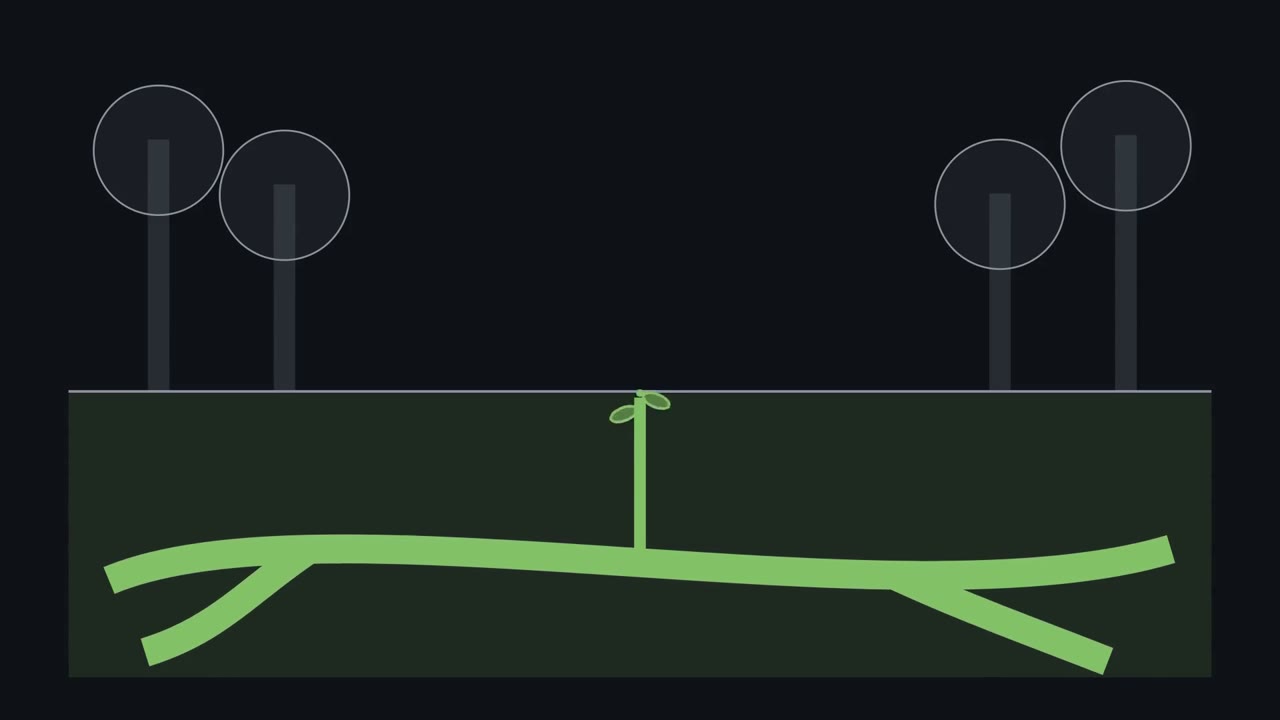
American chestnut trees were once common in Virginia’s Blue Ridge. Why did a fungus nearly wipe them out, while their roots still send up sprouts today?
Continue in the lesson: Extinction and Survival →
3:28 · Free, with captions and a transcript. The lesson has the full text, the questions and the sources.
More films from this lesson
How this film was made. Narration: written from this lesson's text and read by an AI narrator voice (Kokoro, af_heart). Animation: AI-generated in code (Manim) by Claude, a schematic with no drawn molecular structures. Captions come from the narration script. See something wrong? Report it.