Physiology · Skim version
Lymphoid Organs and Immune Traffic
Read the full lesson → Skim the whole course →
The guiding idea
Drain a rat's thoracic duct for a few days and its lymph runs short of lymphocytes. Where were they coming from?
Lymphocytes are made in bone marrow and thymus, and naive ones then spend their lives touring lymph nodes, spleen and mucosal tissue.
-
Lymphocytes go around a loop, not out of a factory
-
A node samples lymph and blood; the spleen samples blood alone
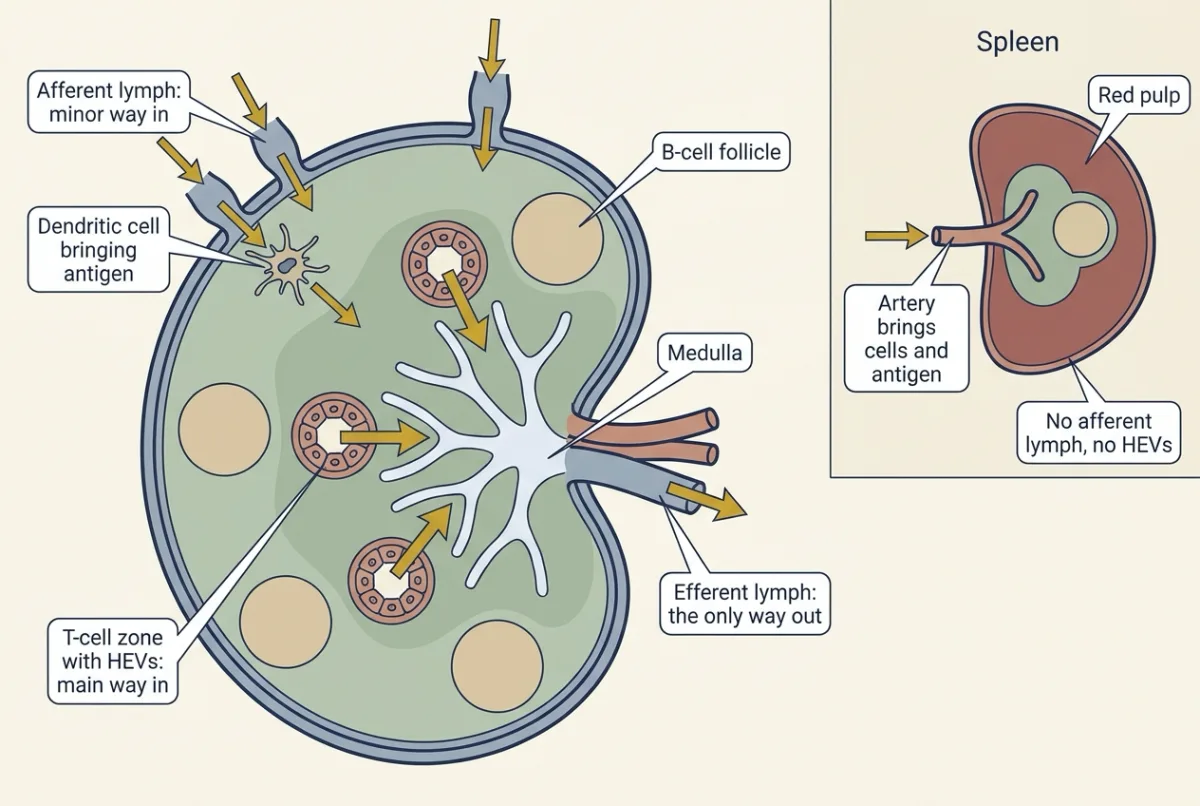
A lymph node is a hotel with two entrances and one exit: most lymphocytes check in from blood across high endothelial venules in the T-cell zone, fewer arrive with afferent lymph, and all leave by the efferent lymphatic. The spleen has no lymph entrance and no HEVs; it samples blood alone. AI-generated illustration -
Getting in on chemokines, getting out on S1P
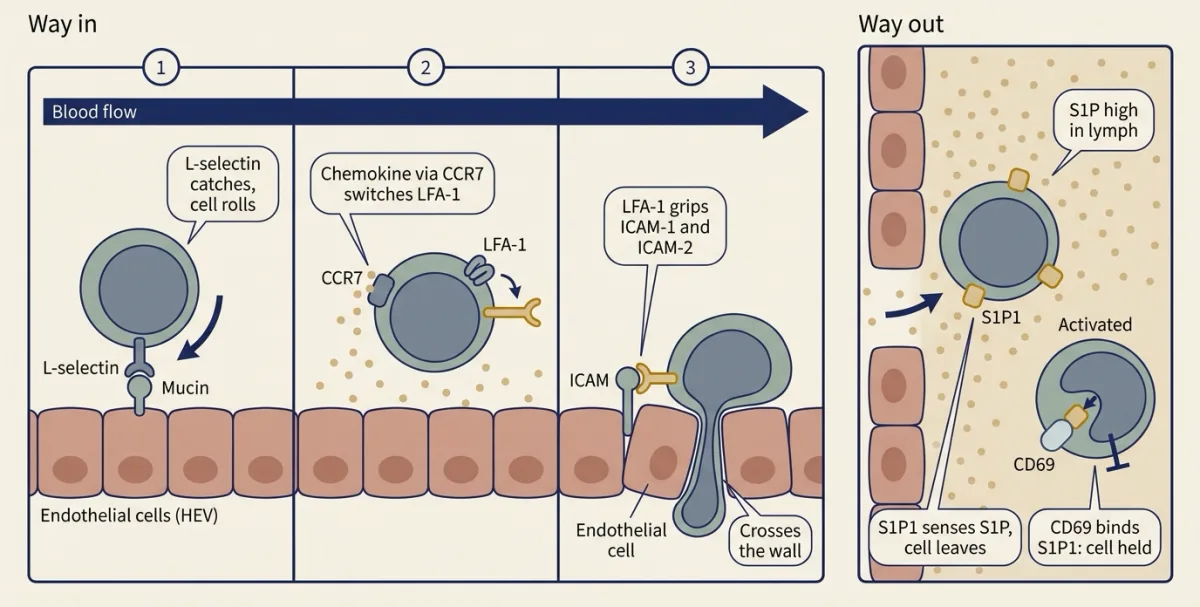
Entry and exit are separate gates. In, L-selectin catches a lymphocyte, a chemokine switches on LFA-1, and the cell stops and crosses the venule; out, S1P1 must sense the S1P in lymph, and CD69 on an activated cell binds S1P1 and opposes it and holds it in the node (mouse evidence for the exit gate). AI-generated illustration -
Why a cell’s stay is set by the way out
-
A draining node holds on to its visitors
-
Going deeper
Where this lesson fits
Before thisReview first
- Capillary Exchange, Lymph and EdemaThis course · Lesson 9
You need how lymph forms and flows back to the veins to follow the thoracic duct and the loop.
- Blood Cells, Hematocrit and ClottingThis course · Lesson 11
Lymphocytes are blood cells, and this lesson counts them in blood, nodes and spleen.
- Innate Immunity: Recognize and RespondOrganismal Biology · Starting college
It introduces the dendritic cells and immune basics that carry antigen to the node.
Elsewhere on the siteFilms, simulations and method films in other courses
- Receptors First, Antigen ChoosesFilm · Organismal Biology
It shows how naive lymphocytes with receptors made before meeting antigen are what the node's tour is sampling.
- Lineage tracingMethod film
Following the descendants of marked cells is the logic behind tracking lymphocytes around the loop.
Suggested by an AI model from the lessons themselves, then checked. How we use AI