Physiology · Skim version
Insulin, Glucagon and Blood Glucose
Read the full lesson → Skim the whole course →
The guiding idea
A 75 g glucose drink is six to seven and a half times all the glucose in your blood and tissue fluid. Why does blood glucose rise so little?
Blood glucose stays level only while glucose entering the blood matches glucose leaving it.
-
Blood glucose is a balance, not a tank
-
A beta cell reads glucose by burning it
-
Insulin says store, glucagon says release
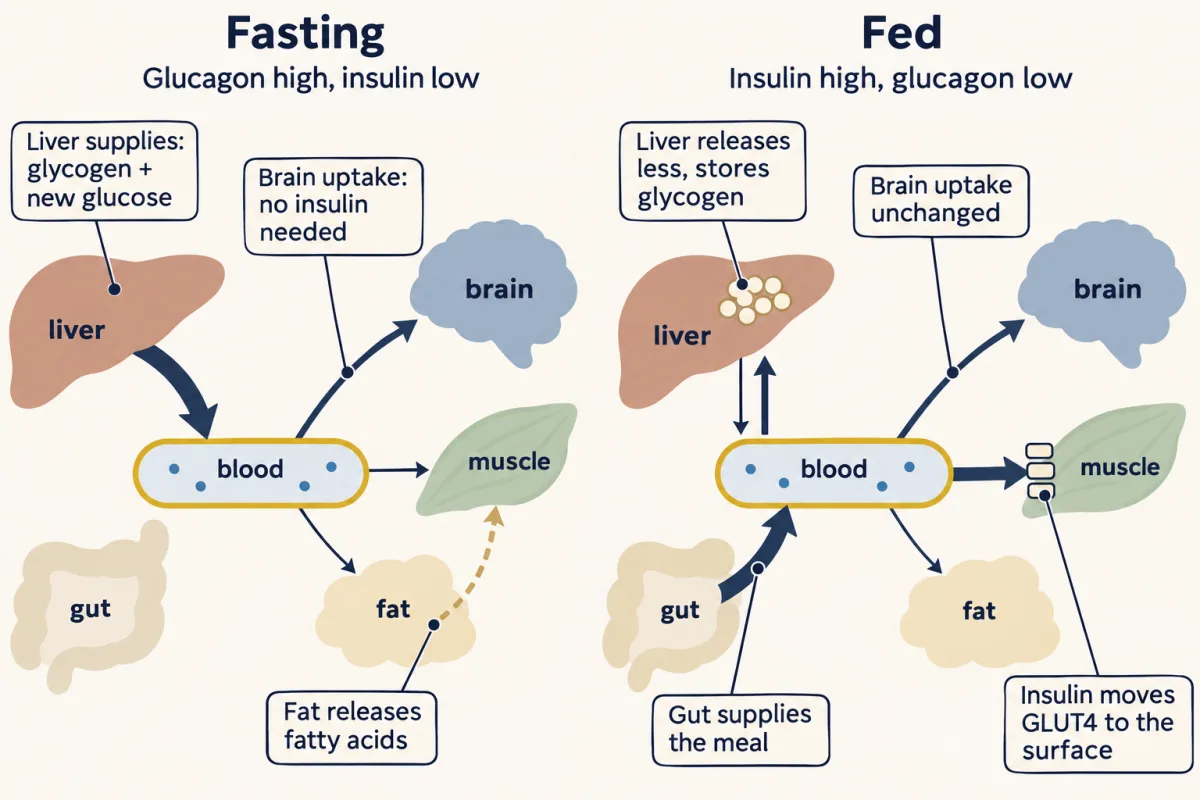
Blood glucose holds steady because what enters matches what leaves: between meals the liver supplies what the brain and other tissues remove, and after a meal insulin acts on both sides at once, cutting the liver's release while muscle (and, to a small degree, fat) takes up more. The brain's draw does not change with insulin, and glucagon acts essentially on the liver. AI-generated illustration -
The gut sends word ahead: incretins
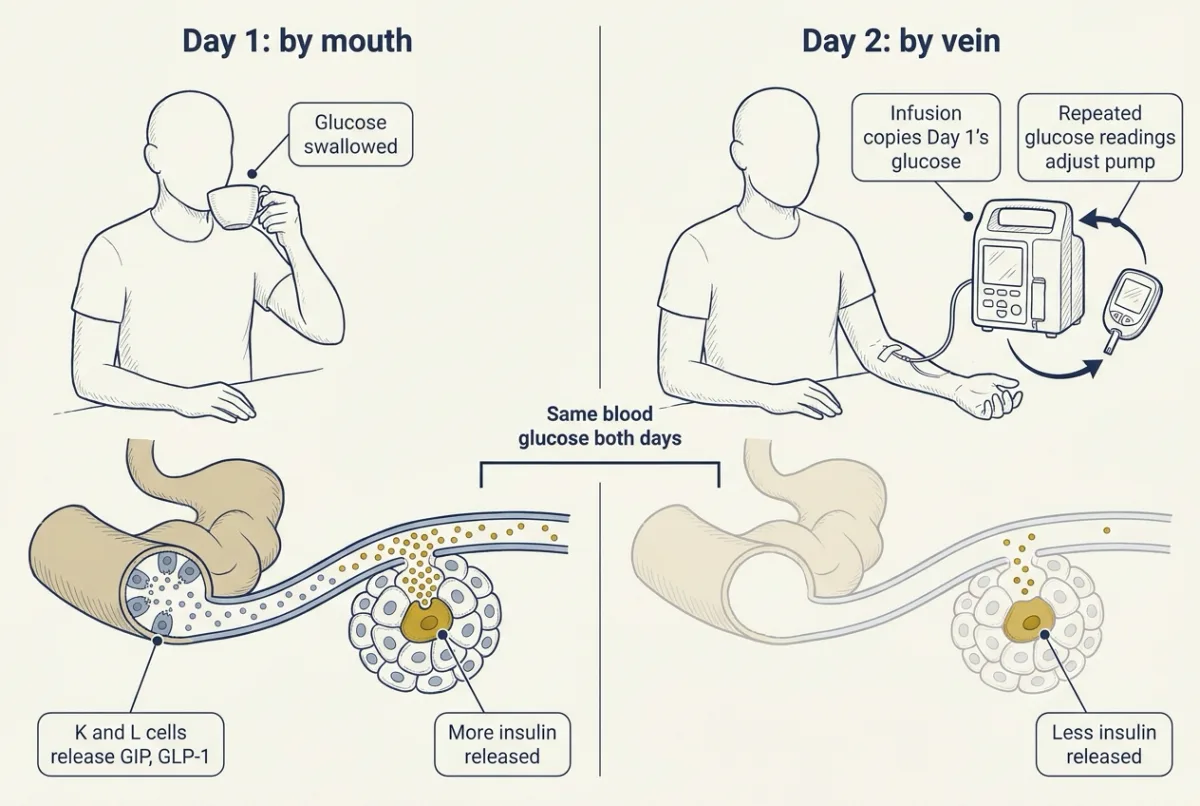
Copy the drink's blood glucose by vein and the beta cell still releases more insulin on the oral day: with the shared stimulus held equal, the extra response is attributed to the route, chiefly the gut hormones GIP and GLP-1, which amplify glucose-stimulated secretion rather than trigger it alone. AI-generated illustration -
Measuring it: secretion versus action
-
Going deeper
Where this lesson fits
Before thisReview first
- Endocrine Axes and How to Test ThemThis course · Lesson 2
It teaches the basic hormone loop and how to test it, which this lesson applies to glucose.
After thisStudy next
- Exercise: The Whole Body at WorkThis course · Lesson 30
It shows muscle glucose uptake rising without insulin and how the liver matches supply to demand during work.
- Absorption, the Liver and Enterohepatic CirculationThis course · Lesson 24
It covers portal delivery and the liver's handling of absorbed glucose, which sets the supply side of the balance.
- Gut Motility, Secretion and Gut HormonesThis course · Lesson 23
It covers gut hormones and gastric emptying, which the incretin section ties to insulin release.
Elsewhere on the siteFilms, simulations and method films in other courses
- How cells pull reactions uphillFilm · Biochemistry
This explains the chain from glucose through ATP that a beta cell uses to read glucose by burning it.
- How the body switches fuelsFilm · Biochemistry
It shows how insulin and glucagon switch the liver, muscle and fat between fed and fasting fuel use.
- Michaelis–Menten plotterSimulation · Biochemistry
A low-affinity enzyme half-saturated near 8 mM, as glucokinase is, follows from Michaelis–Menten saturation.
- Not Glycolysis in ReverseFilm · Biochemistry
The liver's fasting glucose supply comes from building glucose, which this film shows is not glycolysis in reverse.
Suggested by an AI model from the lessons themselves, then checked. How we use AI