Life Science · Skim version
Extinction and Survival
Read the full lesson → Skim the whole course →
The guiding idea
American chestnut trees were once common in Virginia’s Blue Ridge. Why did a fungus nearly wipe them out, while their roots still send up sprouts today?
When environments change, populations survive only if some members survive and reproduce.
From the film: Who Makes It Through the Change?
- When environments change, populations survive only if some members survive and reproduce.
- After a change, some members die and some live; living members may reproduce, and some migrate.
- Genetic variation helps only when some inherited differences fit the change.
- Variation can improve the chance of survivors, but it cannot guarantee survival.
From the film: From Sprouts to Seed-Making Trees
- Survival requires survivors to reproduce, not merely remain alive.
- Living chestnut roots can send up sprouts even when canopy trees are gone.
- Repeated blight can kill sprouts before they make seeds.
- Breeders cross American and Chinese chestnuts, test the young trees with blight, then cross the most resistant ones back to American chestnuts.
- When environments change, populations survive only if some members survive and reproduce.
-
Explore: send a change through a forest
-
Explain: survive, move or die
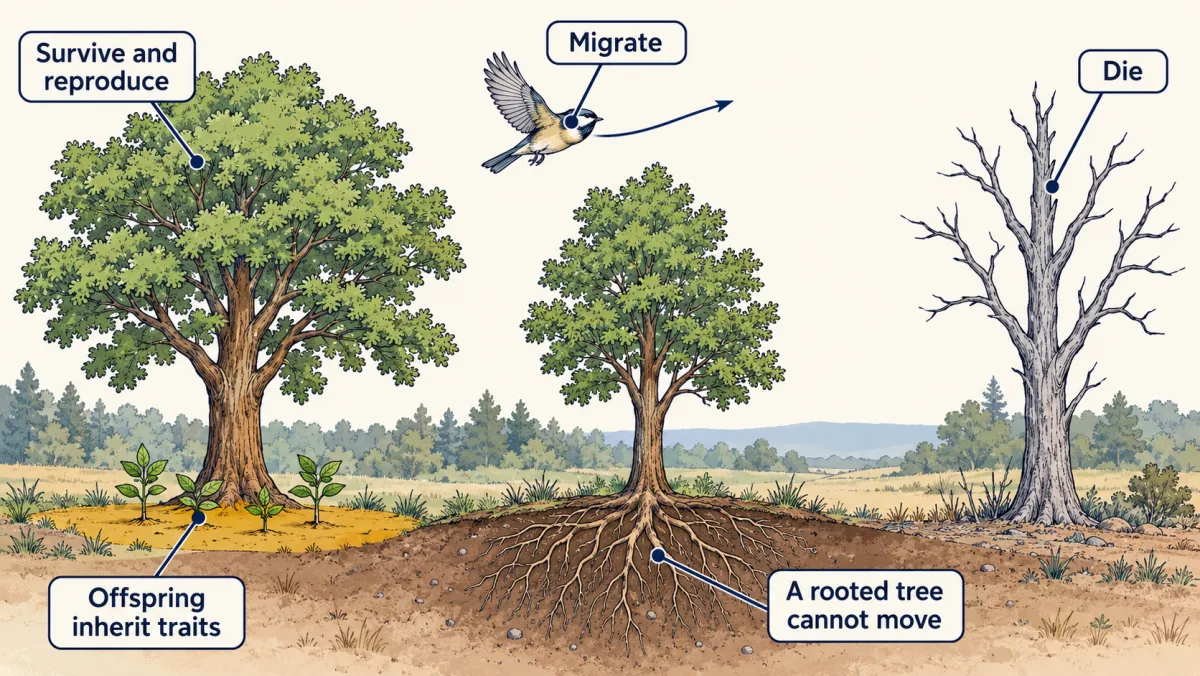
When the environment changes, some members of a population die and some live; living members may reproduce, and some migrate. A bird can fly away; a rooted tree cannot, though its seeds can spread over many years. AI-generated illustration -
Explain: four changes that challenge populations
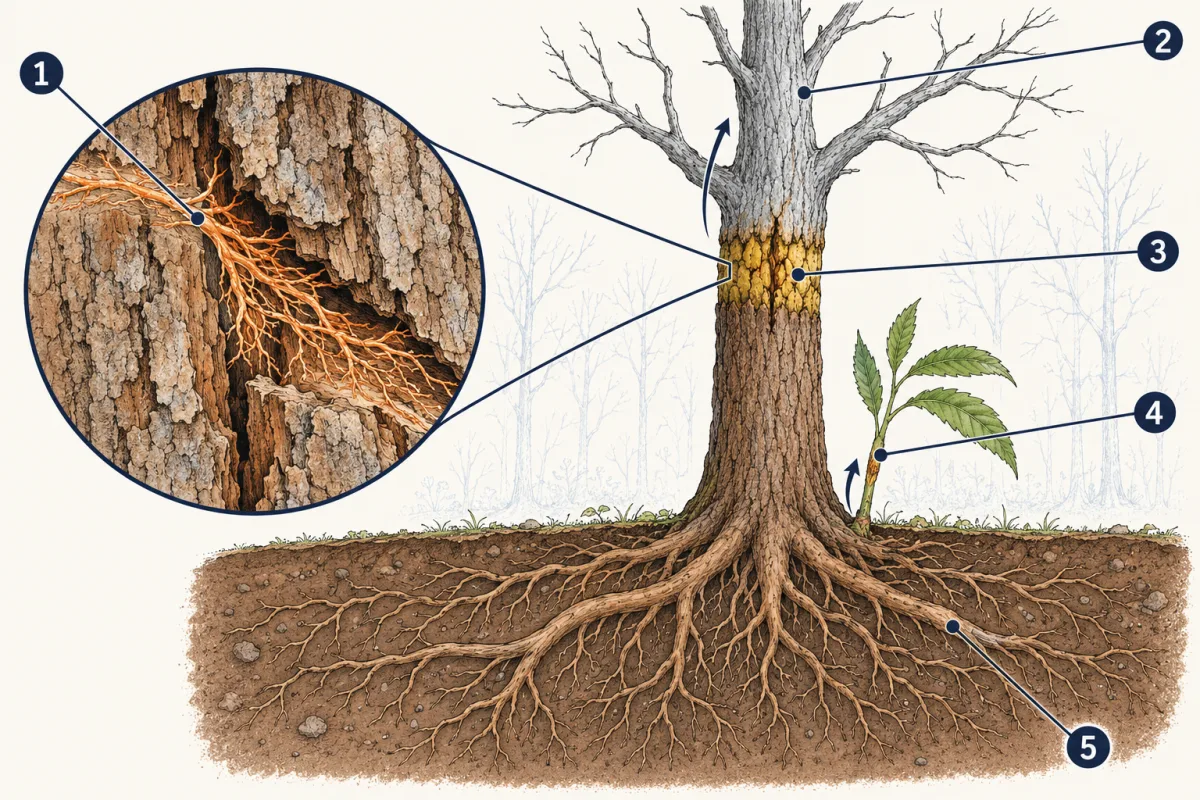
- blight fungus
- dead trunk
- canker
- sprout
- roots
-
Explain: why variation matters
-
Elaborate: read the chestnut data
-
Test whether breeding helped
-
Evaluate: check your thinking
-
Going deeper
Where this lesson fits
Before thisReview first
- Natural Selection in ActionThis course · Lesson 32
The lesson says helpful inherited traits become more common, as shown there, and uses that idea for survivors.
- Mutations and VariationThis course · Lesson 31
You need to know where inherited differences come from to see why a varied population is more likely to have survivors.
- People Change HabitatsThis course · Lesson 25
Habitat loss and invasive species, like blue catfish, are two of the four changes used here.
After thisStudy next
- Variation and SurvivalOne level up · Biology
It takes the idea further by showing how variation lets a population change when conditions shift.
Elsewhere on the siteFilms, simulations and method films in other courses
- The Drought Sorts a PopulationFilm · Biology
It shows a drought sorting a population so that carriers of helpful inherited traits leave more offspring.
Suggested by an AI model from the lessons themselves, then checked. How we use AI