The Drought Sorts a Population
Read the transcript of “The Drought Sorts a Population”
Film transcript: The Drought Sorts a Population
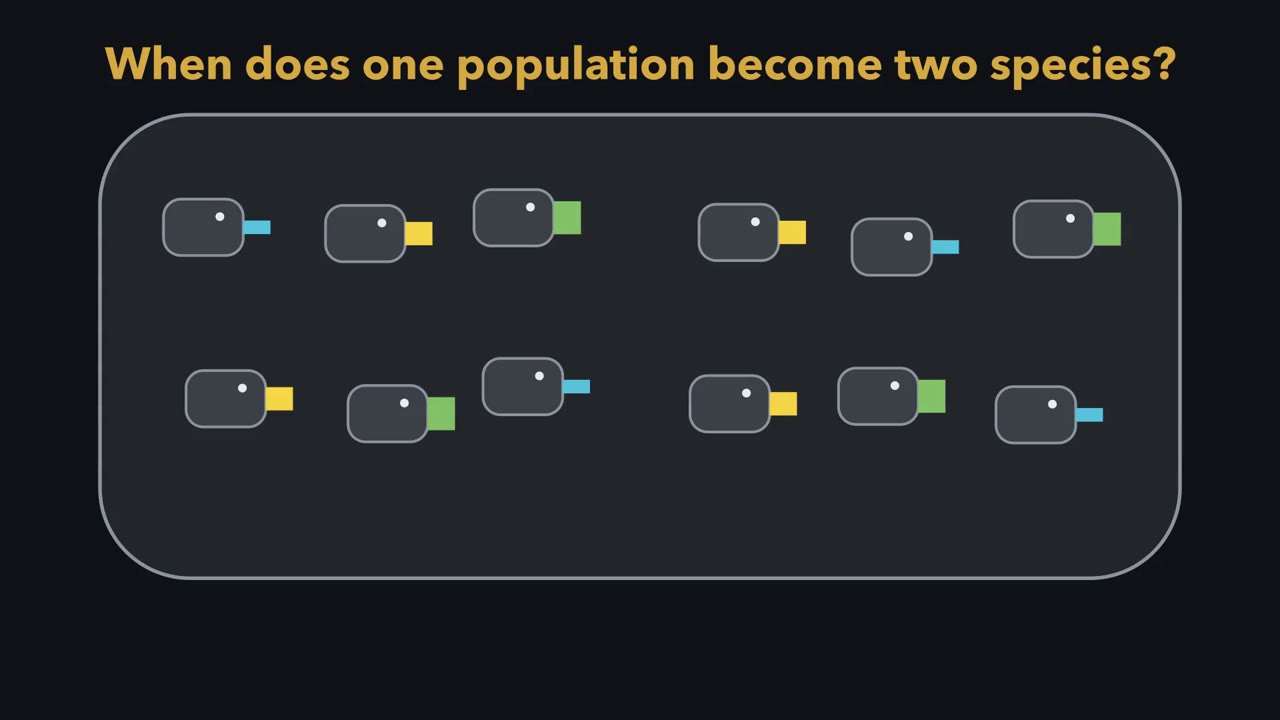
Did the drought reshape these finches, or change which birds remained? On Daphne Major, most medium ground finches died during a severe drought. Researchers had measured their beaks beforehand. The survivors had deeper beaks on average. Watch the population, not one changing bird. Before the drought, beak depth varied. Beak depth is the height of the beak at its base. Blue birds had shallower beaks, yellow birds had middle beaks, and green birds had deeper beaks. These differences existed before conditions changed. Variation gives the environment something to sort. Then drought changed the food.
Small, soft seeds became scarce, while large, hard seeds remained. Deeper beaks could crack those hard seeds. Which birds do you predict will contribute more young to the next generation? Follow the colours already on screen.
More green birds survive in this simple picture, but some birds of every colour remain. The groups overlap. A deep beak improves the chance of survival here; it does not guarantee survival. A helpful trait depends on the present environment. Survival alone does not finish the mechanism. Beak size is strongly inherited, so parents and young tend to resemble each other. The survivors breed. Their young form another mixed population, now with deeper beaks more common on average. That makes change possible across generations, not within one life. Researchers did not guess which birds survived. Each measured bird had a numbered band before the drought.
Later, the team checked which measured birds remained. Comparing the groups connects earlier beak depth with survival. It shows an association, not a promise about every bird. Parents and young provide separate inheritance evidence. This is natural selection. It needs variation, inheritance, and unequal reproductive success.
Inherited traits spread when their carriers leave more reproducing offspring. Fitness means that contribution to the next generation. It does not simply mean strength, health, or a long life. Mutation supplies new gene versions, and sexual reproduction shuffles them into new combinations. Selection does not produce a trait because organisms need it. It sorts inherited variation that is present, including mutations as they arise. No finch changed its own beak. The advantage is not permanent. If rainfall and seeds change, selection can change direction.
Chance and arrivals from other populations can shift traits too. The drought did not reshape any beak. It changed which birds survived and bred. The next generation carried the population change.
Did a drought reshape the finches on one small island, or change which birds were left?
Continue in the lesson: Natural Selection and New Species →
3:33 · Free, with captions and a transcript. The lesson has the full text, the questions and the sources.
More films from this lesson
How this film was made. Narration: written from this lesson's text and read by an AI narrator voice (Kokoro, af_heart). Animation: AI-generated in code (Manim) by Claude, a schematic with no drawn molecular structures. Captions come from the narration script. See something wrong? Report it.