Life Science · Skim version
Evidence for Change Over Time
Read the full lesson → Skim the whole course →
The guiding idea
How can a scallop shell millions of years old, a bat wing and a protein in your cells all tell the same story?
Fossils reveal life's change through time, even with gaps; matching structures and protein sequences point to common ancestry.
From the film: What the Rocks Still Show
- Fossils reveal life's change through time, even with gaps.
- Fossils are preserved remains or traces of living things from the past.
- Fossils record past life, extinction, change and environments.
- A gap limits the story but does not erase the evidence around it.
From the film: Two Clues, One Family Tree
- Matching structures and protein sequences point to common ancestry.
- Compare body parts by their construction and position, not only their job.
- Fewer differences in the same protein usually point to closer relatives.
- When clues conflict, scientists check more evidence.
- When independent clues agree, their shared branch is the stronger explanation.
-
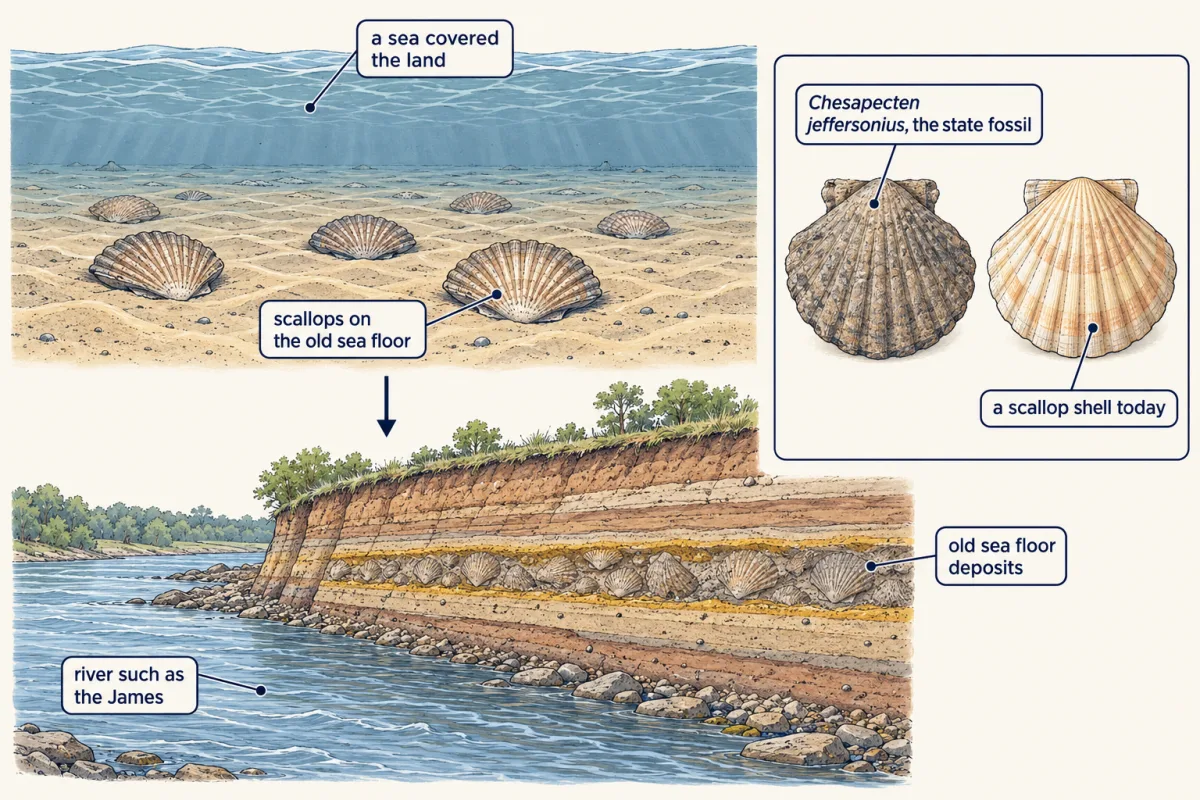
A fossil scallop in Virginia's old sea-floor deposits records both past life and a past environment. AI-generated illustration -
Read the fossil record
-
Compare the same parts
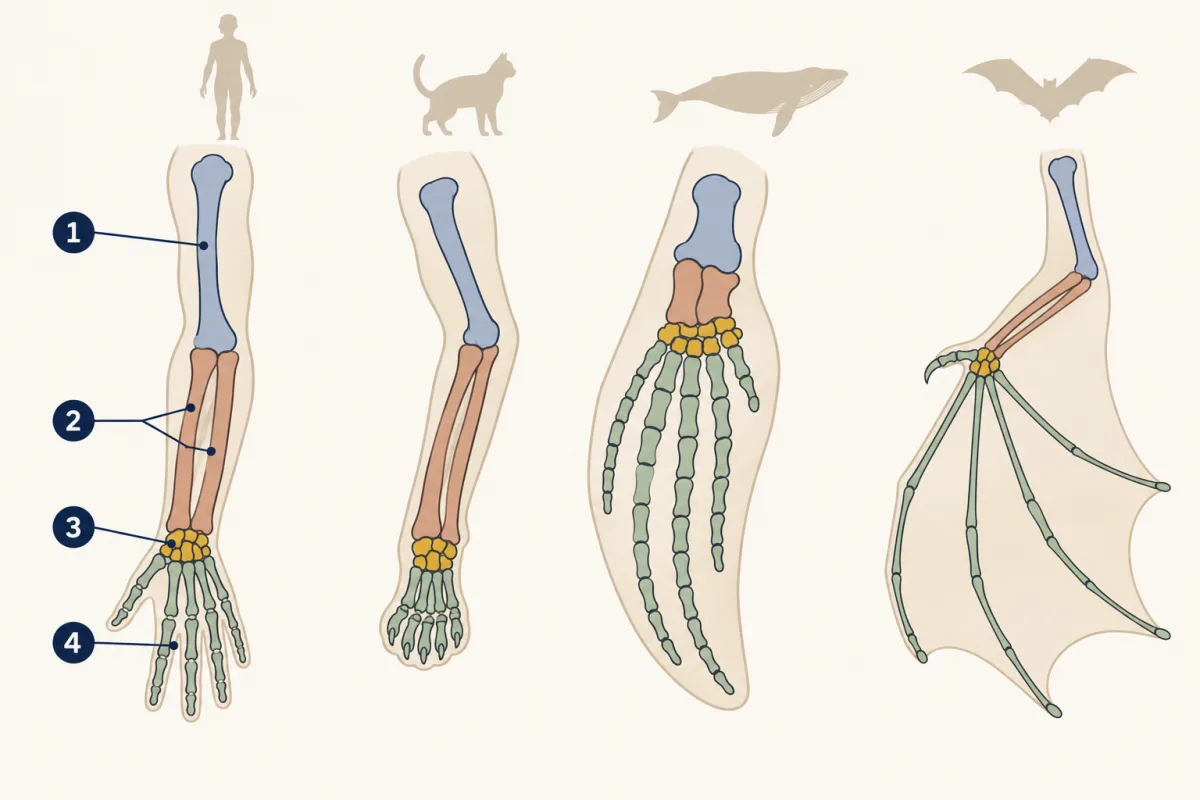
- upper arm bone
- two lower arm bones
- wrist bones
- finger bones
-
Compare sequences
-
Explore: build an evidence board
-
Work with real protein data
-
Why scientists call it a theory
-
Design problem: model burial and decay
-
Going deeper: Virginia’s changing coast
-
Evaluate: check your thinking
Where this lesson fits
Before thisReview first
- DNA: The Code of LifeThis course · Lesson 27
This lesson compares protein differences that come from DNA differences, so you need to know DNA codes for proteins.
- Natural Selection in ActionThis course · Lesson 32
Here you use the idea that populations change over time through natural selection to explain why old and living forms differ.
- Domains, Kingdoms and DNAThis course · Lesson 8
You need to know how DNA evidence helps sort living things into groups before using it to judge relatives.
After thisStudy next
- Extinction and SurvivalThis course · Lesson 34
It uses the fossil pattern of groups dying out and asks what causes extinction and what lets others survive.
Elsewhere on the siteFilms, simulations and method films in other courses
- Rock layers and DNASimulation · Biology
Its rock layers and DNA simulation lets you test fossil and DNA clues for the same ancestry.
- Which Similarities Reveal Relatives?Film · Biology
It shows how shared traits point to the closest relatives, as you do with bones and proteins.
Suggested by an AI model from the lessons themselves, then checked. How we use AI