Physiology · Skim version
Sexual Differentiation and the Testis
Read the full lesson → Skim the whole course →
The guiding idea
An AMH-null male mouse can make sperm and retain a uterus. Which testicular signals have separated?
A gonad becomes a testis because SRY raises SOX9 and turns supporting cells into Sertoli cells.
-
Making a testis: SRY flips the supporting cells
-
Two ducts, two jobs, two signals
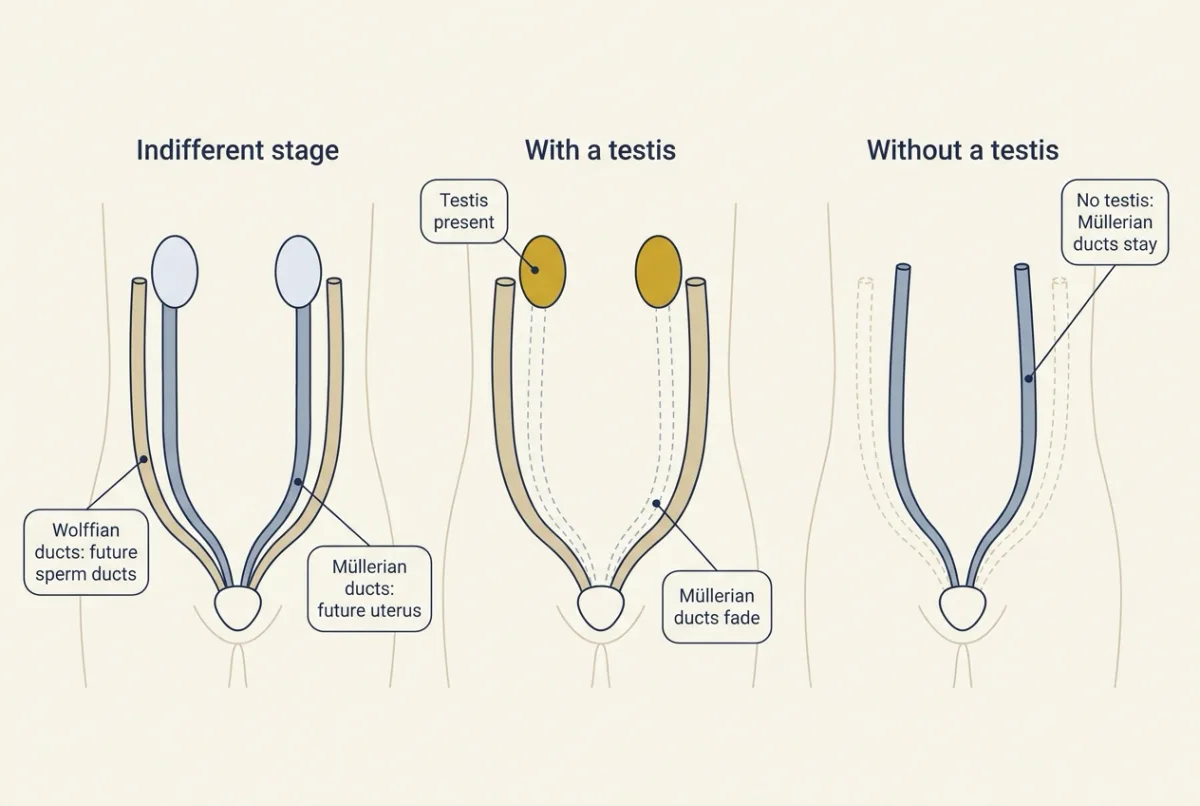
Both duct pairs are built in every embryo, and only one set is kept: the testis decides which, so it must remove one pair and rescue the other. AI-generated illustration -
The outside needs DHT (in humans)
-
The adult testis: the same two cells, two compartments
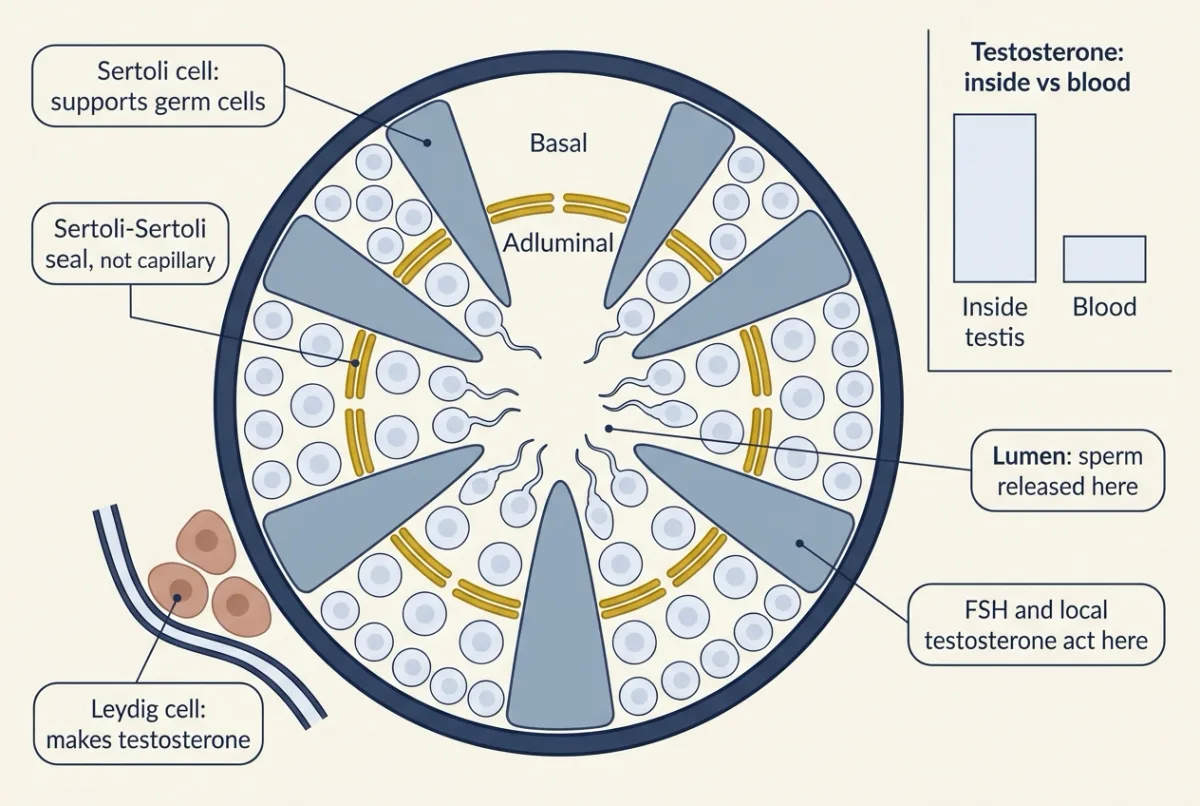
The seal that splits the tubule lies between neighbouring Sertoli cells, not in the capillary wall, and the testosterone the germ cells read is the high local supply from Leydig cells next door, not the amount in blood. AI-generated illustration -
A sperm ejaculated today began developing about two and a half months ago
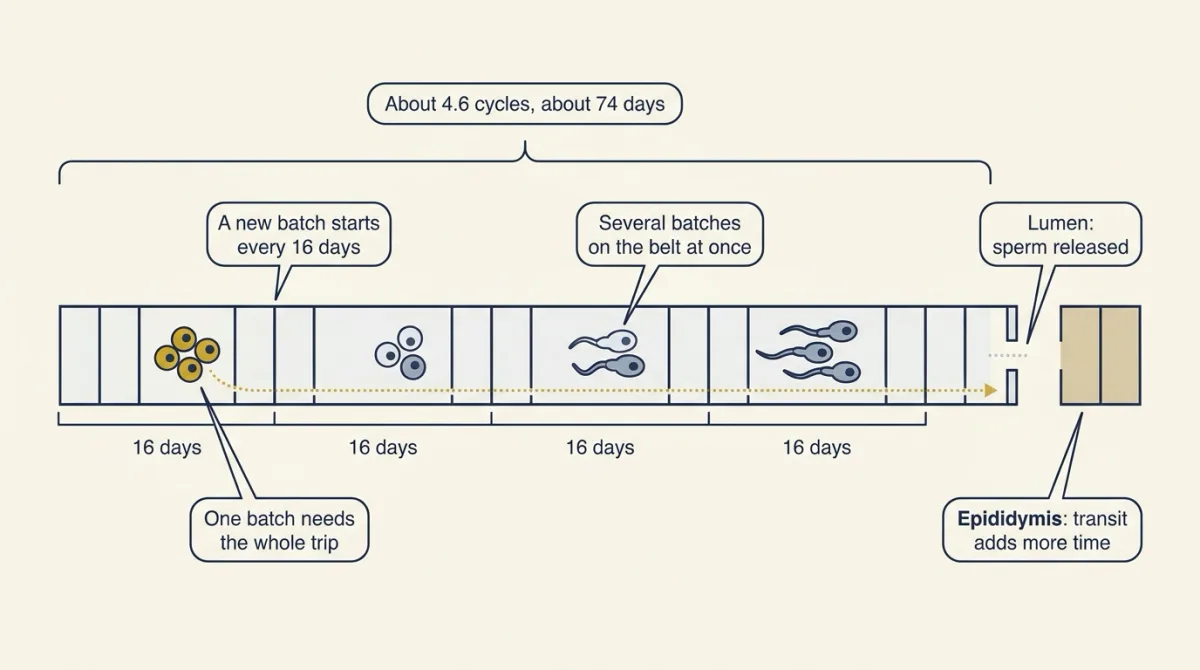
A new batch starts every 16 days while any one batch needs about 74 days to finish, which is why several batches are in flight at once and why a change in production shows up in semen weeks to months later. AI-generated illustration -
Erection and ejaculation: three phases, three outflows
-
Going deeper
Where this lesson fits
Before thisReview first
- Endocrine Axes and How to Test ThemThis course · Lesson 2
You need the feedback logic of hormone axes from there to see why injected testosterone lowers LH and sperm output.
- The Adrenal Cortex and MedullaThis course · Lesson 20
The shared steroid-making machinery and cholesterol handling used by Leydig cells are laid out there.
- Smooth Muscle and the Myogenic ResponseThis course · Lesson 4
Erection rests on smooth-muscle relaxation in blood vessels and erectile tissue, which that lesson explains.
After thisStudy next
- The Ovarian Cycle and FertilityThis course · Lesson 28
It applies the same gonadotropin feedback loop to the ovary, the other half of the reproductive axis.
Elsewhere on the siteFilms, simulations and method films in other courses
- Gene targeting: knockout and knock-in miceMethod film
The lesson's AMH-null and receptor-deletion mice rely on knockout gene targeting.
- Cre-lox and binary expression systemsMethod film
The Sertoli androgen receptor deletions use cell-specific Cre-lox deletion.
- Tissue grafting and transplantationMethod film
Jost's fetal rabbit gonadectomy is surgical removal that shows which testicular signal does which job.
Suggested by an AI model from the lessons themselves, then checked. How we use AI