Biology · Skim version
Mendel and Punnett Squares
Read the full lesson → Skim the whole course →
The guiding idea
How can white flowers disappear in one generation, then return in the next?
Allele separation creates inheritance chances; Punnett squares organize, not guarantee, outcomes.
From the film: Where the White Was Hiding
- Allele separation creates inheritance chances; Punnett squares organize, not guarantee, outcomes.
- A Pp parent makes P and p sex cells in about equal numbers.
- Two Pp parents can produce PP, Pp or pp offspring.
- With complete dominance, PP and Pp are purple while pp is white.
- The four boxes are equally likely outcomes, not four promised offspring.
From the film: Two Genes, Sixteen Chances
- Genes that sort independently turn four sex-cell types into 9:3:3:1 chances.
- An RrYy parent makes RY, Ry, rY and ry sex cells, each with a 1 in 4 chance.
- Only 1 box in 16, rryy, gives wrinkled green seeds.
- Real counts scatter around the prediction; larger samples usually come closer.
- Linked genes, close together on one chromosome, can depart from 9:3:3:1.
-
Explore: cross two plants and count the offspring
-
The hidden allele
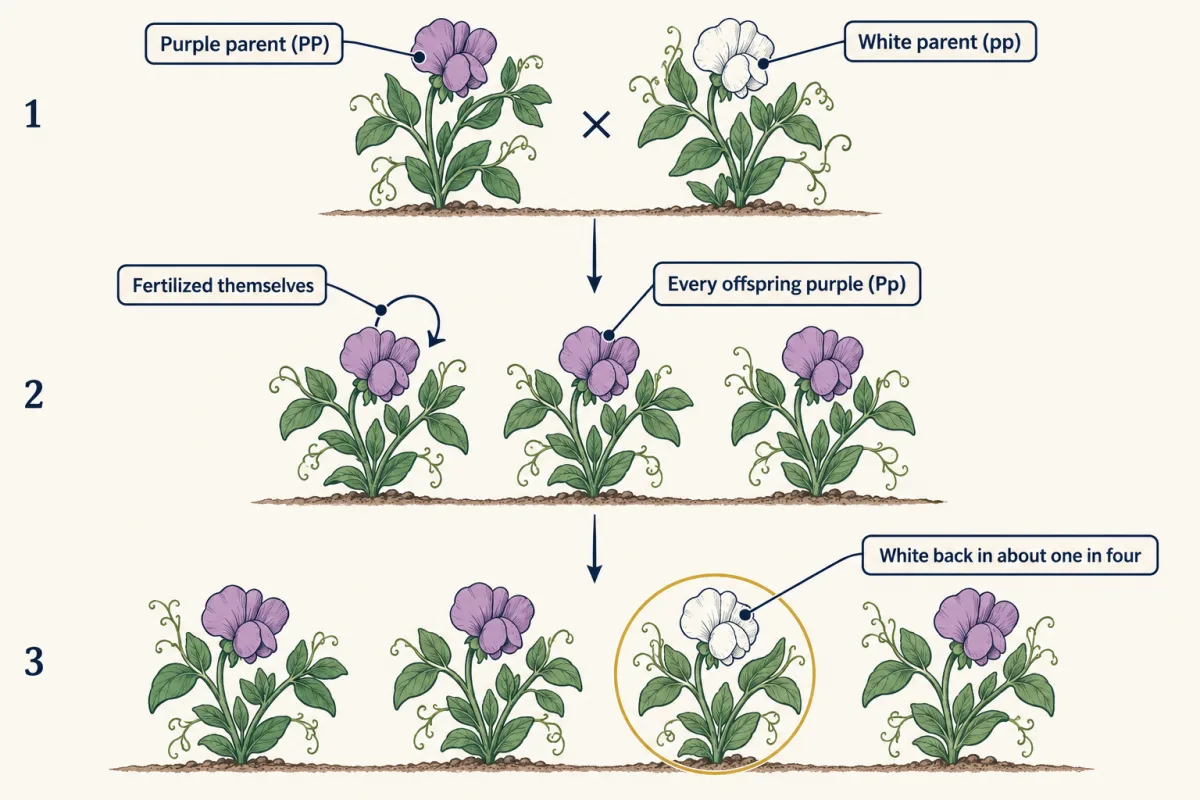
Each purple first-generation plant carried the recessive allele, allowing white flowers to return in the next generation. AI-generated illustration -
Build a one-gene Punnett square
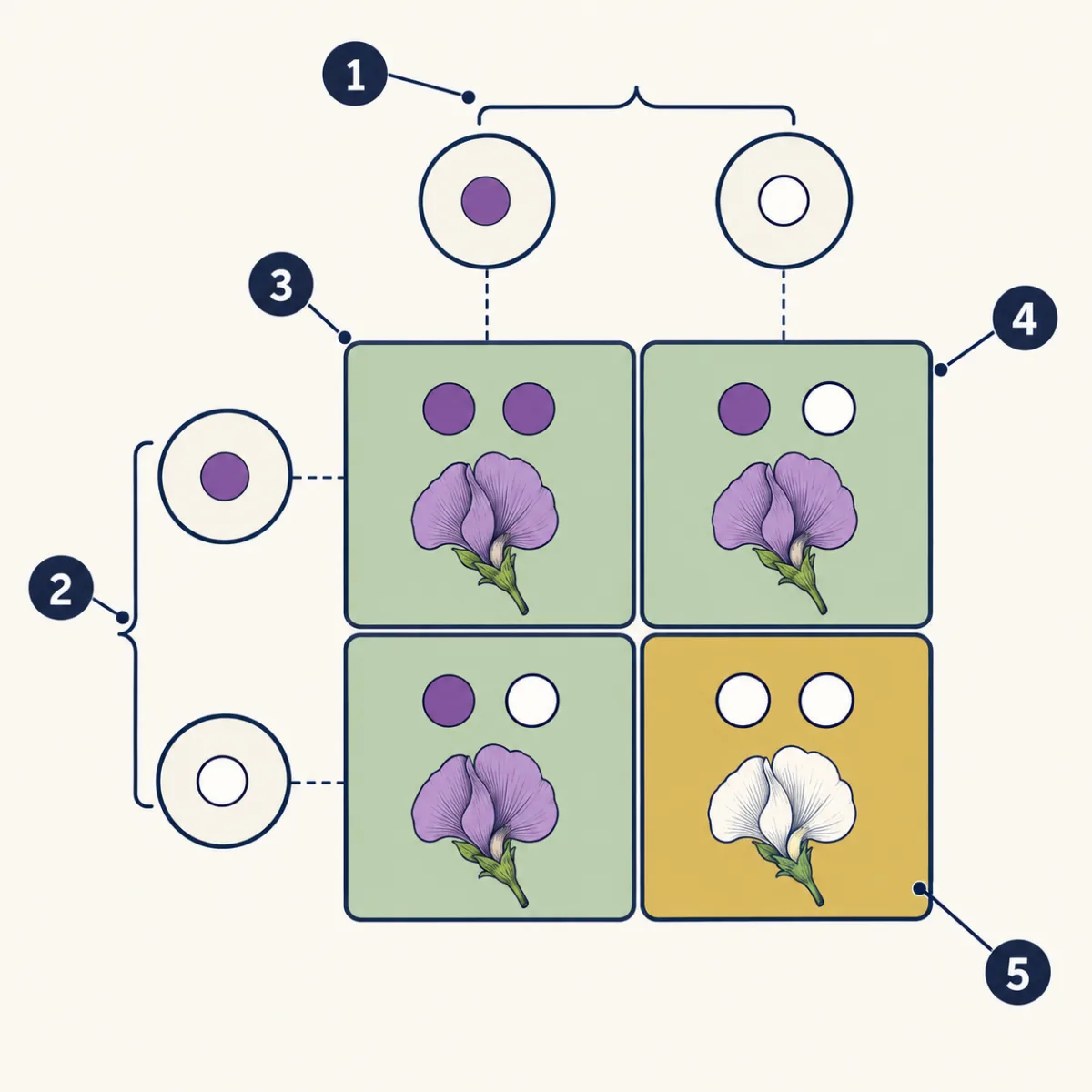
- one parent’s sex cells
- the other parent’s sex cells
- homozygous dominant
- heterozygous
- homozygous recessive
-
Two genes at once
-
Test the model against Mendel’s counts
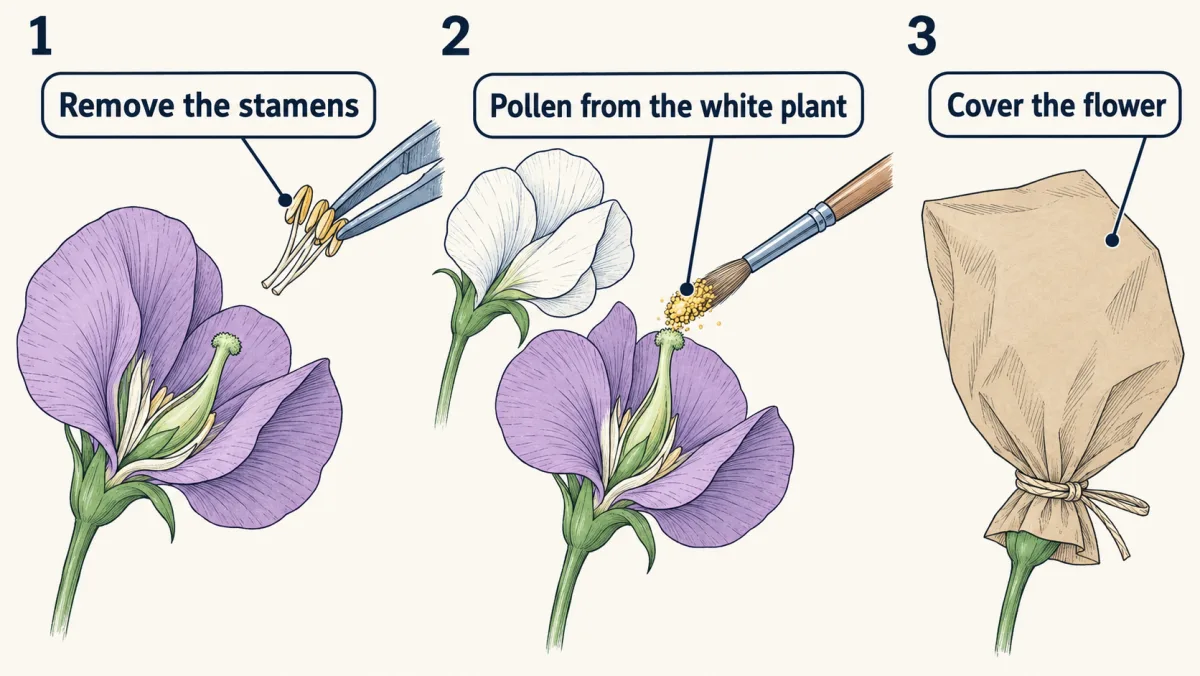
Removing stamens, adding chosen pollen and covering the flower keeps both parents of each seed known. AI-generated illustration -
Evaluate: check your thinking
Where this lesson fits
Before thisReview first
- Meiosis and VariationThis course · Lesson 19
You need to know how meiosis separates alleles into sex cells to see why each one carries a 50 percent chance.
After thisStudy next
- Beyond Dominant and RecessiveThis course · Lesson 21
It uses the same square but with patterns where heterozygotes look different, so the 3:1 ratio no longer holds.
- Engineering GenesThis course · Lesson 22
Moving a gene between organisms builds on knowing how alleles pass on and combine.
- Variation and SurvivalThis course · Lesson 27
Inherited variation from allele shuffling is what selection acts on in a population.
Elsewhere on the siteFilms, simulations and method films in other courses
- Breed pea plantsSimulation · Life Science
Breeding pea plants in this simulation lets you practise one-gene crosses and see chances turn into real counts.
Suggested by an AI model from the lessons themselves, then checked. How we use AI