Life Science · Skim version
Populations Rise and Fall
Read the full lesson → Skim the whole course →
The guiding idea
How can the Bay's blue crab estimate more than double when the Bay does not get bigger?
Populations rise when additions exceed losses, and fall when losses exceed additions.
From the film: Four Ways a Population Changes
- Populations rise when additions exceed losses, and fall when losses exceed additions.
- Births and arrivals are additions; deaths and departures are losses.
- A survey estimate can change sharply even when the place stays the same size.
- A limiting factor changes at least one addition or loss.
From the film: What Pushes the Four Arrows?
- Populations rise when additions exceed losses, and fall when losses exceed additions.
- Biotic factors are living; abiotic factors are nonliving.
- Natural events and human actions can change the same additions and losses.
- Harvest limits can reduce one loss and leave more adults to reproduce, but recovery is not certain.
-
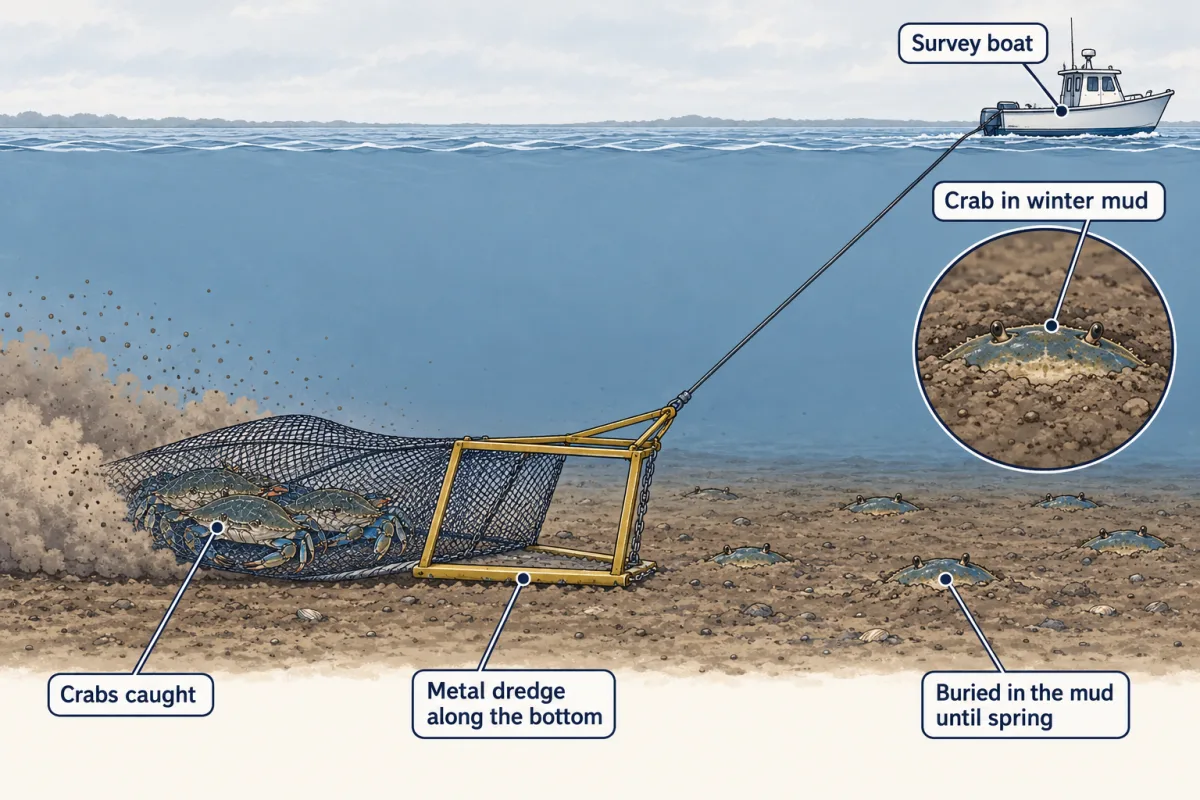
Catches from many winter dredge sites let scientists estimate the whole Bay's crab population without counting every crab. AI-generated illustration -
Explain: what makes a population grow or shrink
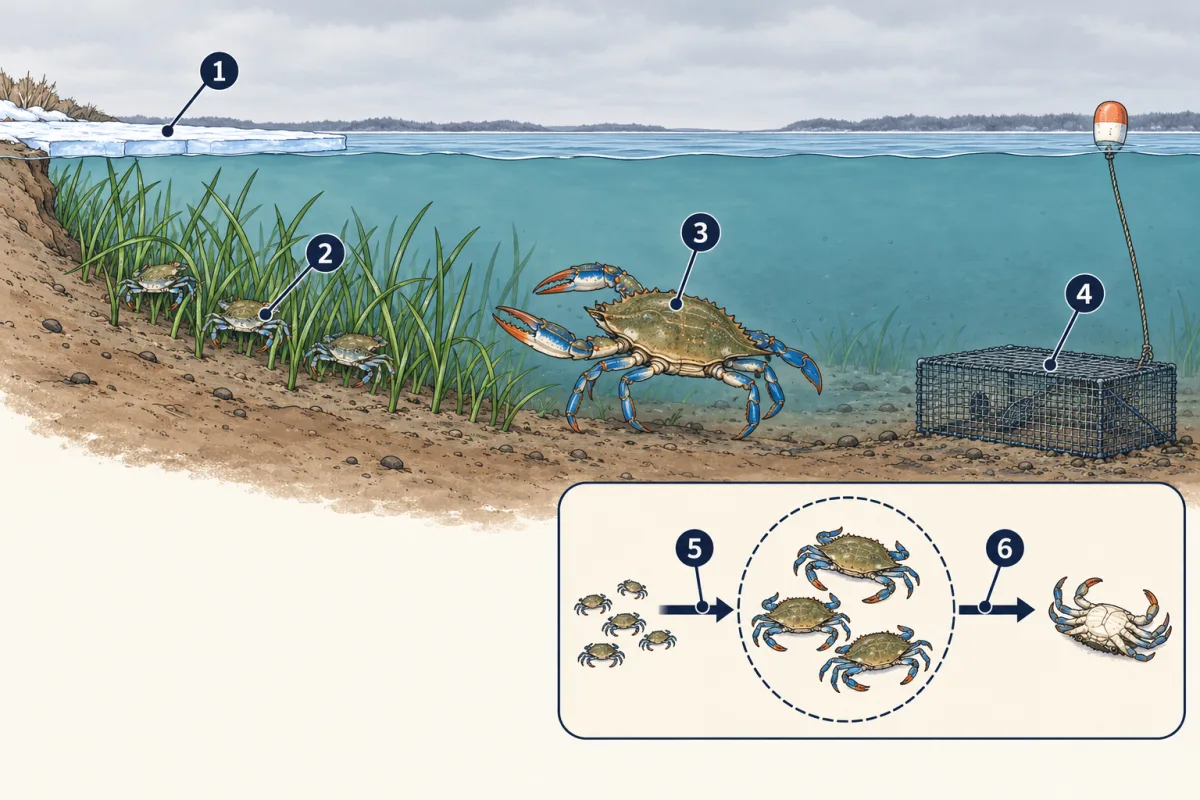
- very cold winter
- young crabs
- big crabs
- harvest
- births
- deaths
-
Explore: run a crab cove for ten years
-
Explain: natural causes and human causes
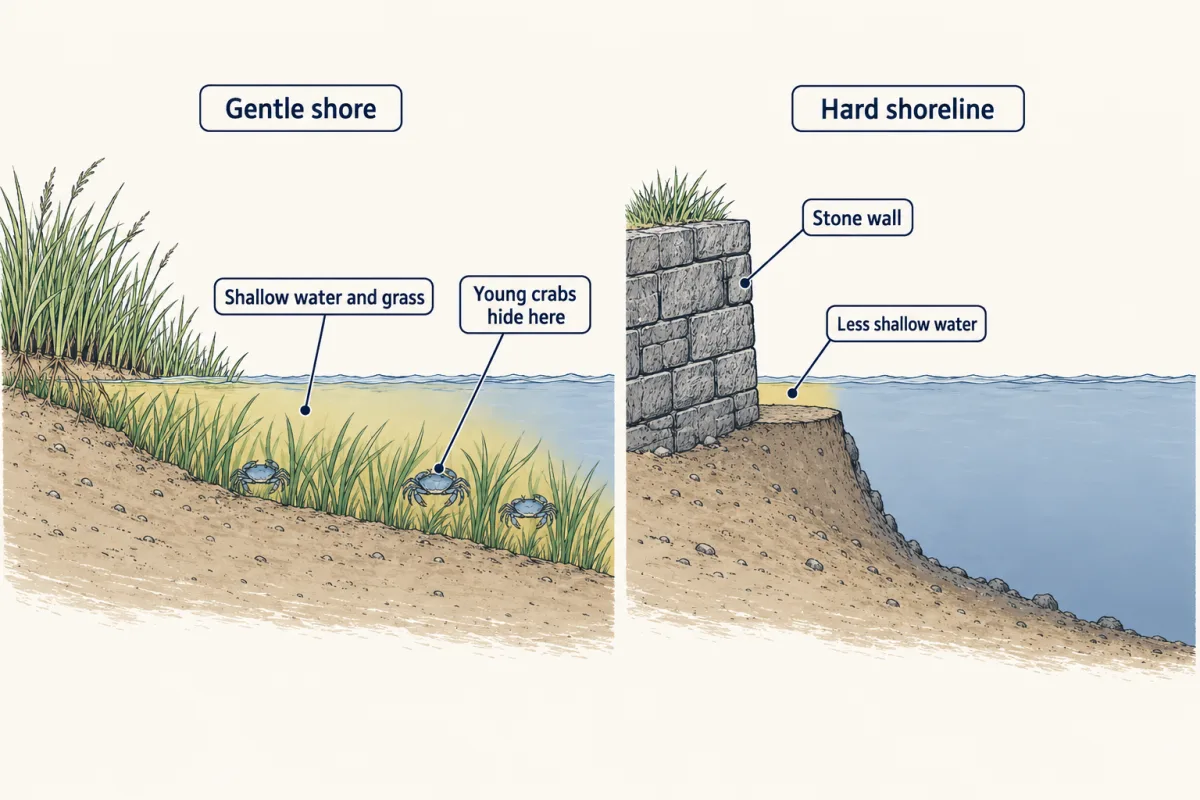
Stone walls and other hard shorelines can shrink the shallow water where young crabs hide. AI-generated illustration -
Explain: limits that help a population recover
-
Elaborate: read the winter crab survey
-
Evaluate: check your thinking
-
Going deeper
Where this lesson fits
Before thisReview first
- Competition and CooperationThis course · Lesson 17
It introduced limited resources and limiting factors like food and shelter, which this lesson uses to explain why populations change.
- Predators and PreyThis course · Lesson 16
You need how predators remove prey, a loss arrow, to see why big crabs eating young crabs shrinks the population.
- Habitat and NicheThis course · Lesson 19
It explains how habitat and shelter affect where a species lives, which this lesson uses for grass and range shifts.
After thisStudy next
- Big Changes: Dead Zones, Storms and ClimateThis course · Lesson 24
It follows pollution and other large changes in the Bay to dead zones that raise losses for crabs and fish.
- People Change HabitatsThis course · Lesson 25
It builds on human causes of population change by showing how habitat change and new species alter additions and losses.
- Helping Ecosystems RecoverThis course · Lesson 26
It takes the idea that limits can help recovery and shows how people bring back a declining population.
Elsewhere on the siteFilms, simulations and method films in other courses
- Grow a population, then add limitsSimulation · Biology
Add limits to a growing population and watch how crab-like numbers level off.
Suggested by an AI model from the lessons themselves, then checked. How we use AI