Life Science · Skim version
People Change Habitats
Read the full lesson → Skim the whole course →
The guiding idea
People put blue catfish into Virginia rivers for fishing, so what could that mean for the crabs and native fish already living there?
When people change an ecosystem, populations may rise or fall.
From the film: One Change, Many Ripples
- When people change an ecosystem, populations may rise or fall.
- A habitat is where an organism lives and finds the food, water and shelter it needs.
- Species may compete when they need the same limited resource, even without a fight.
- An invasive species is brought to a new place, spreads and causes harm; being new is not enough.
From the film: Reading the River's Record
- When people change an ecosystem, populations may rise or fall.
- A survey index tracks how common a fish is in the surveyed area; it is not a count of every fish.
- Compare each fish with itself over time, because the two indexes use different math and river areas.
- A survey shows a pattern, not its cause; competition is one possible explanation.
-
Explore: test a model river
-
Explain: follow the change
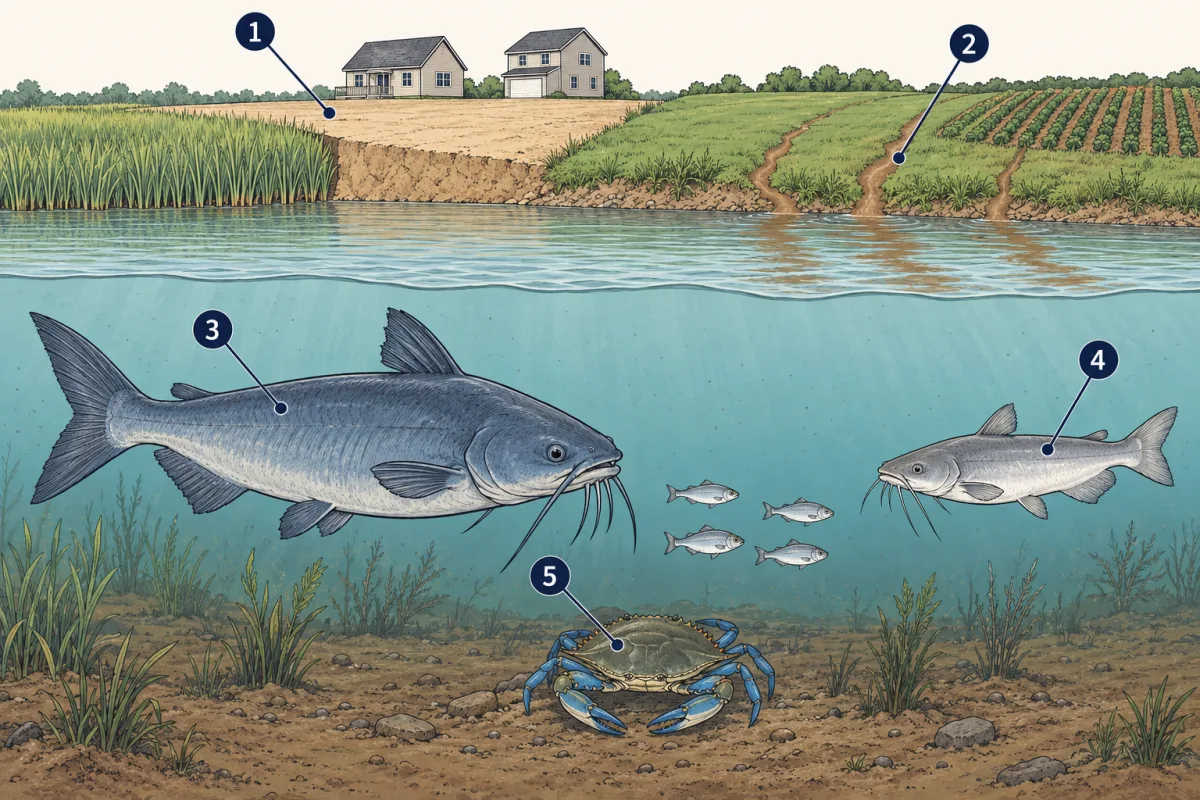
- habitat destruction
- pollution
- blue catfish
- white catfish
- blue crab
-
Explain: a new fish and shared food
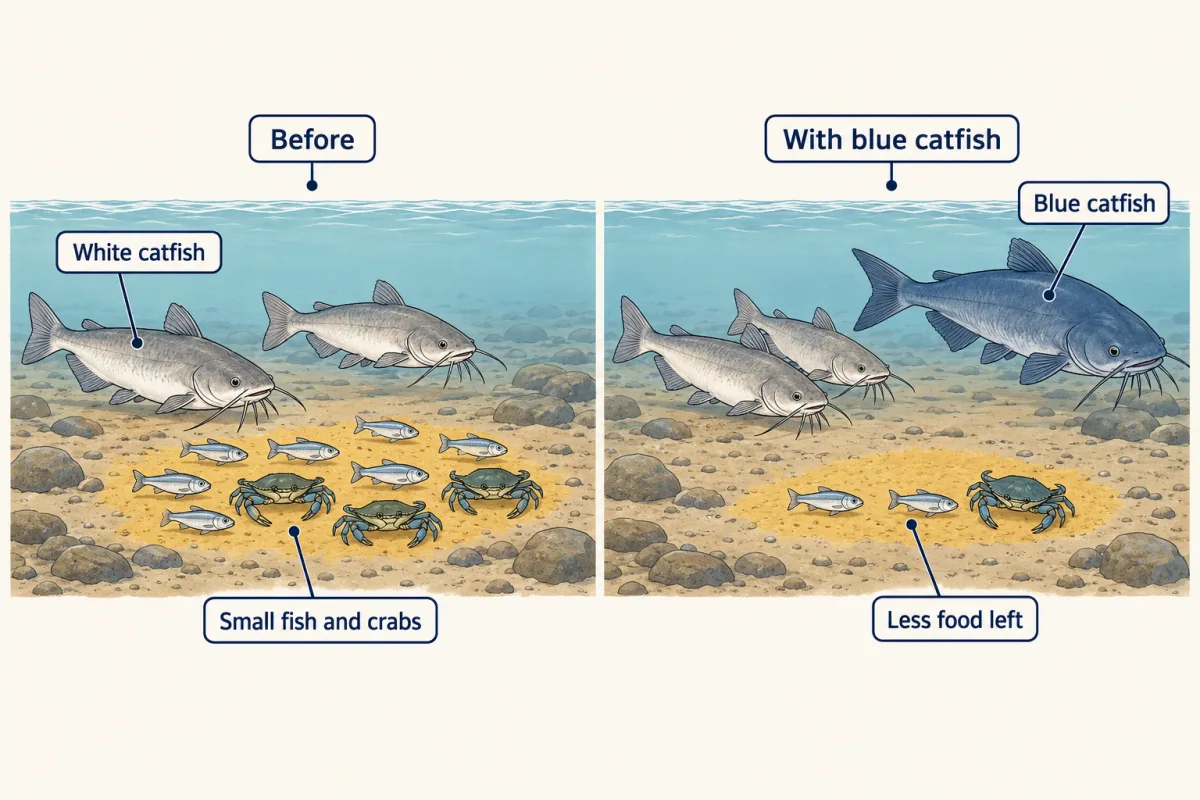
Competition needs a shared, limited resource, but it does not need a fight. AI-generated illustration -
Elaborate: read the James River surveys
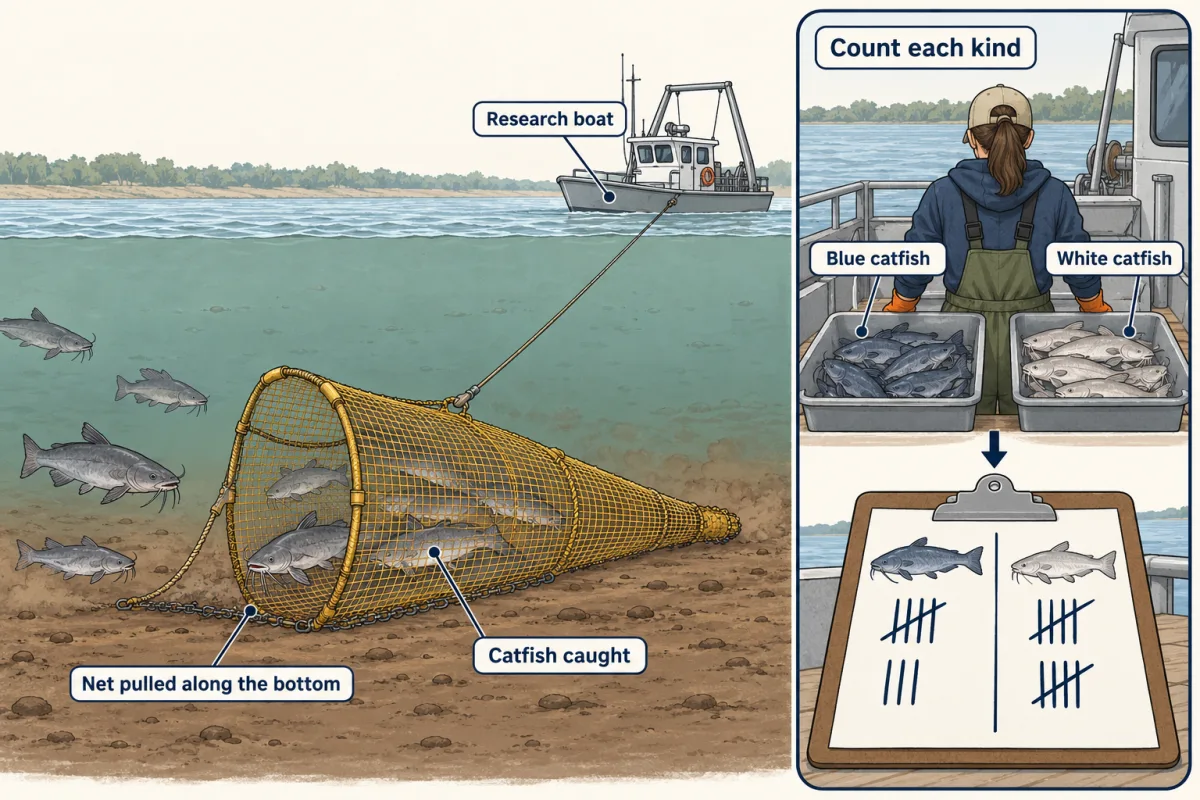
Repeated bottom tows become a survey index that tracks change, not a whole-river count. AI-generated illustration -
Evaluate: check your thinking
-
Going deeper
Where this lesson fits
Before thisReview first
- Food Webs and EnergyThis course · Lesson 12
You need food webs to see how one change in who eats whom spreads to other species.
- Competition and CooperationThis course · Lesson 17
This lesson uses competition for the same limited food, which that lesson teaches first.
- Populations Rise and FallThis course · Lesson 23
You need to know why populations go up and down before judging what people change.
After thisStudy next
- Helping Ecosystems RecoverThis course · Lesson 26
It uses the same rule to show people can help populations recover, as with eelgrass.
- Extinction and SurvivalThis course · Lesson 34
It takes the idea further, showing how an introduced fungus can wipe out a species and its forest.
Suggested by an AI model from the lessons themselves, then checked. How we use AI