Life Science · Skim version
Daily and Seasonal Rhythms
Read the full lesson → Skim the whole course →
The guiding idea
How does a cherry tree with no calendar know when to bloom, and why might that day change?
Inner rhythms and environmental cues time responses; long-term changes can shift them.
From the film: From One Day to One Year
- Inner rhythms and environmental cues time responses; long-term changes can shift them.
- A circadian rhythm repeats about every 24 hours; in many animals it continues for a while in steady darkness.
- A tropism is plant growth toward or away from something, not a repeating rhythm.
- Migration, dormancy and hibernation help organisms meet seasonal conditions.
- Many tree buds need winter cold before later warmth can open them.
From the film: When Nature's Calendar Shifts
- Inner rhythms and environmental cues time responses; long-term changes can shift them.
- A smaller day-of-year number means an earlier event.
- After the 1960s, the mean peak-bloom day moved earlier, though not in a steady line.
- The dates show a pattern, but they alone cannot prove what caused it.
-
Explore: turn the year dial
-
Explain: one day at a time
-
Explain: meeting the seasons
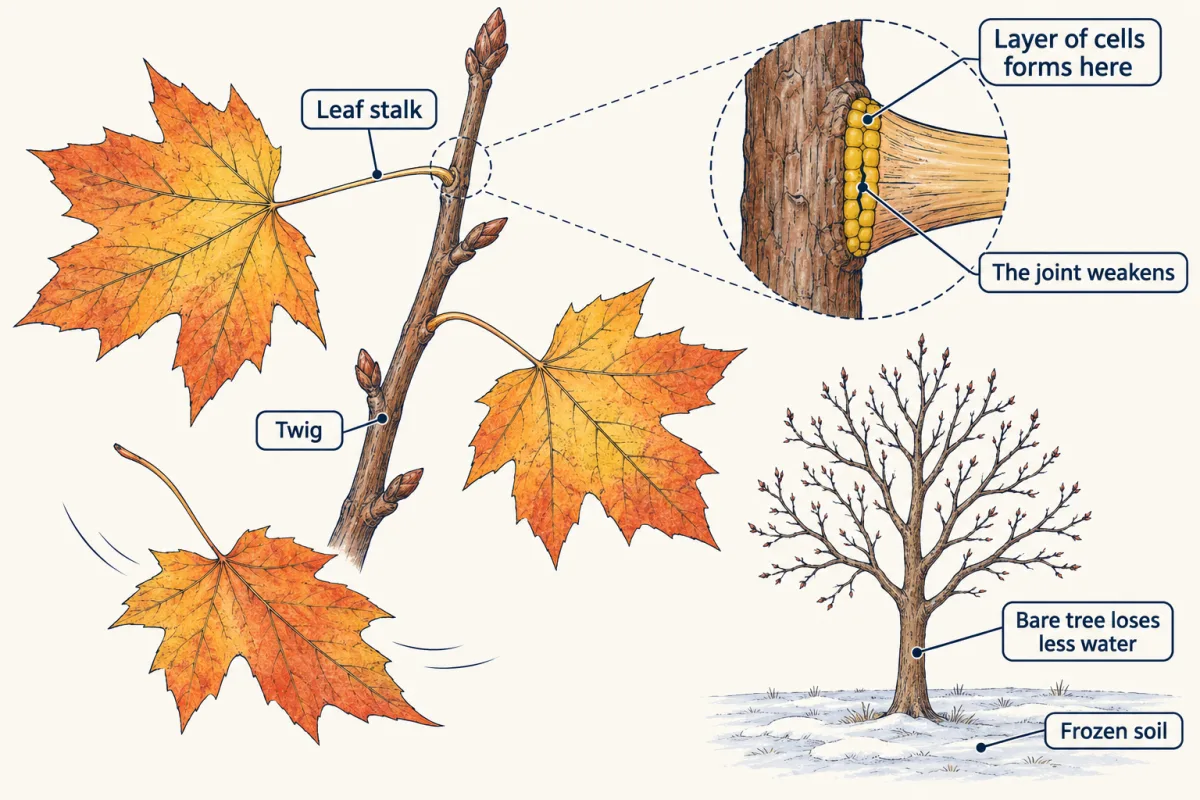
A deciduous tree drops its leaves along a cell band and loses less water while winter soil is frozen. AI-generated illustration -
Explain: when the long-term pattern shifts
-
Elaborate: a century of cherry blossoms
-
Evaluate: check your thinking
-
Going deeper
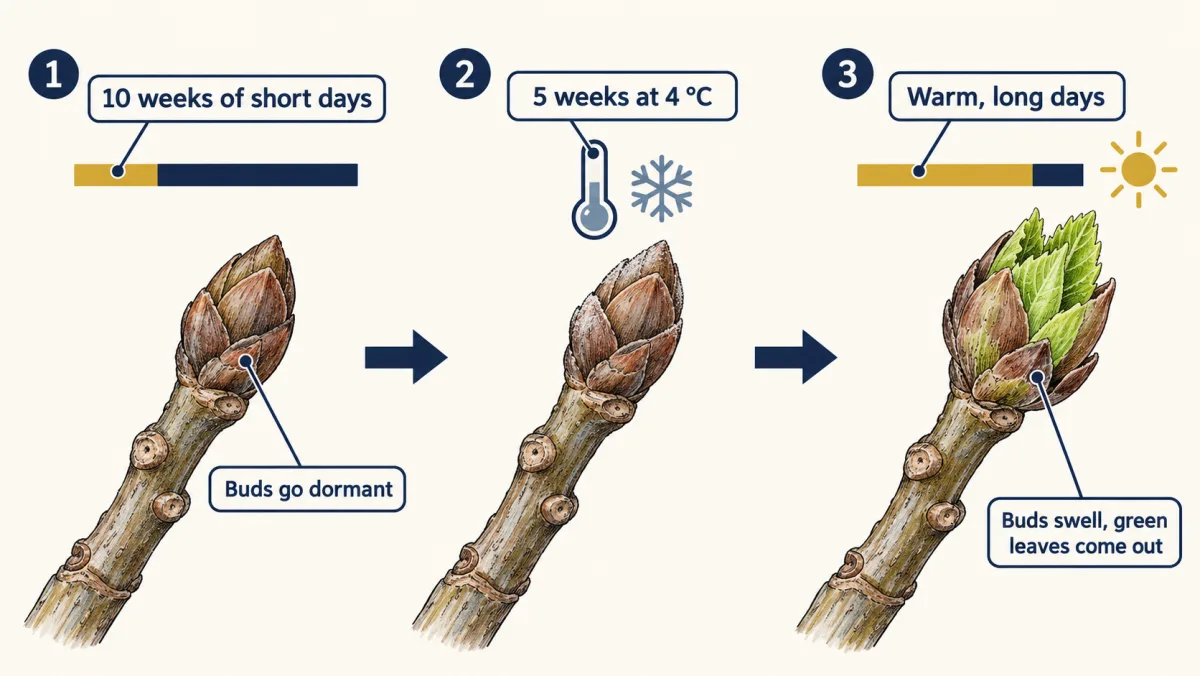
Aspen buds in this experiment opened after short days, winter cold and then warm, long days arrived in that order. AI-generated illustration
Where this lesson fits
Before thisReview first
- Adaptations for SurvivalThis course · Lesson 21
Hibernation, migration and dormancy are survival adaptations, and you need that idea to see why timing them matters.
- Producers, Consumers and DecomposersThis course · Lesson 13
Leaf drop and winter food shortage make more sense once you know how plants, animals and decomposers get matter and energy.
After thisStudy next
- Big Changes: Dead Zones, Storms and ClimateThis course · Lesson 24
It takes long-term environmental change further, showing climate and other big shifts changing whole ecosystems.
- Populations Rise and FallThis course · Lesson 23
Changing seasonal conditions and long-term shifts affect how many organisms live in a place.
Elsewhere on the siteFilms, simulations and method films in other courses
- Set Up: Sleep, Travel or Stay?Film · Biology Together
It shows which animals sleep through, travel from or stay in winter, the seasonal responses used here.
- Set Up: Adopt a TreeFilm · Biology Together
It shows how a tree changes through the seasons, such as bare winter branches that are not dead.
Suggested by an AI model from the lessons themselves, then checked. How we use AI