Biology · Skim version
Classification Changes
Read the full lesson → Skim the whole course →
The guiding idea
If some microbes look just like bacteria under a microscope, how could a molecule inside them show they belong to a different domain of life?
Classification changes when new evidence changes the best-supported picture of ancestry.
From the film: The Molecule Behind the Tree
- Classification changes when new evidence changes the best-supported picture of ancestry.
- Ribosomal RNA can be compared across all cellular life.
- A repeated pattern across comparisons matters more than one score.
- The 1977 rRNA evidence separated the methane makers, later called Archaea, from typical bacteria.
From the film: When Evidence Redraws a Branch
- Classification changes when new evidence changes the best-supported picture of ancestry.
- Scientists revise the classification model; organisms do not switch ancestry.
- New evidence can strengthen a branch instead of moving it.
- Different kinds of molecular evidence can test relationships suggested by appearance.
- A classification claim stays open to more evidence.
-
Explore: remodel a tree with new evidence
-
Build the model: evidence tests a tree
-
How ribosomal RNA exposed a hidden branch
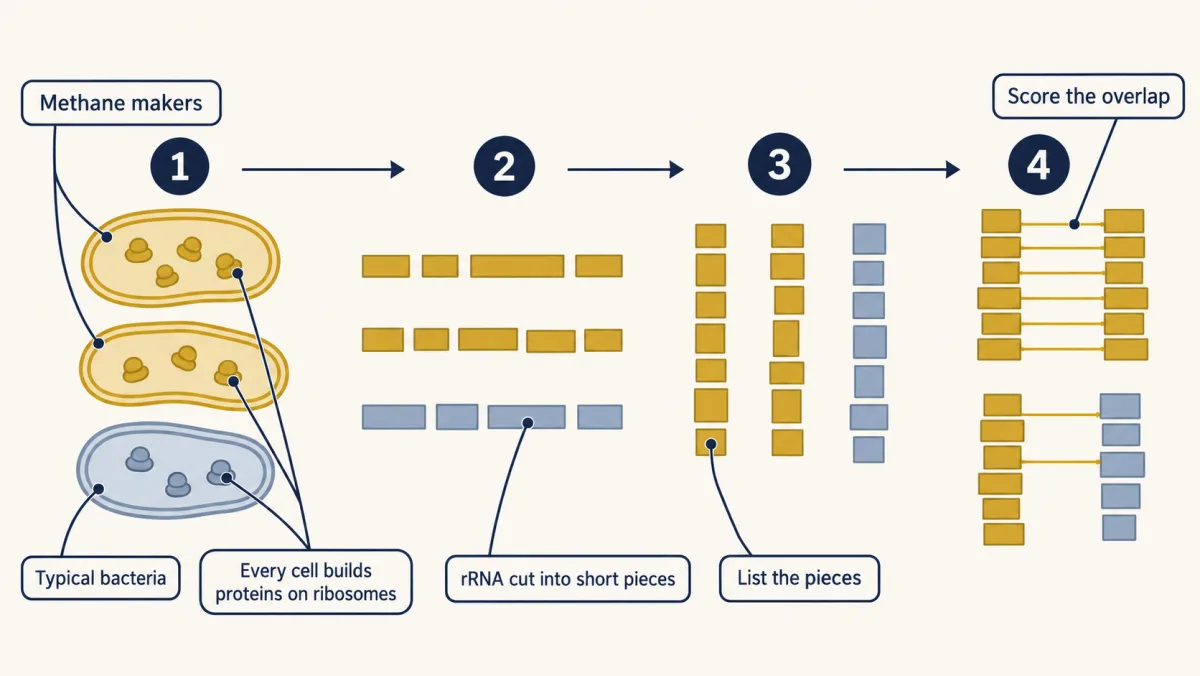
A repeated pattern of rRNA-piece overlap placed methane makers together and apart from typical bacteria. AI-generated illustration -
Other groups that moved
-
Use real data: the 1977 similarity scores
-
Going deeper: systems change, and testing continues
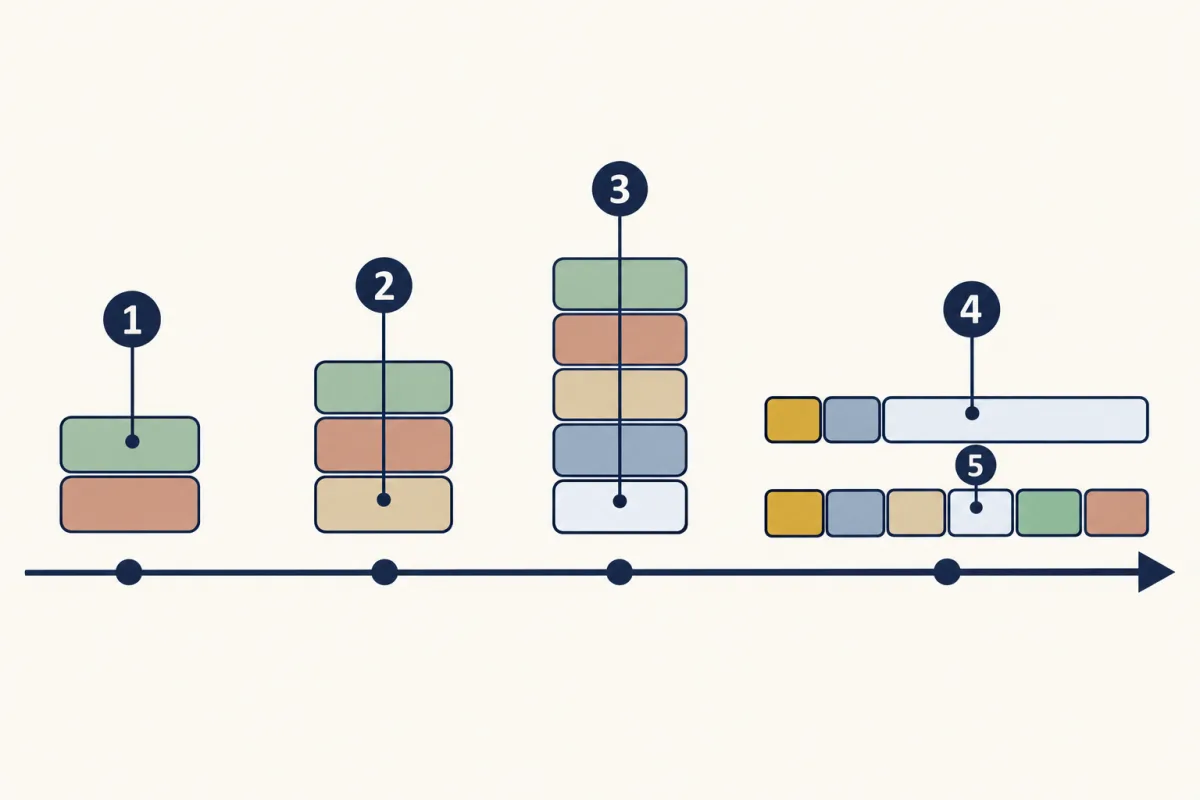
- plants or animals
- Protista added
- Five kingdoms
- Three domains
- six kingdoms
-
Evaluate: check your thinking
Where this lesson fits
Before thisReview first
- Domains and KingdomsThis course · Lesson 24
You need the three domains and the kingdoms from there to follow how the tree was reshaped here.
- Building a Tree of LifeThis course · Lesson 23
You need to read a branching tree of ancestry from there to see how new evidence moves a group.
- DNA: Structure and CopyingThis course · Lesson 16
You need to know DNA and RNA are chains of bases from there to follow sequence comparison here.
After thisStudy next
- Evidence for EvolutionThis course · Lesson 26
It uses molecular comparisons like rRNA similarity as evidence for shared ancestry among living things.
Elsewhere on the siteFilms, simulations and method films in other courses
- Look Alike, Far ApartFilm · Organismal Biology
It shows how Woese compared ribosomal RNA to show that look-alike microbes are distant relatives.
Suggested by an AI model from the lessons themselves, then checked. How we use AI