Biology · Skim version
Building a Tree of Life
Read the full lesson → Skim the whole course →
The guiding idea
A whale lives in the sea and has a body shaped like a fish, so why do biologists say its closest living relatives are hippos?
Trace shared derived traits to branch points to find the closest relatives.
From the film: Which Similarities Reveal Relatives?
- Trace shared derived traits to branch points to find the closest relatives.
- Overall shape can reflect a similar way of life instead of close ancestry.
- Body structures, embryos, fossils and DNA can provide inherited evidence.
- Scientists trust a grouping more when independent kinds of evidence agree.
From the film: Read the Branch Point
- Trace shared derived traits to branch points to find the closest relatives.
- A shared derived trait marks a group that inherited it from one ancestor.
- The closer pair meets at a more recent shared branch point.
- Rotating branches does not change the relationships.
-
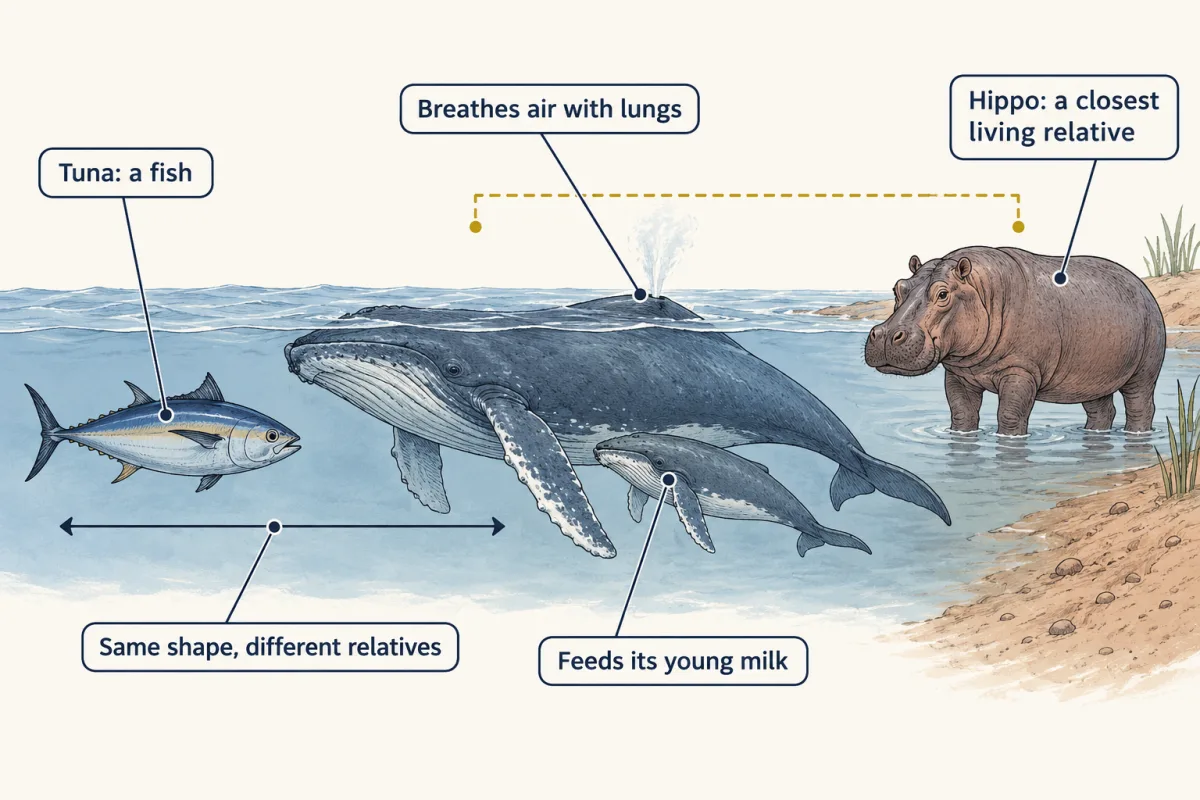
A whale's fishlike shape fits swimming, while its inherited mammal traits and DNA evidence place it with hippos. AI-generated illustration -
Explore: build a tree one trait at a time
-
Explain: the evidence for shared ancestry
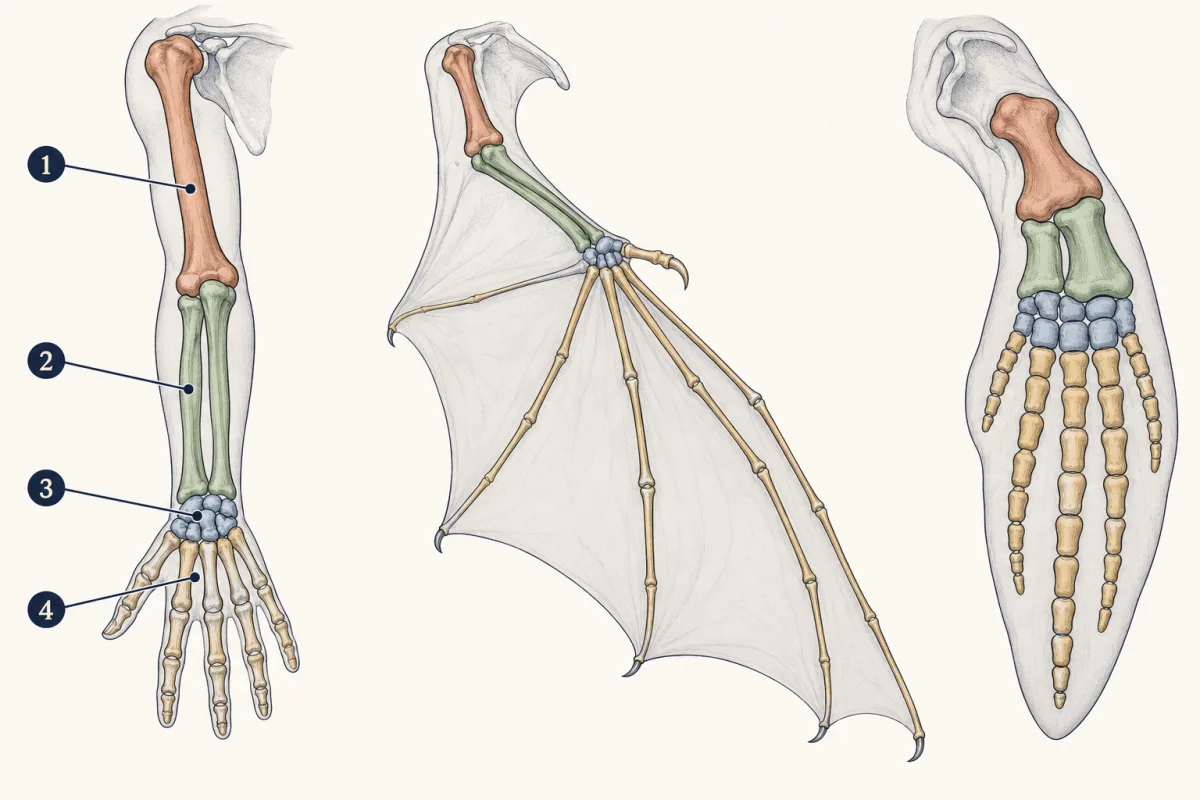
- upper arm bone
- two forearm bones
- wrist bones
- finger bones
-
Explain: read and build a cladogram
-
Elaborate: score six animals and place a whale
-
Evaluate: check your thinking
-
Going deeper
Where this lesson fits
Before thisReview first
- DNA: Structure and CopyingThis course · Lesson 16
You need to know DNA is a sequence of letters before comparing matching DNA between species.
- From DNA to ProteinThis course · Lesson 18
The shared genetic code, and how DNA letters set a protein's amino acids, is used here as evidence.
After thisStudy next
- Domains and KingdomsThis course · Lesson 24
It uses shared traits and DNA evidence to sort organisms into the broadest groups on the tree.
- Classification ChangesThis course · Lesson 25
It shows how new molecular evidence, like the DNA evidence here, can redraw a tree.
- Evidence for EvolutionThis course · Lesson 26
It uses fossils, embryos and DNA as evidence for common ancestry, as the whale case does.
Elsewhere on the siteFilms, simulations and method films in other courses
- Molecular clock datingMethod film
It shows how DNA differences between species can date their branch points.
Suggested by an AI model from the lessons themselves, then checked. How we use AI