Biology Together · Unit 1: Alive and growing
Alive or Not?
Rewritten on : new text and film. Your notes and highlights stay, but the text around them may have moved.
Is a seed alive? Is a car? A sorting game helps a child find out what living things do.
Three real-life stories behind this activity, about 2 minutes aloud, or read them below.
The film, 3 minutes, and the safety notes, for the grown-up to look at before the activity.
The hands-on part, done with a child: about 25 minutes, then a few quick looks later.
Pause when the reading reaches a film, and offer to play it. Saved on this device.
Watch the film now, or keep listening
That is the end of the reading
This idea at other levels
An activity for ages 5 to 10 about what counts as alive. Next, for an older child: Cells Are Everywhere (grade 7).
See every levelHide the levels
What makes something alive (characteristics of life)
Living things are made of cells, use energy, grow, respond and reproduce, and no single feature settles whether something is alive.
Three levels here: ages 5 to 10, grade 7 and high school. The lesson at grade 7 was picked by hand for this lesson.
High school · the level you chose
Living or Not? Viruses and Bacteria
Run the checklist on a bacterium, virus, red blood cell and salt crystal.
Biology · about 40 min · film 3:19 · Virginia BIO.4a, BIO.4c
Grade 7 · the level you chose
Cells Are Everywhere · also at this level, picked for this lesson
Life Science · about 40 min · Virginia LS.2 a
Ages 5 to 10 · the level you chose
Alive or Not? · this lesson
Build a checklist of life, then test a seed, a car, a leaf.
Biology Together · about 25 min · film 3:22 · Virginia K.6 a, K.6 b, K.7 a, 2.5 a
Next door to what counts as alive
- VirusesA virus carries genes and evolves but cannot make its own energy or copy itself, so it fits only some items.Nearest lesson: Living or Not? Viruses and Bacteria (high school)
- Cells, the unit of lifeThe first feature on the list, being made of cells, became a rule once microscopes showed cells in everything alive.Nearest lesson: Cells Are Everywhere (grade 7)
Also at grade 7: From Cells to Organisms
Short versions inside this lesson
The grade 7 version · about 1 minute to read
In grade 7 Life Science, children learn that every living thing is made of one or more cells, the tiny units that carry out life. A drop of pond water that looks empty can hold many living cells. The checklist from this activity (growing, using food, responding, making offspring) becomes a list of things cells do.
The plainest version · about 1 minute to read
Living things grow. They need water and air, and they need food. Animals eat their food. Plants use light to make their own. They can make more of their own kind, like a cat having kittens or a tree making seeds. A rock does none of those things, so it is not alive. Some things, like a dry leaf or a stick, were part of something alive once.
Find an idea: every idea, searchable
Which lessons teach an idea, and the notes on each level, were written by AI models from the lessons and checked by a second model. A person has not yet read every one. How we use AI
About this activity what is in it
Rewritten on : new text and film. Notes and highlights stay, but the text around them may have moved.
Before you start
- Hands-on time
- About 25 minutes, plus an optional 10-minute walk outside
- Where
- Indoors or outdoors
- Ages
- 5 to 10, with an easier and a harder version below
- Grown-up
- Stay close throughout and keep your child closer outdoors. Stay within arm's reach near roads or water. Keep small objects away from younger siblings and all children under 4.
What you need
- A basket, box or bag for collecting
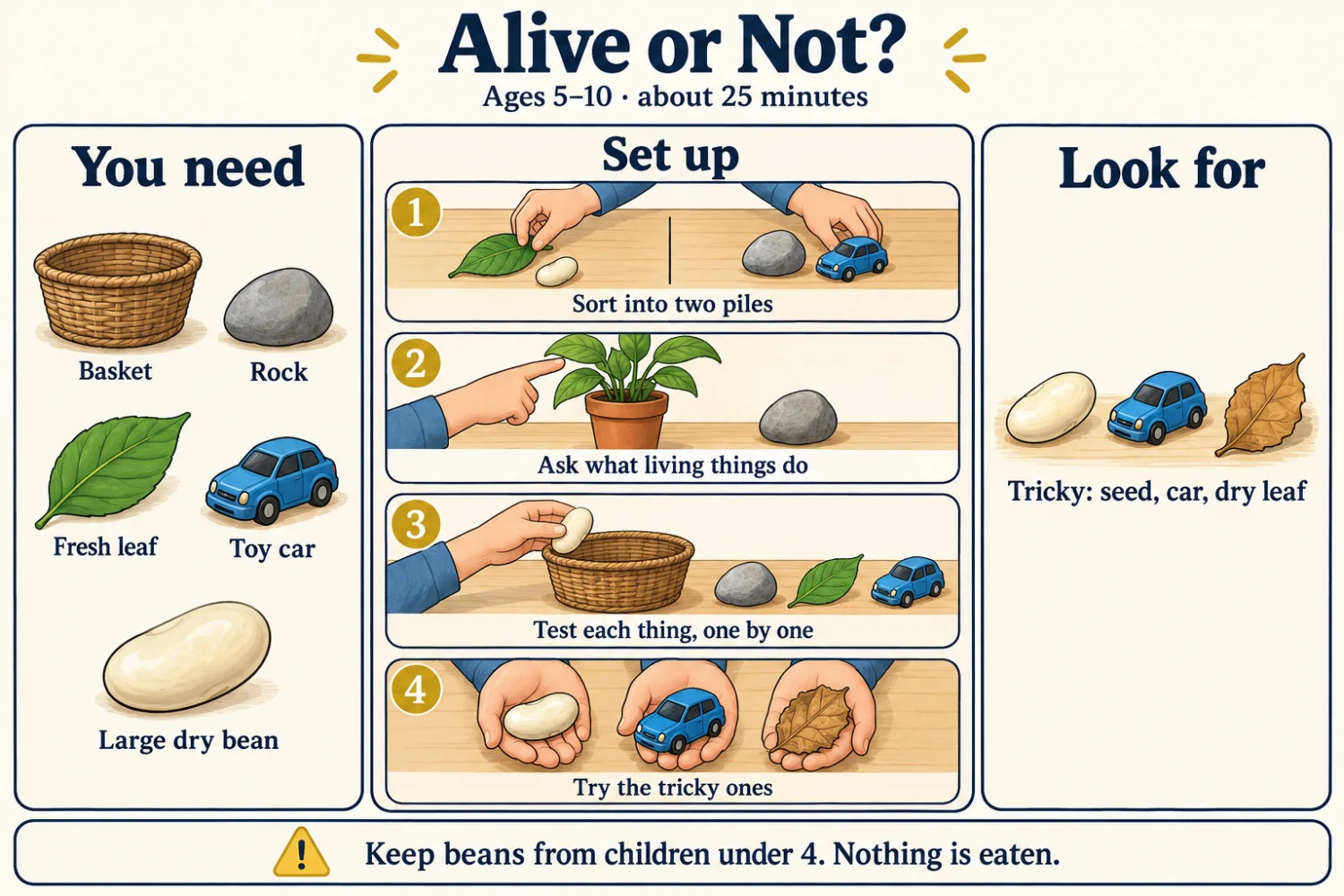
- 10 to 12 things from around the house: a rock, a fresh leaf from a plant you know (not poison ivy), a dry leaf, a stick or pinecone, an apple, a smooth shell, a toy car, a metal spoon, a wind-up toy or a battery toy whose battery cover is closed with a screw, a houseplant in its pot
- 1 or 2 large dry beans from the kitchen, such as a lima bean (not packet seeds from a garden shop, which may be treated with chemicals)
- A pet, a houseplant or a person to look at (the child counts)
- Paper and a pencil, or the printed observation sheet below
Virginia science standards SOL K.6 aSOL K.6 bSOL K.7 aSOL 2.5 a
The main idea. A sorting game with things from around the house and yard, then a short walk outside.
The film
 ▶ Watch Alive or Not? — Parent Guide · 3:22
Read the transcript of “Alive or Not? — Parent Guide”
Film transcript: Alive or Not? — Parent Guide
A toy car moves. A dry bean sits still. Which one is alive? Use this twenty-five-minute sort to help your child practice looking closely. They make a rule and check it against what they find. Fill a basket with ten to twelve household things. Start with a houseplant, an apple, a dry leaf, a stick, and a shell. Add a rock, a spoon, and a toy car. Set out paper and a pencil. Use one or two large dry kitchen beans. Skip garden-shop seed packets. First, ask your child to sort everything into two piles, alive and not alive. Hold back from correcting them. Instead, ask, how did you decide, and write down their rule in their own words. Listening first lets your child test their own idea.
Compare the rock with a plant, a pet, or your child. Ask, what does it do that the rock does not? Write four clues together: grows, needs water, air and food, reacts, and makes more of its kind. Plants use light to make food. Check all four clues together. Try the checklist on the rock together first. Then let your child test each object and move it if their answer changes. With the car, ask, does it grow or make a baby car? A dry seed is still alive. Water and warmth let it sprout. Now picture the dry leaf sitting on your table. If you are using just two piles, living and nonliving, pause and decide for yourself. Which pile does that dry leaf belong in, and why?
For this sort, use Virginia’s kindergarten rule. The dry leaf goes in the living pile because it was part of a living plant. A rock goes in nonliving. For ages eight to ten, split the living pile into alive now and once alive. Stay with your child throughout the activity. Keep all small objects, including large beans, away from children under four. Keep everything in the basket out of mouths. Count the beans back into a lidded jar yourself. If a child is choking or struggling to breathe, call nine one one. On your optional ten-minute walk, find three living and three nonliving things. Stay on a permitted path away from roads and water. Stay within arm’s reach near roads or water.
Never leave your child alone near water of any depth. Look without picking. Wash hands with soap and water and check for ticks afterward. In this game, your child practices looking closely and stating a rule out loud. They test that rule against tricky objects and revise it when evidence pushes back. One clue alone can fool you, so checking every sign together is what counts.
Before you start
- Hands-on time
- About 25 minutes, plus an optional 10-minute walk outside
- Where
- Indoors or outdoors
- Ages
- 5 to 10, with an easier and a harder version below
- Grown-up
- Stay close throughout and keep your child closer outdoors. Stay within arm's reach near roads or water. Keep small objects away from younger siblings and all children under 4.
What you need
- A basket, box or bag for collecting
- 10 to 12 things from around the house: a rock, a fresh leaf from a plant you know (not poison ivy), a dry leaf, a stick or pinecone, an apple, a smooth shell, a toy car, a metal spoon, a wind-up toy or a battery toy whose battery cover is closed with a screw, a houseplant in its pot
- 1 or 2 large dry beans from the kitchen, such as a lima bean (not packet seeds from a garden shop, which may be treated with chemicals)
- A pet, a houseplant or a person to look at (the child counts)
- Paper and a pencil, or the printed observation sheet below
Virginia science standards SOL K.6 aSOL K.6 bSOL K.7 aSOL 2.5 a
The big idea
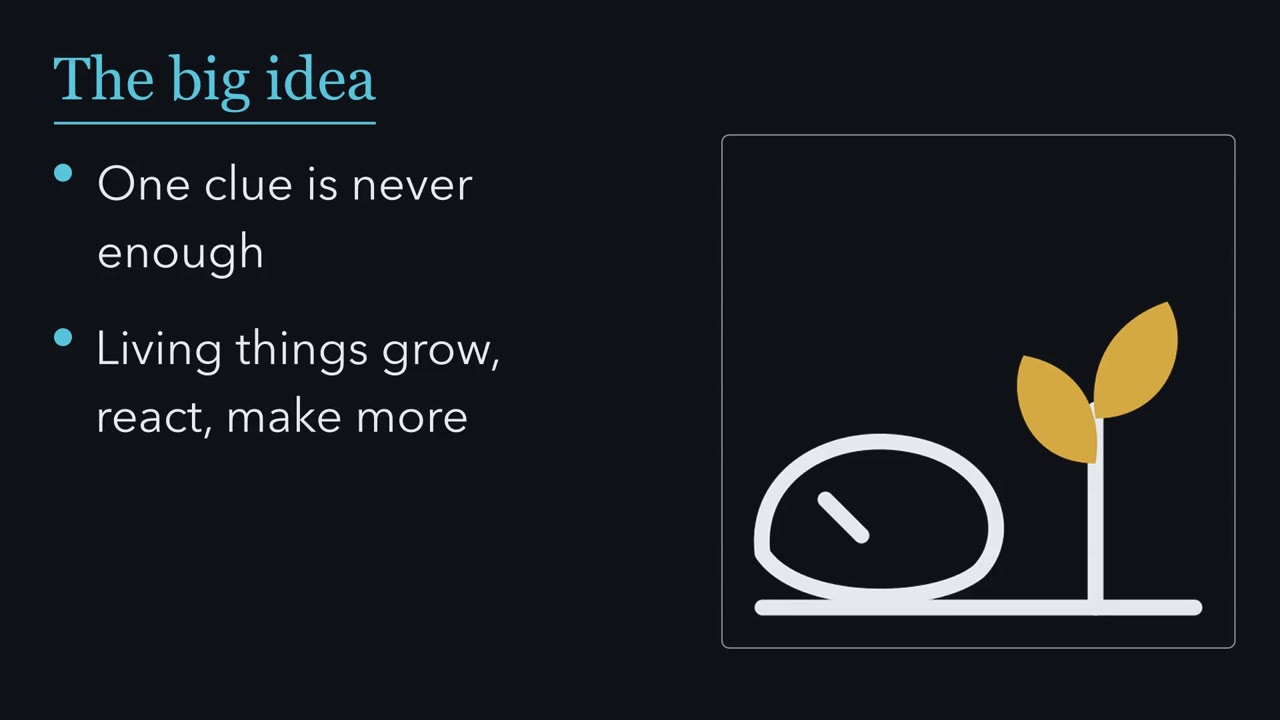
Use this 25-minute sort to practice looking closely. Your child names a rule and checks it against tricky objects. See why it takes more than one clue to decide whether something is alive.
Say it together:
“Living things grow. They need water, air, and food—animals eat food, and plants use light to make their own. They react to what happens around them, and their kind can make more like them.”
Living things share these features together. A plant bends toward a window, and a cat runs from a loud noise. A kind of living thing can make more of its own kind even if some individuals never have young. A kitten is already alive before it can have kittens. No single feature decides it. A toy car moves, and a fire grows, yet neither does all of these things.
For teachers: Virginia standards
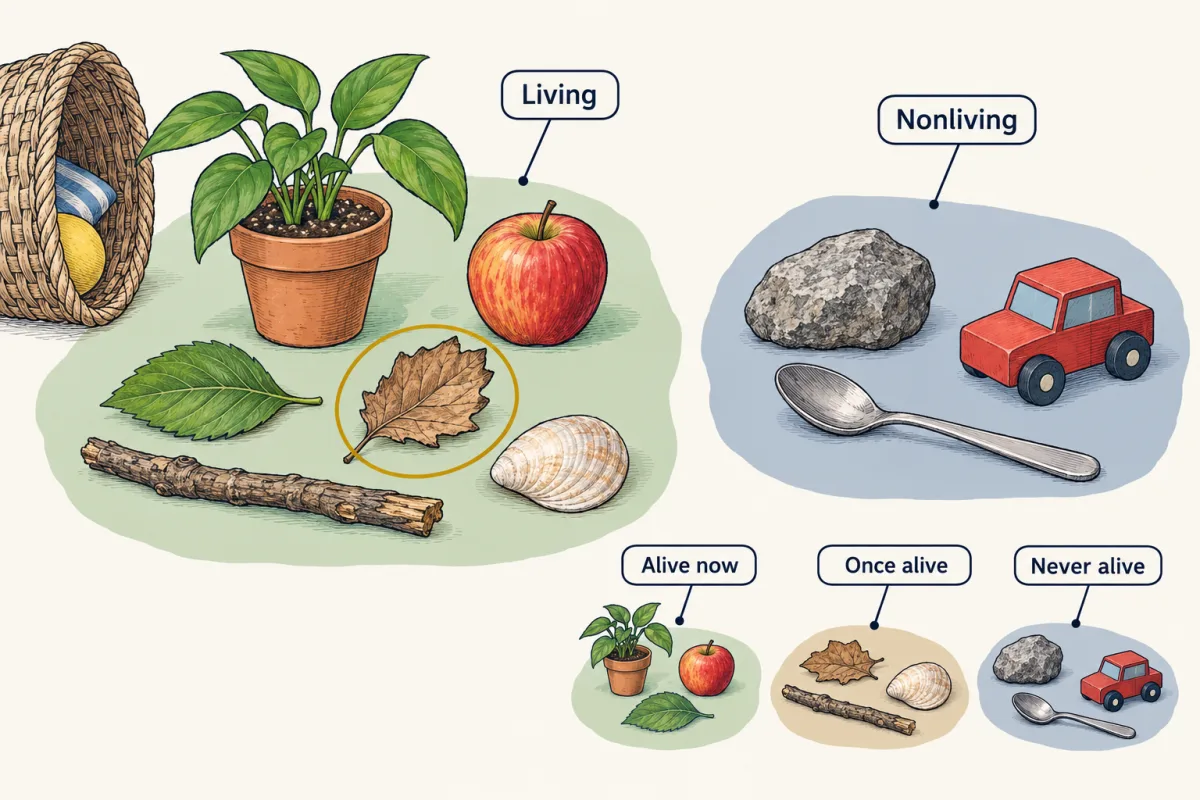
Virginia’s kindergarten standard uses two groups. Living means anything that is alive now or was ever alive, so a dry leaf or a fallen log counts. Nonliving means anything that never was, like a rock or a metal spoon. Older children (ages 8 to 10) can split “living” into “alive now” and “once alive.”
What to do
- Gather (adult step). Put 10 to 12 everyday things in a basket, plus 1 or 2 large dry kitchen beans. Mix things that are alive now (houseplant, apple, fresh leaf), things that were alive or came from living things (dry leaf, stick, smooth shell), and things that never lived (rock, metal spoon, toy car).
- First guess. Say, “Sort these into two piles: alive and not alive.” Do not correct yet. Ask, “How did you decide?” Write down their rule in their words. Let your child make the first sort on their own. If they put the car in “alive” or the bean or plant in “not alive,” ask how movement figured into their rule.
- Build a checklist, one clue at a time. Point to your child, a pet, or the houseplant beside the rock. Ask, “What does it do that the rock does not?” Build four questions:
- Does it grow?
- Does it need water, air, and food? (A plant uses light to make its own food.)
- Do things like it make more of their own kind? (Your child is alive before having babies; this is about the whole kind, like cats having kittens.)
- Does it react when things change around it?
- Work one easy case first, then test. Check the rock together against all four questions so your child sees how the list works. Then let them test the rest one by one and move items between piles. Remind them that a resting seed will not show every clue today.
- Predict, then check the tricky ones. Spend extra time on the dry bean, toy car, and dry leaf. Ask your child to predict first:
- Dry bean: “What do you think will happen if we put a dry bean in a damp paper towel?” Write down the prediction. In the next activity, Wake Up a Seed, put a bean in a damp paper towel and watch it over a few days. Compare what you see with the prediction.
- Toy car: “It moves. Does it grow? Can it make a baby car?”
- Dry leaf: “It is not growing now. Was it ever part of something alive?”
- Apple and fresh leaf: Each is part of a plant, not a whole plant. Its cells stay alive for a while after picking, then slowly die. Either way, it belongs in the living group.
- Final sort and debrief. Sort into two piles: living (alive now or ever alive) and nonliving (never alive). For ages 8 to 10, use three piles: alive now, once alive, never alive. Close with two debrief questions:
- “Which object surprised you most, and which clue changed your mind?”
- “If someone hands you something new tomorrow, what will you check?”
- Walk outside (optional). Check the weather, dress for sun and weather, and stay in your yard, a public park, or another place where you have permission. Spend 10 minutes finding three living and three nonliving things. Stay on the path or short grass, away from tall grass, roads, and water; never leave your child alone near water of any depth. Look, do not pick. An adult picks up any fallen leaf or stick only where no poison ivy grows nearby (dry leaves and hairy winter vines still cause a rash). Wash hands afterward.
Questions to ask while you do it
Ask your child to guess first, then check.
- “I wonder if this seed is alive. What could we do to find out?”
- “The car moves. Does it grow? Does it eat?”
- “Does this rock need anything to keep going? What happens to a plant with no water?”
- “Was this stick ever alive? How can you tell?”
- “What do you need to stay alive? Does a dog need the same things? Does a tree?”
- “Can you find something that breaks our rule?”
What children often think
-
A child might say “It moves, so it’s alive.”
You could try Hold up the toy car and ask, "Does it grow? Does it need food? Can it have babies?" Moving is a clue, but living things do more than move.
-
A child might say “Plants aren’t alive. They don’t do anything.”
You could try Ask how the plant got so big, and what happens if nobody waters it. Plants grow, need water and light, and many make seeds. They react too, just slowly, like bending toward a window over a few days.
-
A child might say “A seed is just a little rock.”
You could try Don’t settle it with words. Put a seed in a damp paper towel and see what happens over a few days. That test is the next activity, Wake Up a Seed.
-
A child might say “Fire is alive. It eats wood and grows.”
You could try That is a good argument, so take it seriously. Ask, "Does fire have babies that look like it? Is it made of the same stuff as a leaf or a dog?" Fire meets some of the checklist, but not all of it.
-
A child might say “The dry leaf is not alive, so it goes with the rocks.”
You could try Ask where the leaf came from. In Virginia’s kindergarten groups, something that was once alive counts as living. Older children can give it its own pile, "once alive."
Why it works
Scientists have no one-line test for life either. They look at features together: being made of cells, taking in energy from food or light, growing, responding to surroundings, and reproducing. Your child’s checklist is a simple version of that list.
The seed is the best puzzle. A dry seed is alive but resting. It uses very little of its stored food, and many seeds can wait months or years until water and warmth let them sprout. The toy car and fire each seem alive in one or two ways, like moving or growing. That is why the full list matters more than any single clue.
Easier and harder
Ages 5 to 7
Use two piles and six to eight objects: clear examples (a plant, an apple, a rock, a metal spoon) and one puzzle (a seed). Ask just three questions: Does it grow? Does it eat or drink? Can things like it have babies? Your child can draw instead of write.
Ages 8 to 10
Use three piles (alive now, once alive, never alive) and add harder items: a cotton sock, a sheet of paper, a wooden spoon, and an unlit beeswax candle (never light anything for this activity). Ask what each was made from. Paper and cotton come from plant parts that were once alive. Beeswax, like a shell, was made by a living animal but was never made of living cells, so your child may add a pile called “made by a living thing.” Have them write a rule, hunt for an object that breaks it, and revise the rule to fit.
If it doesn’t go as planned
If your child gets stuck, come back to themselves: “Do you grow? Do you eat? Did you start as a baby?” Then compare the object to that. If they want a simple yes or no for fire or the car, leave it open and say, “Scientists use the whole list. Let’s check it again.” Leaving a question open is part of science.
Observation sheet
Here is a worked example showing how three items look on the chart before your child tries the rest:
| Thing | Does it grow? | Does it need water and food (or light)? | Do things like it make more of their kind? | Alive now, once alive, or never alive? |
|---|---|---|---|---|
| Rock | No | No | No | Never alive |
| Houseplant | Yes | Yes (water and light) | Many kinds make seeds | Alive now |
| Dry leaf | Not now (did on tree) | Not now | Tree makes seeds | Once alive |
Observation sheet
Alive or not?
NameDate
Check each thing. Write your answer in each box.
| Thing | Does it grow? | Does it need water and food (or light)? | Do things like it make more of their kind? | Alive now, once alive, or never alive? |
|---|---|---|---|---|
My rule for living things is:
stemhop.com · Biology Together
The three stories, told aloud Side Hops: three stories that go with this lesson Side Hops
Three playful ways to talk about living and nonliving things
1:30 · Narration: an AI narrator voice (Kokoro, af_heart).
Read the transcript
Hi there! Before you start the sorting game, here are three easy ways to make alive or not click while you play. First, look up together, through a window or outside with you close by, and find a big, puffy white cloud. Scientists worked out that one puffy cloud could hold about one point one million pounds of water. That's roughly the weight of one hundred elephants! Ask your child, "It drifts across the sky and gets bigger, so is it alive?" If they say yes, smile and check the rest of your list together. Does a cloud eat? Does it make tiny baby clouds? Second, when your child insists a houseplant is not alive because it just sits there, try saying, "Plants do move. Most just move in slow motion!" Young sunflowers really do turn from east to west all day to follow the sun, then swing back east overnight to wait for morning. That usually earns a big grin, and suddenly the quiet houseplant seems a lot busier. Third, on your walk, stay close, keep hands to yourselves, and hunt for soft green moss on a shady rock. The moss is alive. The rock was never alive. Moss has no true roots. It drinks water straight through its surface, and many kinds can rest when they dry out and grow again once they get wet. Have fun testing your child's rules together!
The idea underneath them. A sorting game with things from around the house and yard, then a short walk outside.
Your notes
Select any text in the lesson to highlight it or add a note to it. Your highlights and notes are saved in this browser and collected in your notebook.
This browser is not letting the site save anything (a private window or strict privacy settings), so highlights and notes will be lost when you leave the page.
Where this lesson fits
After thisStudy next
- Wake Up a SeedThis course · Lesson 2
Your child tests the seed puzzle for real by waking a dry bean and seeing it grow.
- What Do Plants Need?This course · Lesson 7
It builds on the checklist item that living things need water, air and food, using a plant.
- Mealworms to BeetlesThis course · Lesson 14
Your child watches a living thing grow and change over days, using the same checklist.
Suggested by an AI model from the lessons themselves, then checked. How we use AI
Those are the stories. The idea under them is the one the lesson builds.
That is the film. The rest of the activity is the fun part.
The rest of the activity is here when you want it.
Finish line
Test yourself
4 questions
Questions to talk over together.
Next · Lesson 2
Wake Up a Seed
Is a dry bean alive, or is it just a little stone? Two bags and a damp paper towel let a child find out.
Continue →Rewritten on : new text and film. Notes and highlights stay, but the text around them may have moved.