Anywhere in the Field, and Columns
Read the transcript of “Anywhere in the Field, and Columns”
Film transcript: Anywhere in the Field, and Columns
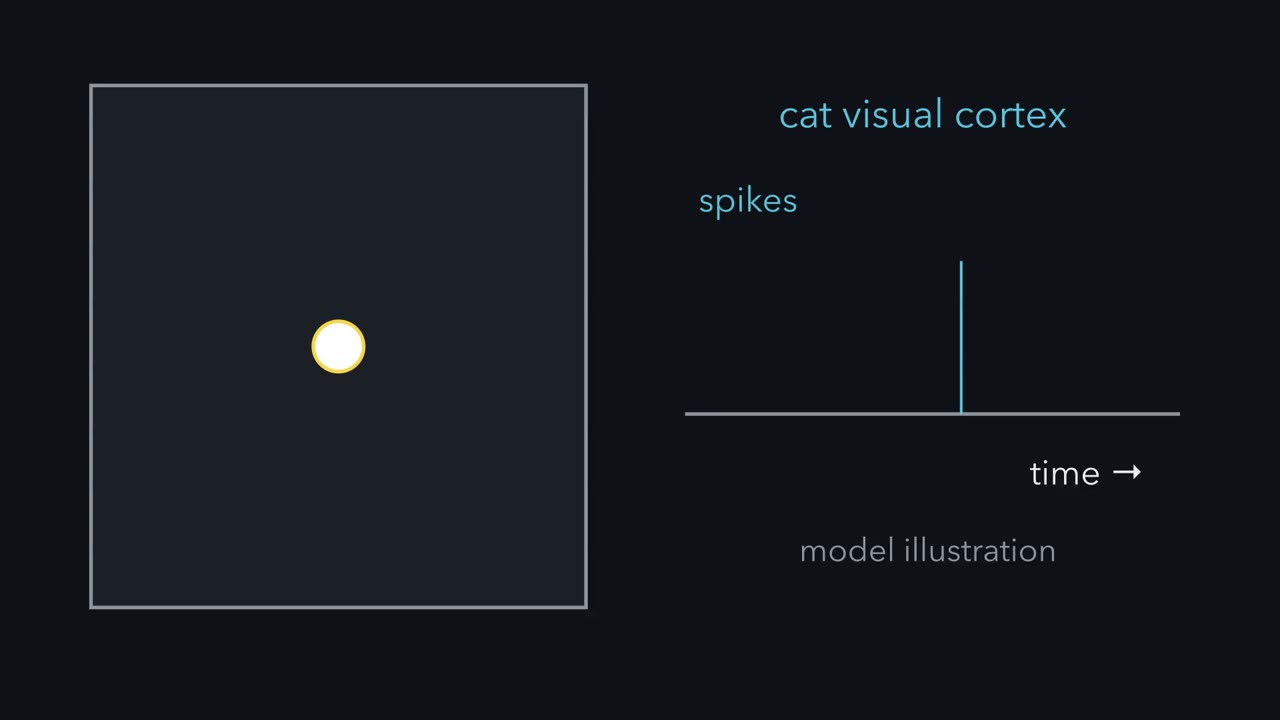
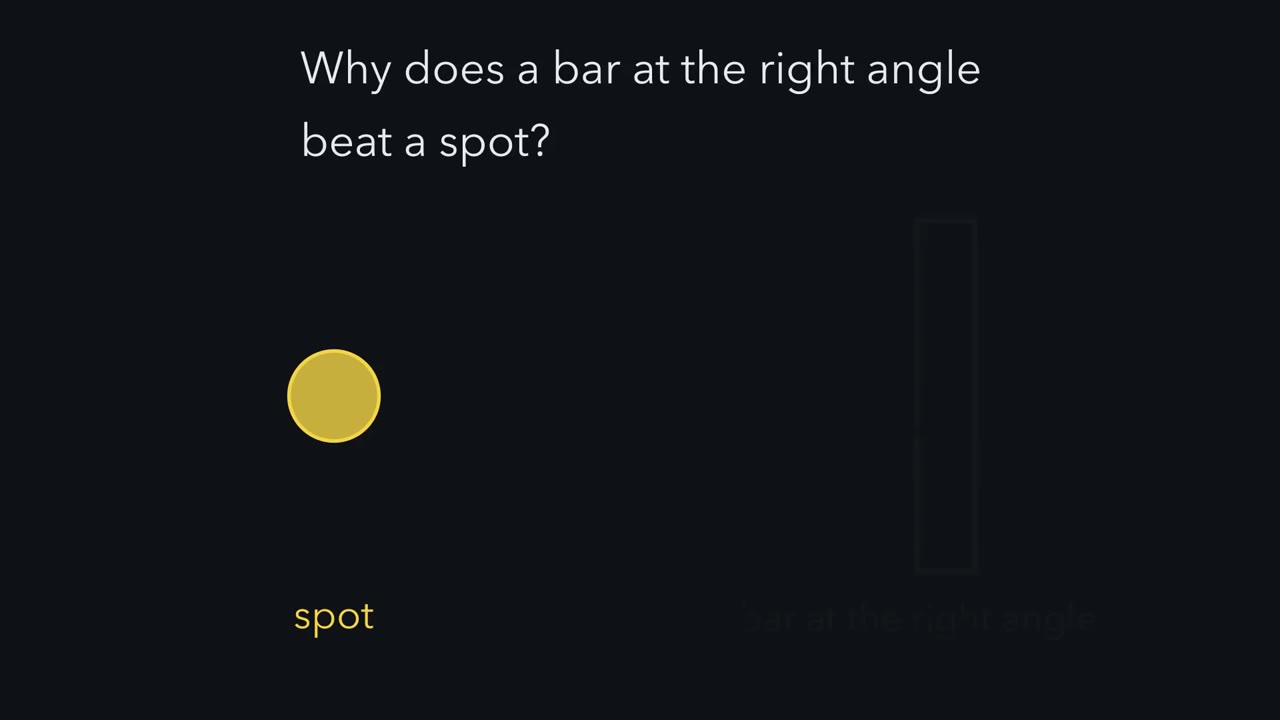
Take a simple cell's best bar and slide it sideways, off the ON strip and onto an OFF strip. What happens to the sum? It falls past zero and goes negative. This cell goes from firing hard to falling silent. Hubel and Wiesel's complex cells did. A correctly oriented bar drove them over much of the field. A bar at the wrong angle still did little. In many complex cells that answered spots, turning a spot on and turning it off excited the same places, unlike a simple cell's separate ON and OFF subregions. Other complex cells did not answer small spots. One sum cannot do that. Swap a bright bar for a dark one, and the sum flips sign. Their proposal applies the rule twice.
Several simple cells share one angle, with fields at slightly different places. All of them excite one complex cell. Where their responses overlap enough, at least one of them answers as the bar shifts. So the complex cell keeps its preferred angle and gains tolerance of position. This second step is still debated. Some complex cells receive direct geniculate input, and circuits within cortex contribute. In cat and monkey, an electrode going straight down through cortex meets cells that tend to share an angle. That is a column. Does a cell need neighbours that agree with it in order to be tuned?
No. Imaging rat visual cortex cell by cell found sharply tuned cells. Their neighbours preferred unrelated angles. This layout is called salt-and-pepper. Tuning does not need a map. So tuning does not need neighbours that agree. How each cell gets its preference is a separate question. So keep the rule and its limit. A simple cell adds up the light in its field, and the field's layout largely sets its preference. A complex cell needs more than one sum.
Cut one optic nerve and one eye goes blind. Cut one optic tract and both eyes lose the same half of the world. Why the difference?
Continue in the lesson: Visual Cortex →
2:25 · Free, with captions and a transcript. The lesson has the full text, the questions and the sources.
More films from this lesson
How this film was made. Narration: an AI narrator voice (Kokoro, af_heart) reading narration written from this lesson's text. Animation: AI-generated in code (Manim) by Claude, a schematic with no drawn molecular structures. Captions come from the narration script. See something wrong? Report it.