Adding Up the Light
Read the transcript of “Adding Up the Light”
Film transcript: Adding Up the Light
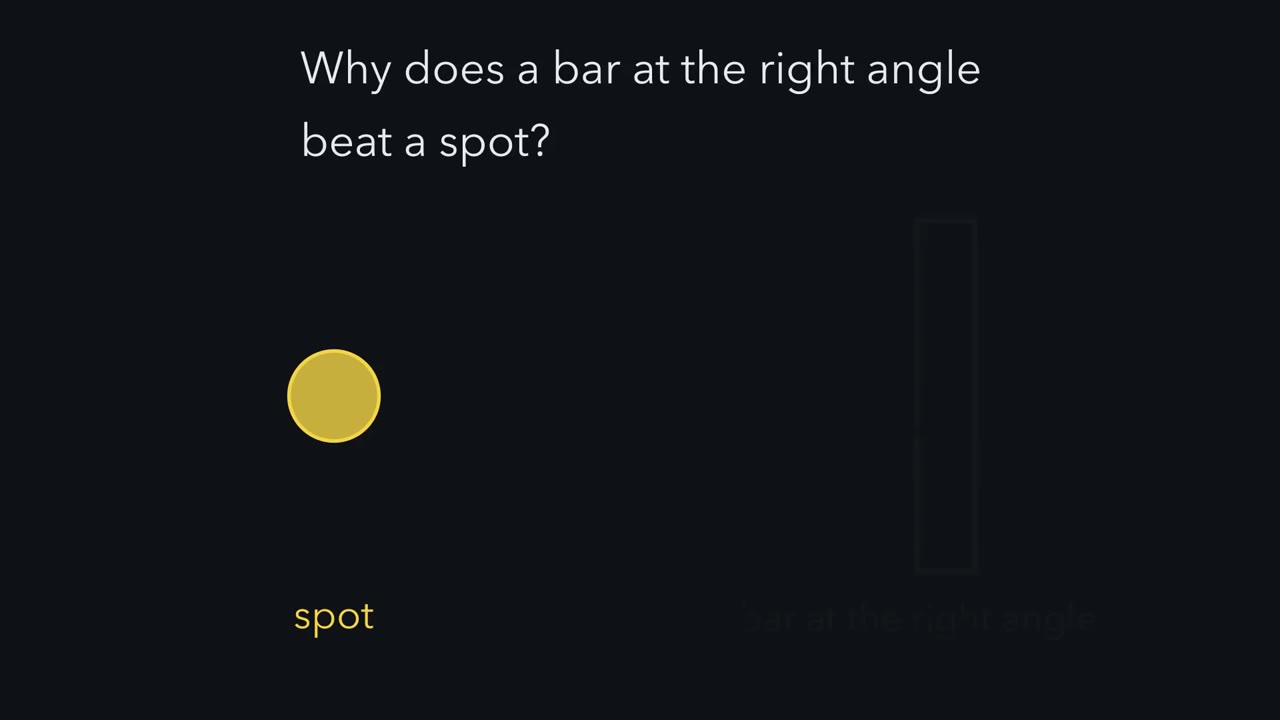
Spots of light drive the retina well. In cat visual cortex, the same spots often did little. A bar at the right angle drove some cells hard. Why would a bar win? Start in the retina. Every visual neuron watches one patch of the world, its receptive field. Take an ON-centre ganglion cell. Light on its small round centre excites it. Light on the ring around it, the surround, inhibits it. Shine a small spot that just fills the centre. It lands only on plus, so the cell fires faster. Now light the whole patch, centre and ring together. What will the cell do?
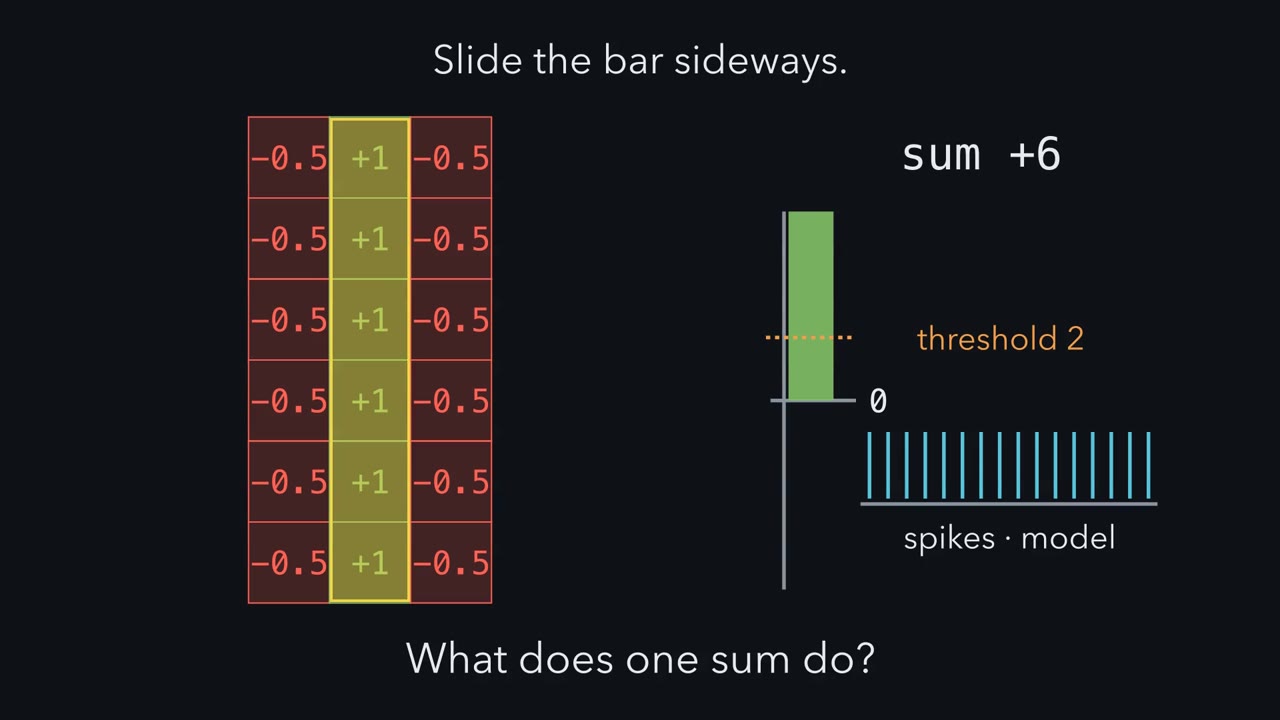
Very little. The centre adds plus, the ring adds minus, and the two largely cancel. Light the ring alone, and the sum goes negative, so firing drops below its spontaneous rate. When that light goes off, the cell gives a brief burst. That burst answers a change in light, which the sum alone does not capture. So here is the rule for cells like this one. Add up the light in the field. Light on an ON region counts as plus. Light on an OFF region counts as minus. A bigger sum means stronger drive. A sum near zero leaves the spontaneous rate. A positive sum can raise firing, and a negative sum lowers it, down to zero.
Where the patch sits tells you which part of the world the cell reports. How plus and minus are laid out tells you which stimulus it reports best. Cells of the thalamic relay, the lateral geniculate nucleus have fields of the same kind. It is a good first approximation for many cells in the retina and thalamus, and for simple cells in cortex. Later we find where it stops.
Keep the rule. Add up the light in the patch, plus on ON regions and minus on OFF regions.
Cut one optic nerve and one eye goes blind. Cut one optic tract and both eyes lose the same half of the world. Why the difference?
Continue in the lesson: Visual Cortex →
2:17 · Free, with captions and a transcript. The lesson has the full text, the questions and the sources.
More films from this lesson
How this film was made. Narration: an AI narrator voice (Kokoro, af_heart) reading narration written from this lesson's text. Animation: AI-generated in code (Manim) by Claude, a schematic with no drawn molecular structures. Captions come from the narration script. See something wrong? Report it.