Pressure and the Clock
Read the transcript of “Pressure and the Clock”
Film transcript: Pressure and the Clock
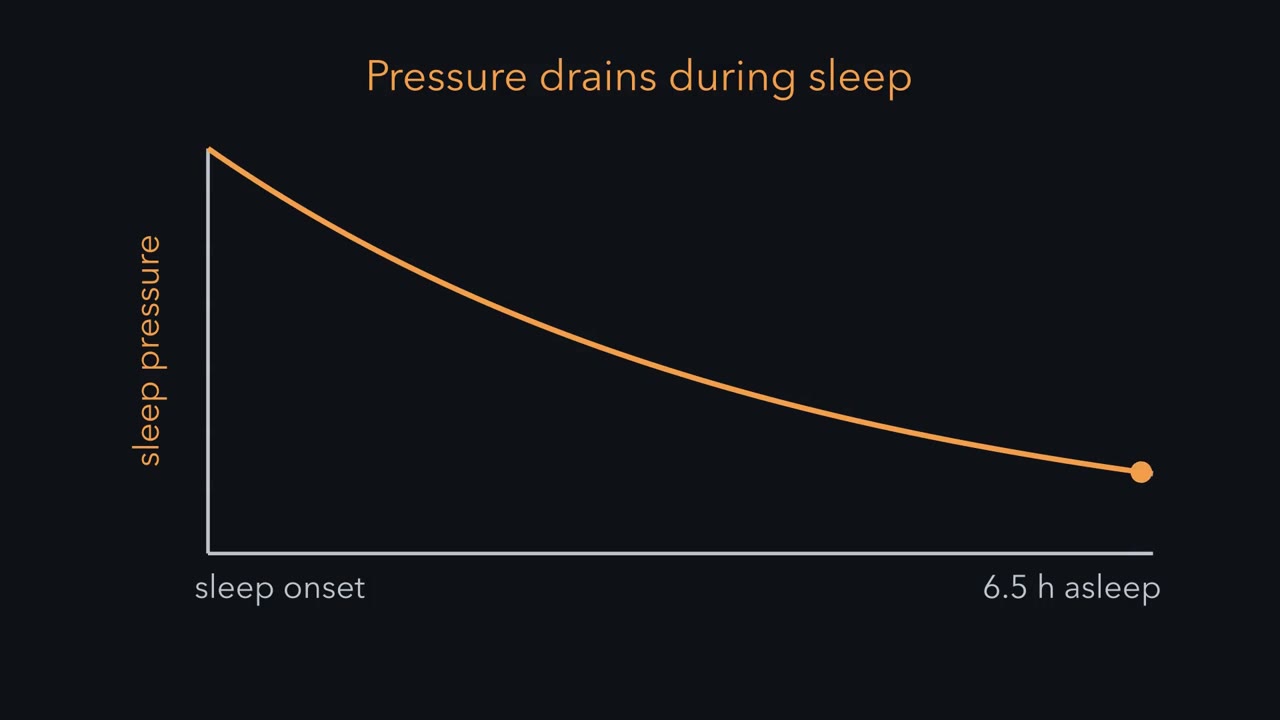
Stay up all night. Near dawn, you can barely keep your eyes open. By early afternoon, still without sleep, you feel better. How can more time awake make you less sleepy? If time awake were all that mattered, the afternoon would feel worse. Something else changed: a clock. The first process is sleep pressure. It builds while you are awake, quickly at first, then more slowly. While you sleep, it drains. The second process is a clock in your brain. It keeps a cycle of about a day, even with no windows. The clock's main push is toward waking. It is hardest in the late afternoon and evening, weakest in the early morning. Put both on one graph. An upper wavy line is the level pressure must reach before you fall asleep.
A lower wavy line is the level it must drain to before you wake. Both lines rise and fall with the clock. Here is the one idea, in the simple model of an adult's undisturbed sleep. Sleep pressure climbs while you are awake and drains while you sleep. You fall asleep when it climbs to an upper level. You wake when it drains to a lower one. The clock raises both levels by day and lowers them by night. Why two levels? Replace them with one line midway between, and the model chatters on and off at that line. The gap keeps this model's sleep in one long block. Back to the all-nighter. Staying up means refusing sleep after pressure crosses the upper level.
Near dawn, the clock has pulled that level low. So pressure sits far above it, and you feel very sleepy. By early afternoon, pressure is higher still. But the clock has lifted the level, so the excess has shrunk. When you finally sleep, will you get back every hour you lost?
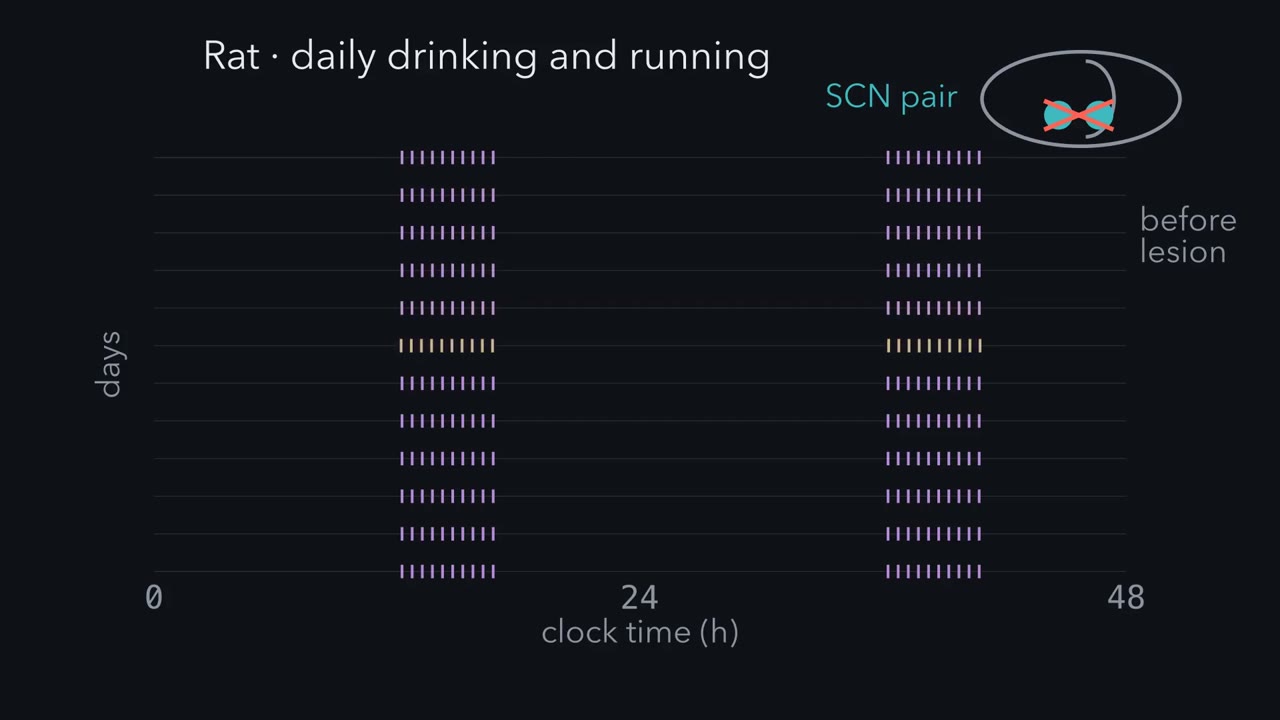
No. Recovery sleep is longer than usual, but nowhere near hour for hour. Much of the payback comes as deeper sleep. Can the two processes be pulled apart? In rats, destroy the clock: the suprachiasmatic nucleus, just above the optic chiasm. Sleep scatters across day and night. Yet after a spell without sleep, these rats still slept more, and more deeply. Keep this. Pressure climbs and drains, and the clock sets the levels.
Stay up all night and you feel worst near dawn, then better by the afternoon, still without sleep. How can more time awake make you less sleepy?
Continue in the lesson: Circadian Rhythms and Sleep →
2:45 · Free, with captions and a transcript. The lesson has the full text, the questions and the sources.
More films from this lesson
How this film was made. Narration: an AI narrator voice (Kokoro, af_heart) reading narration written from this lesson's text. Animation: AI-generated in code (Manim) by Claude, a schematic with no drawn molecular structures. Captions come from the narration script. See something wrong? Report it.