The Oxygen Bargain
Read the transcript of “The Oxygen Bargain”
Film transcript: The Oxygen Bargain
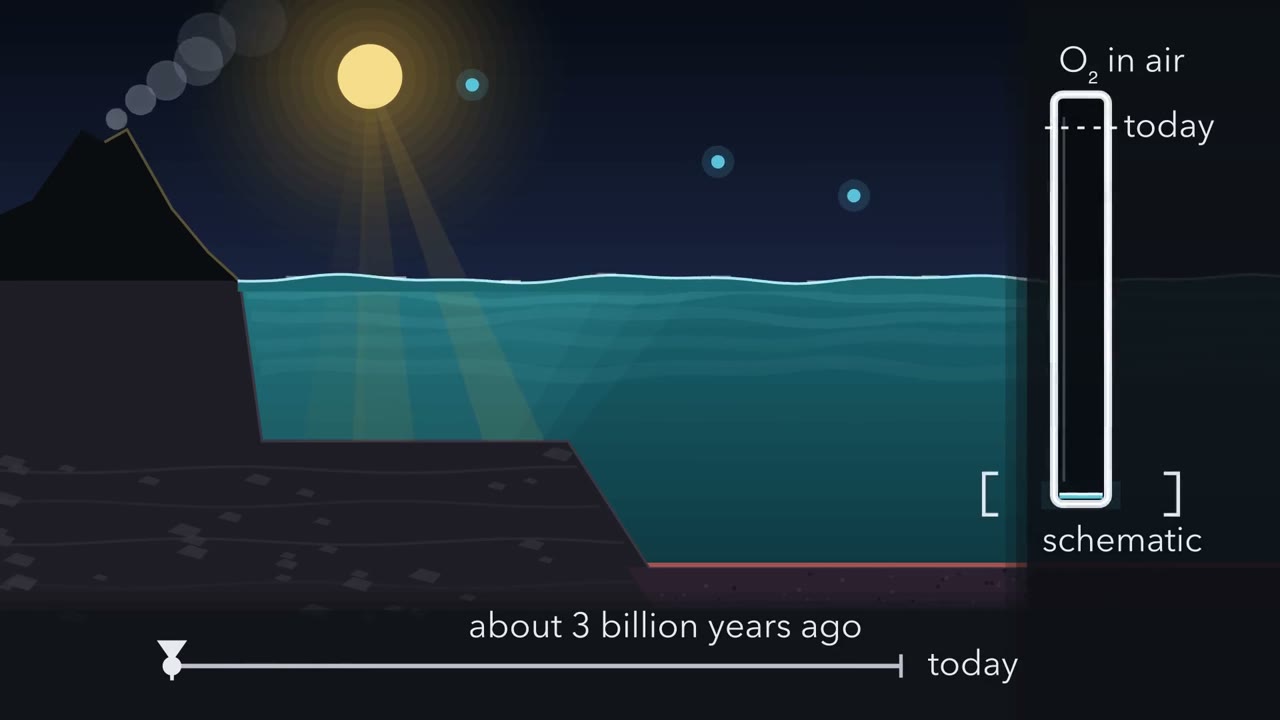
Picture Earth about three billion years ago. There are oceans, volcanoes and sunlight. But there is almost no oxygen in the air. The sky may have been hazy, perhaps tinted orange by a methane haze. Nobody saw it, so we rebuild it from ancient rocks.
The oceans held dissolved iron, in its reduced, ferrous form. With little oxygen to take its electrons, much of that iron stayed dissolved. Life was already here, and all of it was microbial. Cells likely made energy by fermenting or by making methane. Some may have reduced sulfate.
Every one of those lifestyles moves electrons from a donor to an acceptor. Oxygen, a far more powerful acceptor, was scarce. The land had no plants and no animals, though microbes may have crusted damp patches. Plants would not arrive for over two billion years.
Then came a new trick. Cyanobacteria learned to pull electrons out of water, powered by sunlight. The waste product was oxygen gas. Water holds its electrons tightly. Photosystem two splits it, and photosystem one then boosts the electrons higher. This machinery evolved once, in the ancestors of cyanobacteria. Plants later gained it by taking in a cyanobacterium.
In shallow seas, these cells spread as glowing, sticky mats. Similar mats still build layered mounds, called stromatolites, in some bays and lakes today. Predict. If cyanobacteria were releasing oxygen, why did the air not fill with it right away?
Because oxygen had many places to go. Dissolved iron handed its electrons to oxygen, formed rust-like minerals, and sank. Layer by layer, iron and silica built banded iron formations. Some layers may record microbes rusting iron without oxygen. Much of the iron we mine today comes from them.
Their biggest pulse came just before and as oxygen began to rise. Iron was not the only sink. Volcanic gases, methane and minerals on land all consumed oxygen too. Cyanobacteria most likely arose well before oxygen built up, though by how long is debated. Some rocks hint at brief whiffs of oxygen before that lasting rise.
Then, between about two point four and two point one billion years ago, oxygen rose, wavered, and finally stayed. Geologists call this the Great Oxygenation Event. The methane haze may have thinned, leaving a clearer sky. Even so, oxygen stayed far below today's level for a very long time.
Was there a mass die-off of anaerobes? It is often said, but the evidence is thin. Anaerobes clearly survived, in mud, deep water and other airless places. They thrive there still, including in your own gut. Oxygen did not end the old world of life. It pushed it into the shadows.
Why should oxygen be dangerous at all? Oxygen strongly pulls in four electrons, to become water. But its two unpaired electrons make it slow to react with most molecules. It tends to take electrons one at a time. Predict. If oxygen picks up electrons one at a time, what forms along the way?
Partly reduced oxygen. One electron makes superoxide. Two make hydrogen peroxide. Three make a hydroxyl radical, plus water. That radical attacks almost anything it touches. Together these are called reactive oxygen species. They break DNA, damage proteins, and set off chain reactions in membrane lipids.
Iron makes it worse. Ferrous iron hands an electron to hydrogen peroxide, releasing the hydroxyl radical. This is one reason cells keep most of their iron tightly bound, much of it stored inside proteins. Here is the idea that ties this film together. Every way of living with oxygen is a way of handling its electrons.
Cells evolved and spread defenses. Superoxide dismutase turns superoxide into hydrogen peroxide. Catalase turns hydrogen peroxide into water and oxygen. Some bacteria went further and put oxygen to work. They placed it at the end of an electron-transport chain.
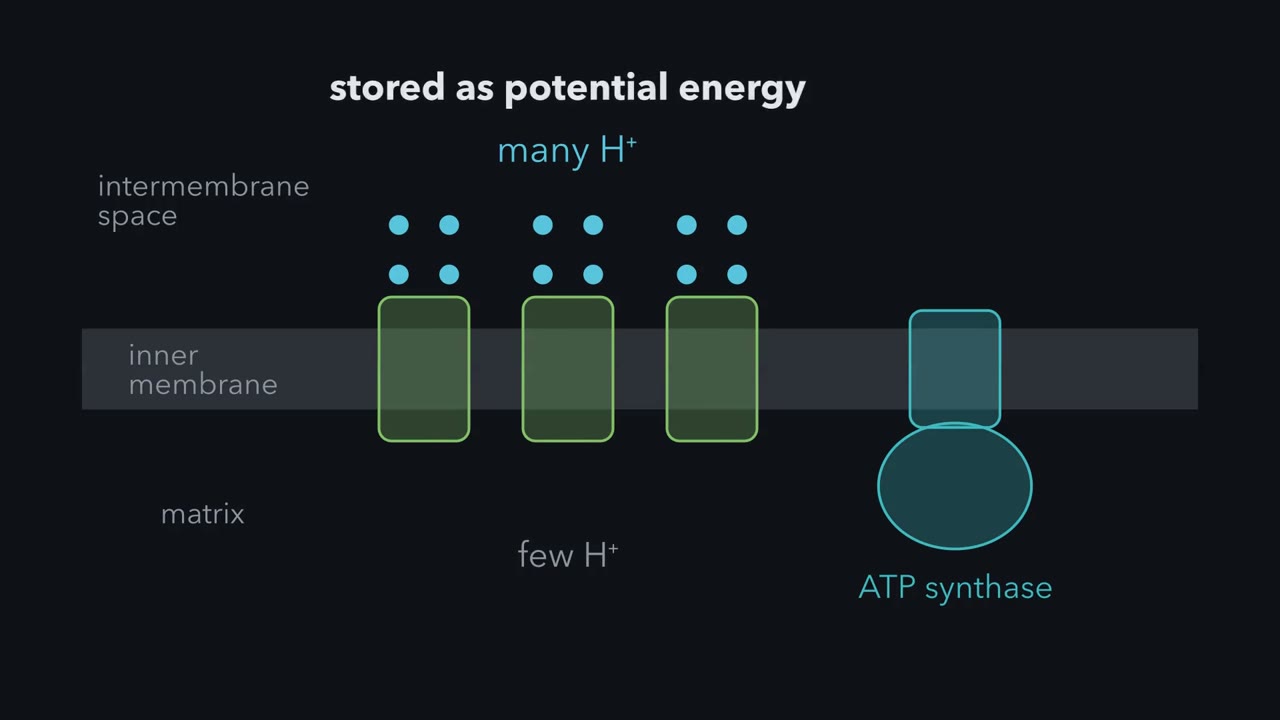
Oxygen is the strongest common acceptor. So an electron that falls all the way to oxygen releases much more energy. Fermenting glucose to lactate or ethanol yields two A T P. Respiring it fully with oxygen, as our cells do, yields around thirty.
But the chain is not perfect. A small fraction of electrons slip off early, often at complexes one and three, making superoxide. Now move forward, to some time after oxygen rose. The oldest widely accepted eukaryote fossils are more than one and a half billion years old.
The host was most likely an archaeon, related to today's Asgard archaea. Whether it already had a nucleus is still debated. Asgard archaea were first found as DNA in deep sea sediments. Their genomes carry many genes once thought unique to eukaryotes.
The guest was a bacterium related to today's alphaproteobacteria. It could probably respire, and may have used oxygen. Somehow, the archaeon came to enclose the bacterium. And instead of being digested, the guest stayed.
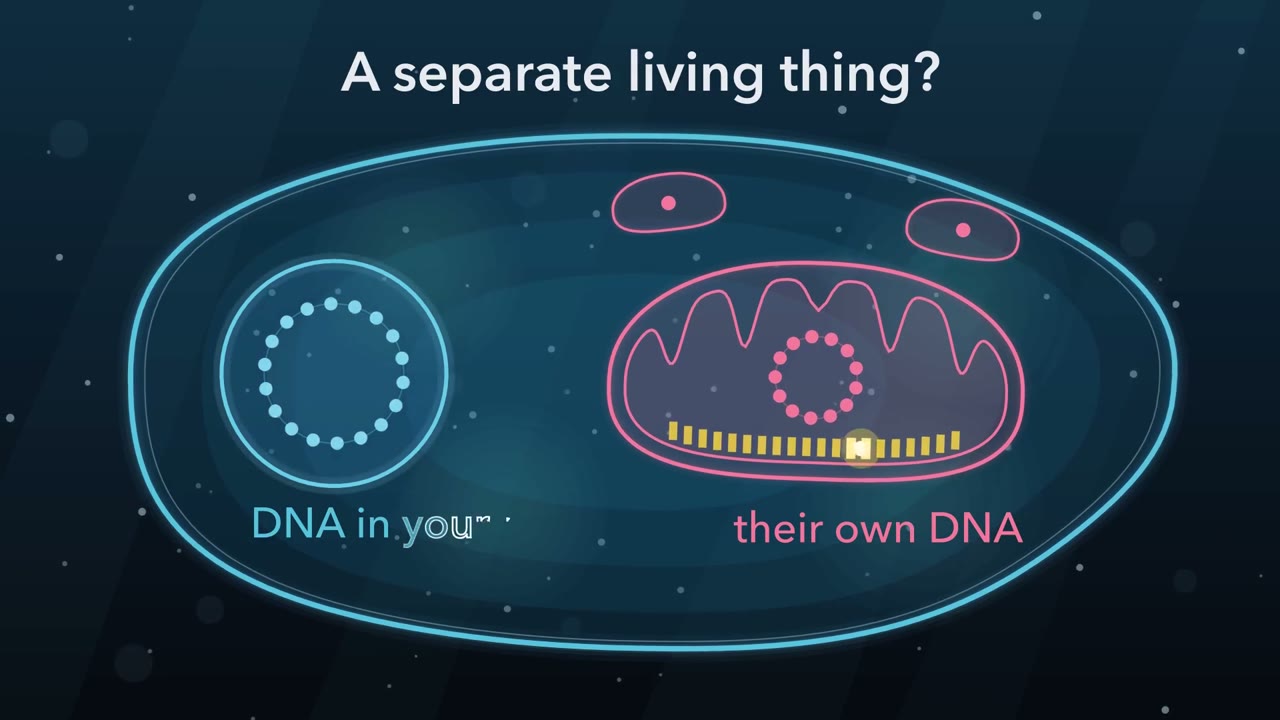
Gene trees suggest that this happened only once. Every mitochondrion today descends from that single guest. Most mitochondria still show their bacterial past. They have two membranes, their own DNA, bacteria-like ribosomes, and they divide by pinching in two.
Why did the partnership begin? The honest answer is that it is still debated. The hydrogen hypothesis says the host lived on hydrogen. The bacterium gave off hydrogen as waste, so the two fed each other. The oxygen detoxification hypothesis says oxygen harmed the host. The bacterium consumed oxygen and shielded its partner.
Both ideas fit some evidence, and neither is proven. The first Asgard archaeon grown in a lab gives hydrogen to partner microbes. That is the reverse of the proposed host, but it shows such partnerships are real. Oxygen changed the world the partners lived in. But eukaryote fossils appear long after the oxygen rise. How much oxygen drove their merger is still debated.
Over time, the guest became an organelle. Many of its genes were lost, and others moved to the nucleus. But it kept a small genome of its own. Human mitochondrial DNA encodes just thirteen proteins, all for respiration and A T P synthesis.
One influential idea is that many mitochondria let eukaryotic cells afford larger genomes and more complex lives. So think back to the idea. Rust, poison and power are all ways of handling oxygen's electrons. In this lesson, follow electrons from N A D H down the chain to oxygen. Watch complex four hold oxygen until it is fully reduced to water.
That careful grip is the bargain. Every breath you take delivers oxygen to a chain inherited from that ancient guest.
Electron flow and ATP synthesis are two separate machines linked by one thing: the proton gradient.
Continue in the lesson: Oxidative Phosphorylation: The Electron-Transport Chain →
9:57 · Free, with captions and a transcript. The lesson has the full text, the questions and the sources.
More films from this lesson
How this film was made. Narration: an AI narrator voice (Kokoro, af_heart) reading narration written from Chris's lecture slides and the review literature. Animation: AI-generated in code (Manim) by Claude, a schematic with no drawn molecular structures. Captions come from the narration script. See something wrong? Report it.