The Answer Key: How Many Spikes Is a Flash?
Read the transcript of “The Answer Key: How Many Spikes Is a Flash?”
Film transcript: The Answer Key: How Many Spikes Is a Flash?
A neuron flashes brighter for a moment. How many spikes did it fire? The glow is measured in light, not spikes. To translate, record both at once in a sample of neurons. Then ask whether that calibration fits your conditions. A fine glass pipette presses against the outside of the cell, without breaking in. It picks up each spike electrically. This is a cell-attached recording. Meanwhile, the microscope films the same cell's glow. Picture the record. Spike ticks from the pipette run along the top, and the glow runs below. The spikes are the answer key. You ask how often the light gets them right. The detection rate is the fraction of isolated single spikes that the light reveals.
The false-positive rate is the fraction of spike-free test windows in which the light reports a spike anyway. You can always find more spikes by accepting more false alarms. So fair comparisons fix the false alarms at 1% % of spike-free windows. First, the best case. Chen and colleagues made detection as easy as possible, with a magnified view of one cell. The sensor, GCaMP6s, revealed nearly every isolated spike. Now widen the field to hold hundreds of cells. Each cell becomes a tiny part of the picture. What happens to single-spike detection, and why?
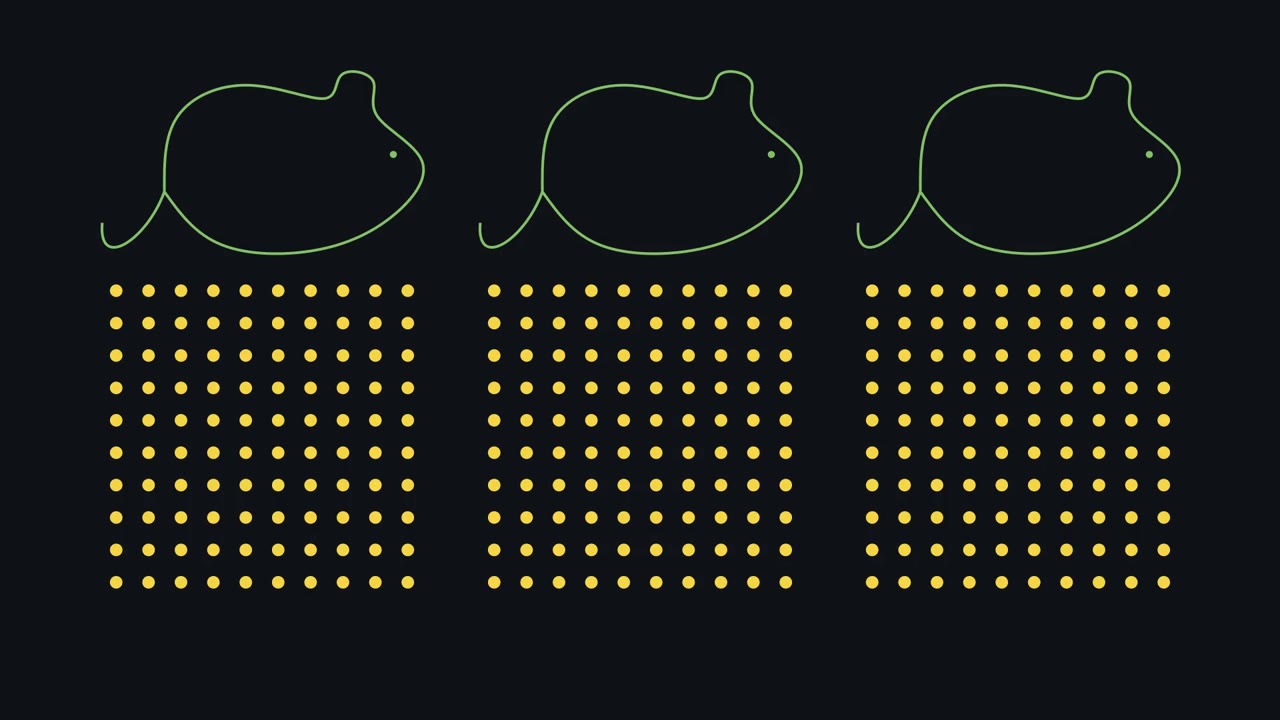
It falls further. Huang and colleagues repeated the calibration in transgenic mice. Even at high magnification, their tuned detector caught fewer single spikes than in Chen's cells. The authors proposed weaker expression and more labelled neuropil as possible reasons. When the movies were made to mimic a wide field, it caught only a minority. Standard software without the answer key often caught under one spike in ten, even before that. Huang and colleagues pointed to photons. A wider field spreads the imaging time over more pixels. Each neuron sends back fewer photons. Photon counts flicker at random, and one spike's glow sinks into the flicker.
If the cell sends back the same photons per second, a slower frame rate costs a slow sensor little. Frame rate still limits spike timing. So a calibration belongs to its conditions, not to the sensor. Before turning glow into spikes, ask: was it calibrated at your field of view, expression level and cell type? And in population imaging, a flat trace does not prove a silent cell. One or a few spikes can hide in it.
A probe with 960 recording sites does not record one neuron per site. What does it record?
Continue in the lesson: Recording Many Neurons: Imaging, Arrays and Atlases →
2:47 · Free, with captions and a transcript. The lesson has the full text, the questions and the sources.
More films from this lesson

How this film was made. Narration: an AI narrator voice (Kokoro, af_heart) reading narration written from this lesson's text. Animation: AI-generated in code (Manim) by Claude, a schematic with no drawn molecular structures. Captions come from the narration script. See something wrong? Report it.