One Question for Every Number
Read the transcript of “One Question for Every Number”
Film transcript: One Question for Every Number
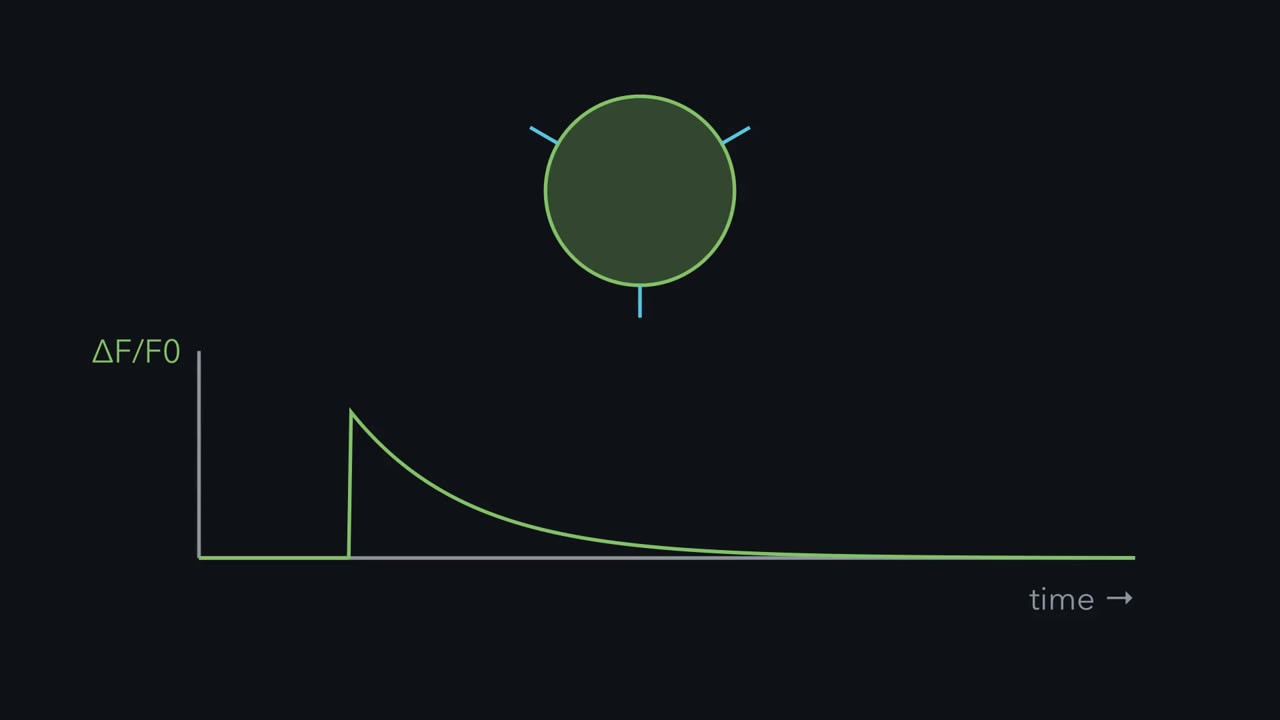
The original Neuropixels probe carries 960 recording sites. Does it record 960 neurons? Not necessarily. The original probe reads out only 384 sites at a time. Each one read out is a channel. And neurons are not read off sites at all. Software sorts the spikes into units. It can find more units than channels, or fewer. One neuron shows up on several neighbouring sites. One site hears several neurons. So a unit can merge two neurons, or split one. Treat each unit as an inference, with quality scores. Notice the ladder. Sites, then channels, then units, then neurons. Each rung is a step from what you want. Calcium imaging has a ladder too. A spike lets calcium in, and calcium makes a sensor glow.
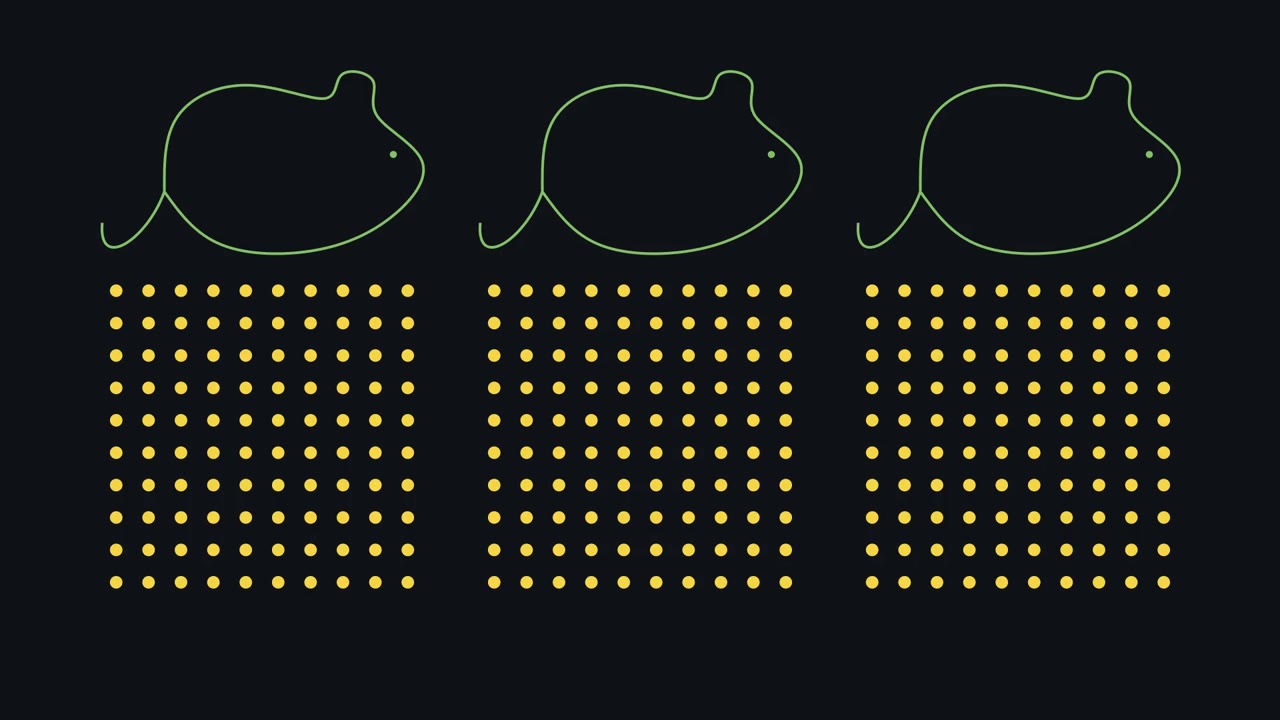
The glow is real, but it lags and blurs the spike, like steam from a kettle. An atlas sorts cells into clusters. Is each cluster a true cell type? Not every one may be. A connectome counts synapses. Is a count a strength? Treating it as one is an assumption, not a measurement. Even a pile of units has a step. Units from one mouse share that mouse. So here is the one idea. Each of these numbers is a proxy, one or more steps from your claim. Name each step. Trust it only as far as someone has measured that step, in conditions like yours. More cells sharpen the estimate for each animal. But they never count as more animals. Every method has a row like this: the number it gives, and the step to your claim.
The rule says how far to trust a measurement. It cannot show a pathway is needed. That takes a manipulation. The next two films follow two of these steps closely: light to spikes, and cells to mice.
A probe with 960 recording sites does not record one neuron per site. What does it record?
Continue in the lesson: Recording Many Neurons: Imaging, Arrays and Atlases →
2:17 · Free, with captions and a transcript. The lesson has the full text, the questions and the sources.
More films from this lesson
How this film was made. Narration: an AI narrator voice (Kokoro, af_heart) reading narration written from this lesson's text. Animation: AI-generated in code (Manim) by Claude, a schematic with no drawn molecular structures. Captions come from the narration script. See something wrong? Report it.