Biology · Skim version
Variation and Survival
Read the full lesson → Skim the whole course →
The guiding idea
How can a population change when no elephant changes the tusk trait she was born with?
When inherited variations affect reproductive success, populations change across generations.
From the film: How Populations Change
- When inherited variations affect reproductive success, populations change across generations.
- Mutation makes new alleles, gene flow moves alleles, and sexual reproduction reshuffles alleles.
- An individual keeps its inherited variant while the population's mix can change.
- Natural selection needs inherited variation and unequal reproductive success under the current conditions.
From the film: Reading Selection in a Population
- When inherited variations affect reproductive success, populations change across generations.
- Populations usually produce more young than their environments can support.
- A trait-frequency shift describes groups, not an individual changing during life.
- Comparisons against chance strengthen a claim that selection shaped a population.
-
Explore: put a population under pressure
-
Explain: where variation comes from
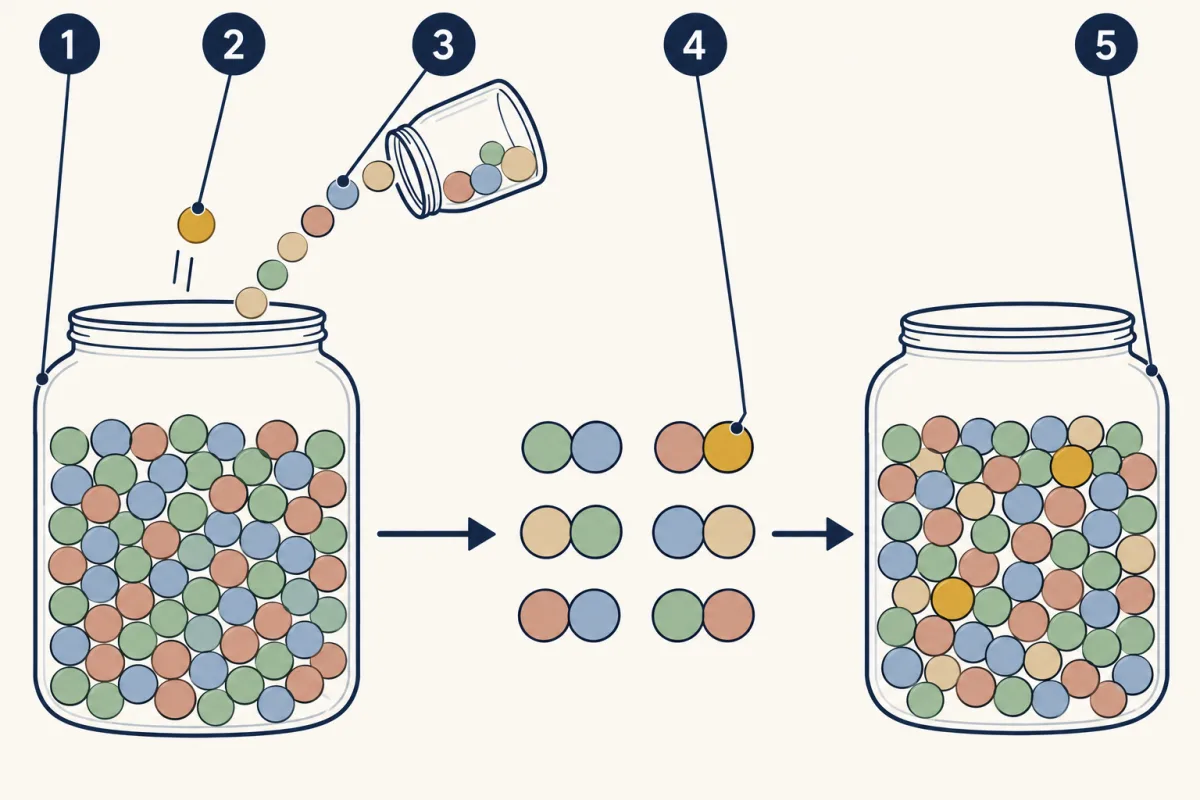
- gene pool
- mutation
- gene flow
- meiosis and fertilization
- one generation later
-
Explain: what the film left out
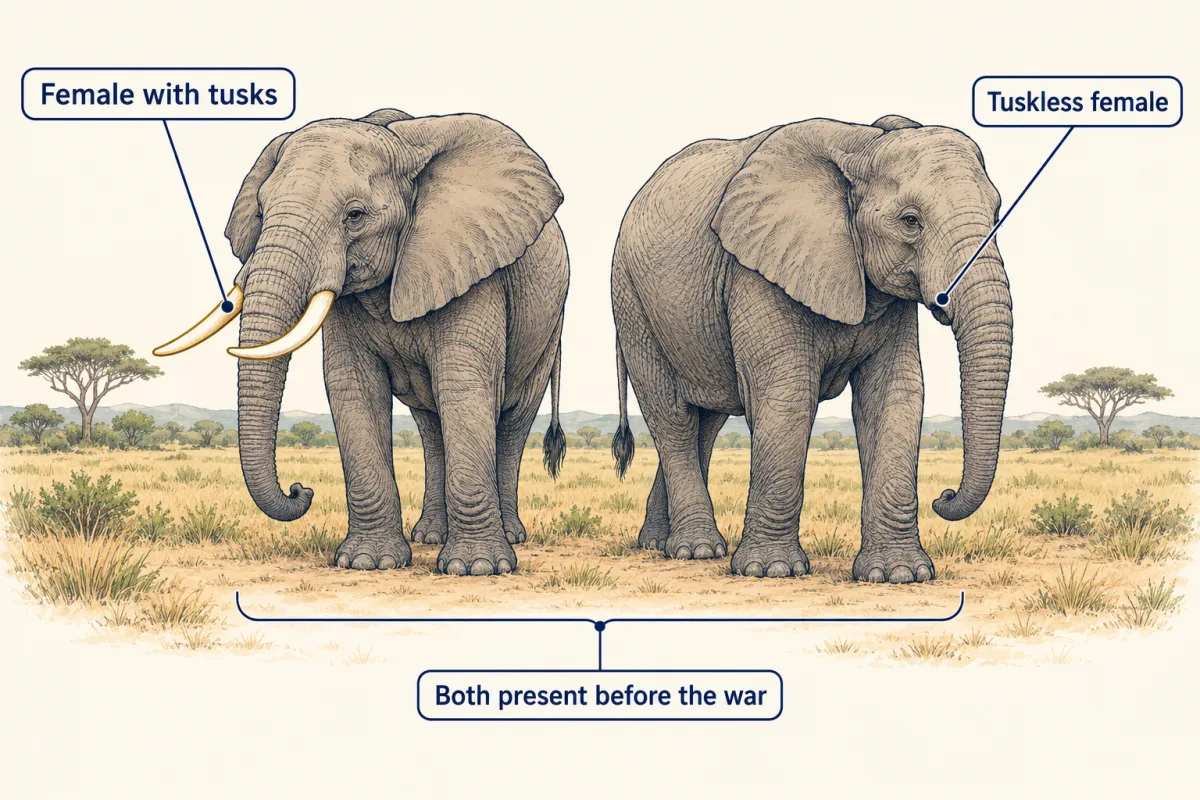
Tuskless females were already part of the Gorongosa population before the war. Poachers killed tusked elephants more often, so tuskless females survived more often. AI-generated illustration 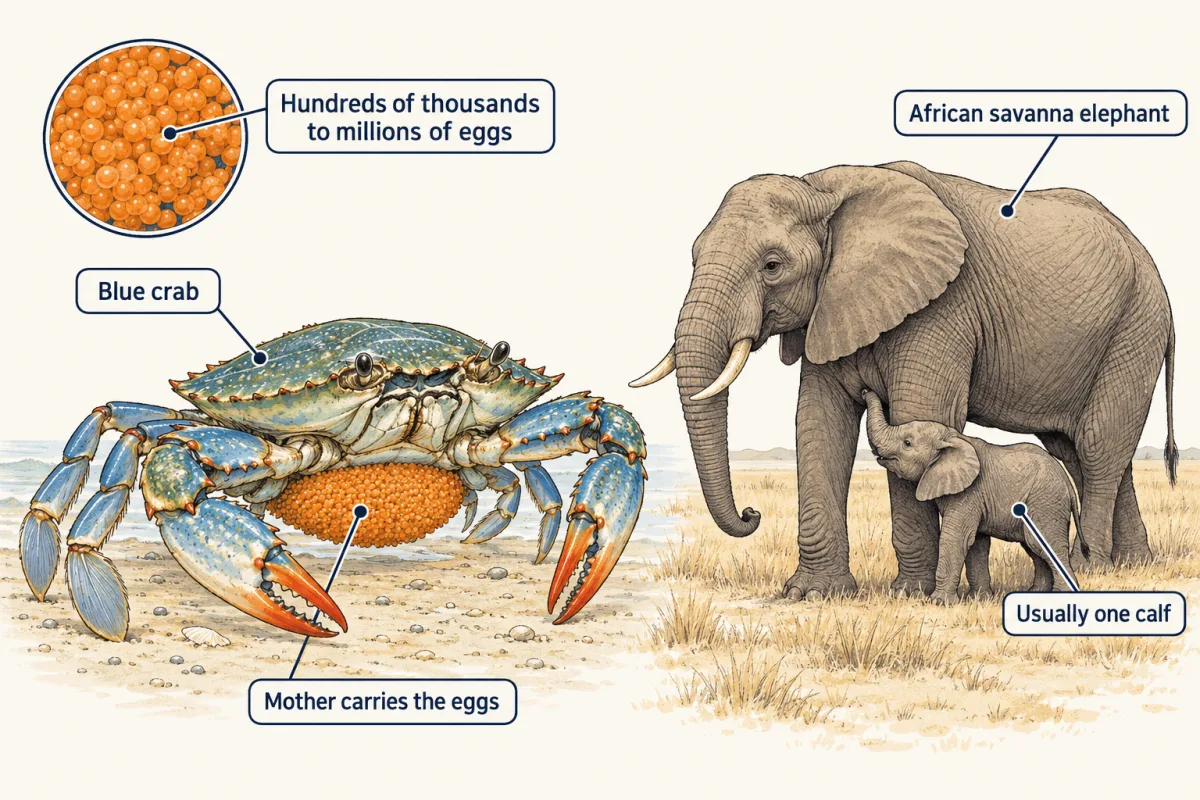
Two ends of a range of reproductive strategies: a blue crab carries hundreds of thousands to millions of eggs, while an elephant usually raises one calf with years of care. AI-generated illustration -
Elaborate: read the elephant and crab data
-
Going deeper
-
Evaluate: check your thinking
Where this lesson fits
Before thisReview first
- Meiosis and VariationThis course · Lesson 19
Meiosis shuffling chromosomes into new allele combinations is used here to explain why offspring differ.
- From DNA to ProteinThis course · Lesson 18
You need to know how a changed DNA letter can change a protein to see how mutations make new traits.
After thisStudy next
- Natural Selection and New SpeciesThis course · Lesson 28
It takes selection further, showing how pressure on variation reshapes finches and can split one population into new species.
- Populations and Carrying CapacityThis course · Lesson 29
It builds on the idea that populations make more young than the environment supports, using blue crab numbers.
Elsewhere on the siteFilms, simulations and method films in other courses
- How a Population Changes ColourFilm · Life Science
The moth film shows a trait becoming common because carriers survive and reproduce more under a pressure.
- Moths and birdsSimulation · Life Science
You can change the environment and watch moth colour frequencies shift across generations.
Suggested by an AI model from the lessons themselves, then checked. How we use AI