Life Science · Skim version
Sorting Living Things
Read the full lesson → Skim the whole course →
The guiding idea
In Virginia some people call a vulture a buzzard, and in Britain the buzzard is a hawk, so how can a scientist say which bird they mean?
Every species sits inside eight main nested groups, from domain to species, and its two-part scientific name, the same in every country, labels its species group.
From the film: Eight Boxes and a Name
- Scientists sort every species into eight main levels, nested like boxes, from domain, the most general, to species, the most specific.
- Each level is a box inside a bigger box, and an inner box holds the same or fewer kinds of living things, usually fewer.
- A scientific name is the genus name plus a second word, such as Cathartes aura; the genus gets a capital letter, and both words go in italics or are underlined.
- Scientists in every country use the same scientific name, though a name or a box can change when scientists learn more.
- The more boxes two living things share, the more closely they are grouped.
From the film: A Key Finds a Name, Not Relatives
- A dichotomous key names a living thing through a series of two-choice steps about traits you can see.
- Changing the order of a key's questions changes which living things sit side by side, but every name stays the same.
- The blue crab shares only two levels, domain and kingdom, with the sea star, the oyster and the trout.
- This key's questions follow traits that are easy to see, so its order alone does not show which living things are related; the boxes show how one classification groups them.
-
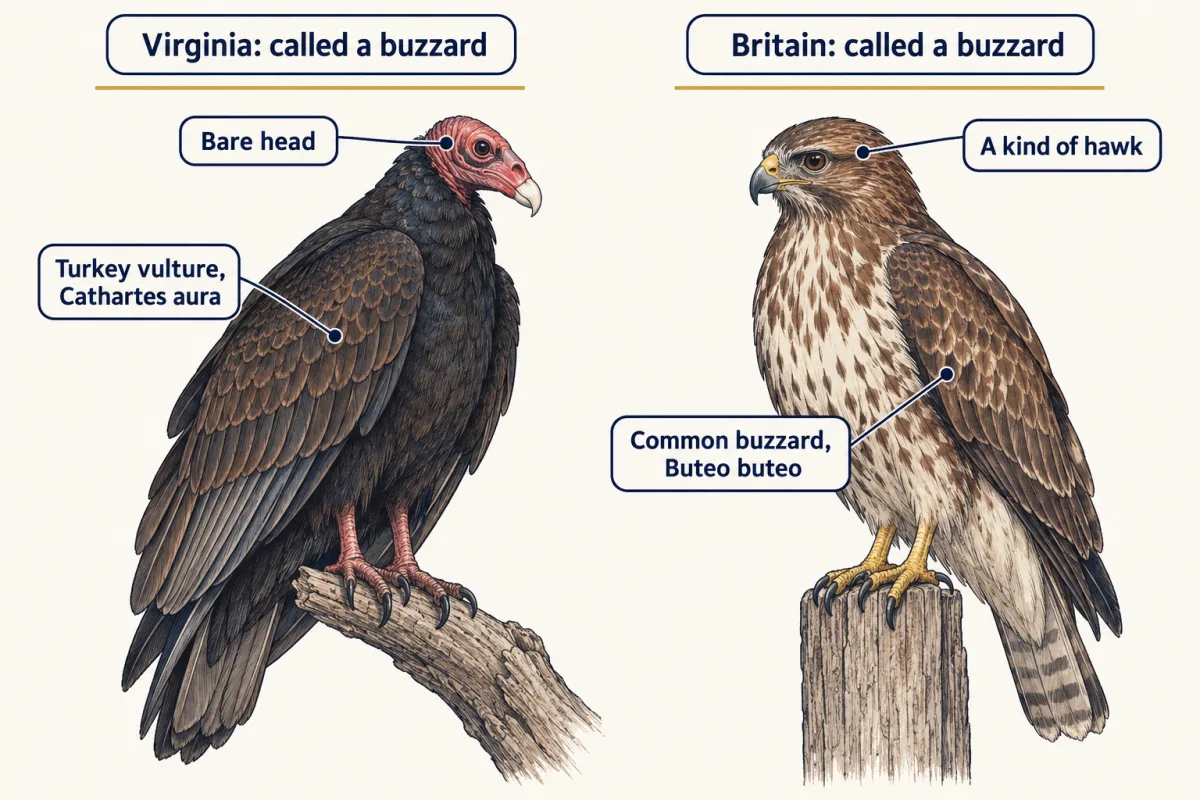
One common name, two different birds. Their scientific names, Cathartes aura and Buteo buteo, tell a scientist anywhere which one you mean. AI-generated illustration -
Explain: one name for each species
-
Explain: eight boxes, from general to specific
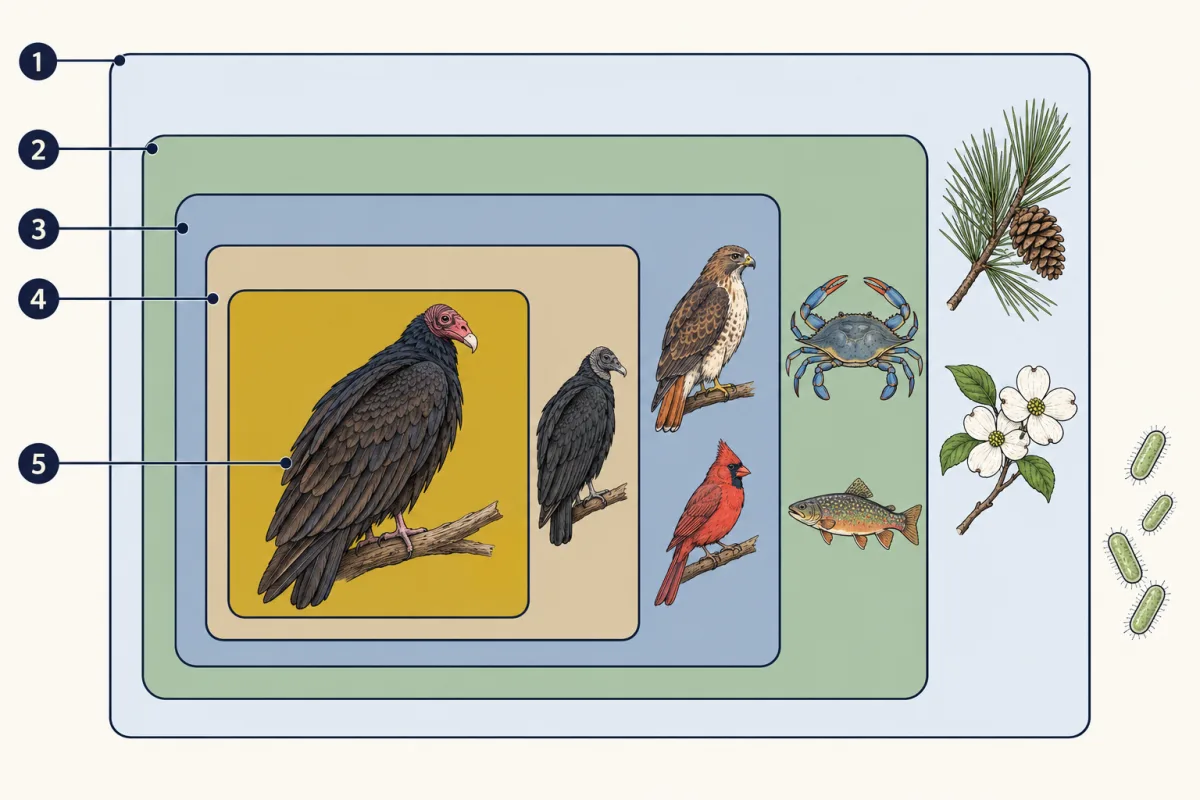
- domain Eukarya
- kingdom Animalia
- class Aves
- family Cathartidae
- species Cathartes aura
-
Explore: run a dichotomous key
-
Explain: use a dichotomous key
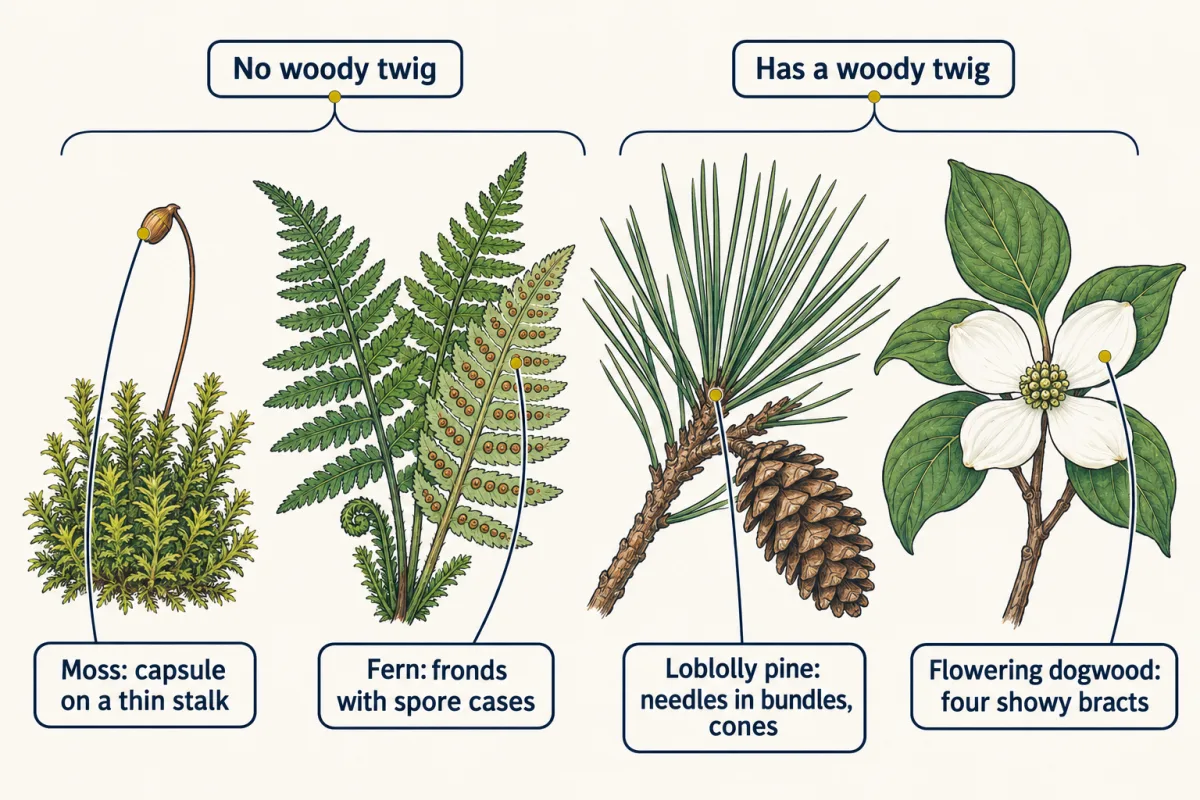
The plant key sorts these four by traits you can see, starting with a woody twig or not. Plants are not drawn to scale. AI-generated illustration -
Elaborate: read real classifications
-
Evaluate: check your thinking
-
Going deeper
Where this lesson fits
Before thisReview first
- Leaf DetectivesBiology Together · Ages 5–10, with a grown-up
You already sorted leaves with yes-or-no questions there, which is the same kind of step-by-step key used here.
- Cells Are EverywhereThis course · Lesson 1
You need to know that all living things are made of cells, since the domains are told apart by cell type.
After thisStudy next
- Domains, Kingdoms and DNAThis course · Lesson 8
It takes the domains and kingdoms from this lesson and shows how DNA evidence decides where the walls go.
Elsewhere on the siteFilms, simulations and method films in other courses
- Classify the unknownSimulation · Biology
You can classify an unknown organism by asking ordered questions about its traits, much like using a key.
Suggested by an AI model from the lessons themselves, then checked. How we use AI