Biology · Skim version
Respiration and ATP
Read the full lesson → Skim the whole course →
The guiding idea
Why do your legs burn after a sprint, why does bread dough puff up, and why does the deep Chesapeake Bay lose its oxygen in summer?
Cells spend ATP and rebuild it by taking glucose apart; a glucose taken all the way to carbon dioxide and water with oxygen rebuilds about 30 ATP, while a glucose that stops partway in fermentation rebuilds 2, leaving most of the energy in lactate or ethanol.
From the film: Spending ATP, Rebuilding ATP
- Cells do work by spending ATP, which becomes ADP and a phosphate when it reacts with water.
- A cell keeps only a small supply of ATP, so it rebuilds ATP from ADP all the time.
- The energy to rebuild ATP comes from taking glucose apart; the first steps run in the cytoplasm.
- With oxygen, mitochondria finish the job, down to carbon dioxide and water; the whole route rebuilds about 30 ATP per glucose.
- ATP is a molecule that carries energy; it is not energy itself.
From the film: Stopping Partway
- When oxygen-using respiration can't keep up, some glucose stops partway; each glucose that stops partway rebuilds just 2 ATP, while the mitochondria keep working on the rest.
- In muscle the halves become lactate; in yeast they become ethanol and carbon dioxide, which makes dough rise.
- Lactate and ethanol still hold over nine-tenths of glucose's energy, which is why fermentation yields so little ATP.
- To rebuild the same ATP, a fermenting cell must break down about 15 times as much glucose.
-
Explore: run a cell’s energy budget
-
Explain: ATP carries energy to where it is used
-
Explain: where ATP is rebuilt
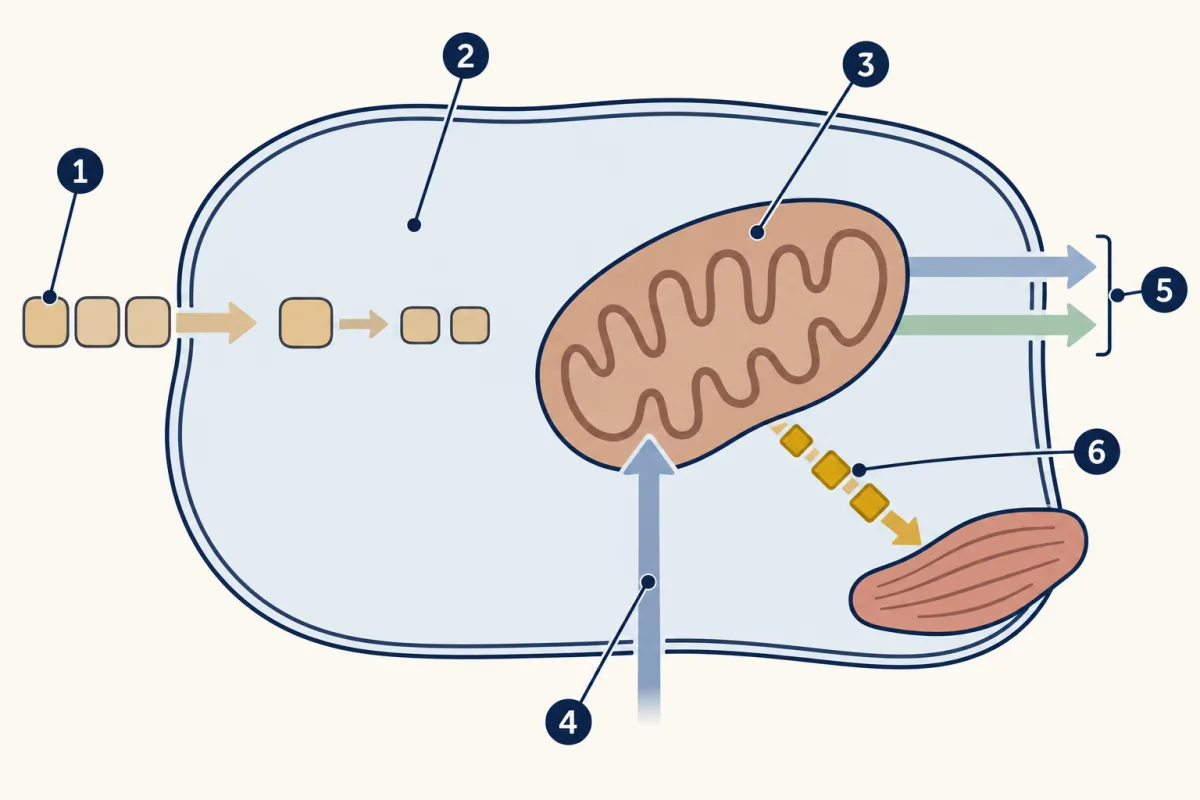
- glucose
- cytoplasm
- mitochondrion
- oxygen
- carbon dioxide and water
- ATP
-
Explain: with oxygen and without it
-
Elaborate: the Bay’s summer oxygen gap
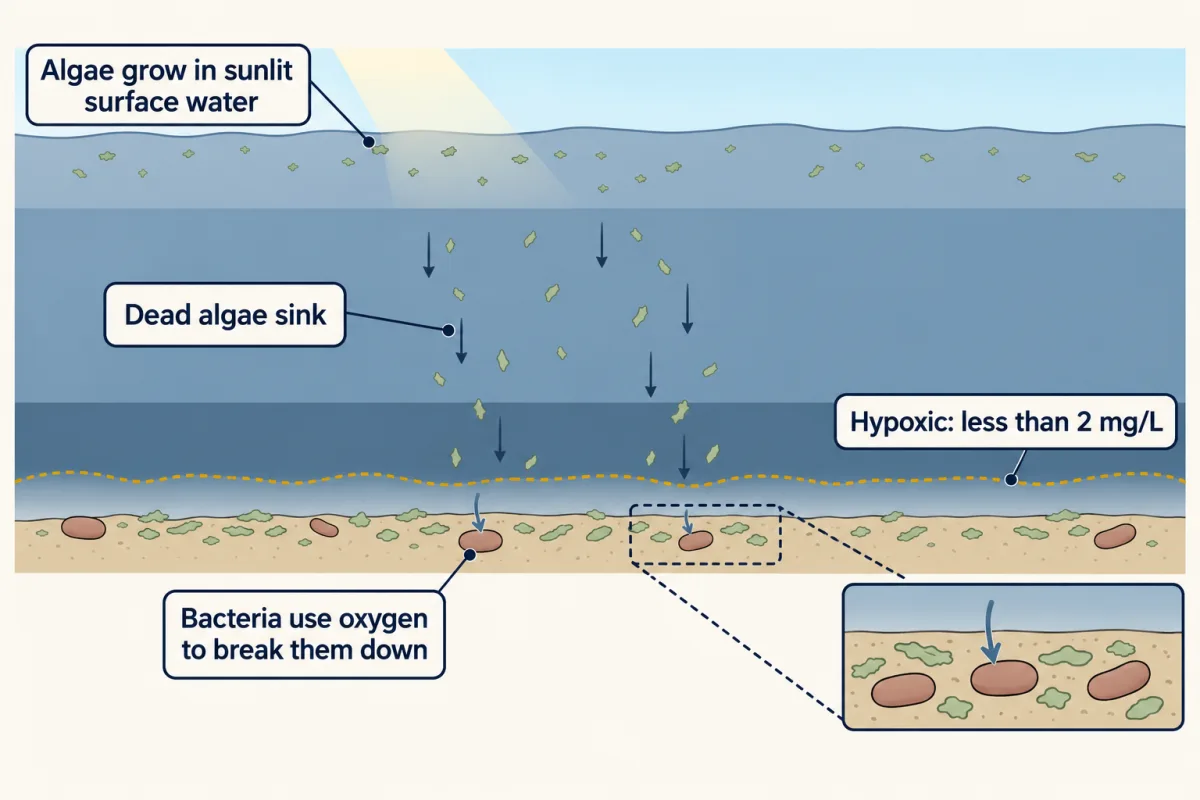
In summer, algae that die in the sunlit surface water sink, bacteria near the bottom use up the oxygen as they break the algae down, and little new oxygen mixes down, leaving hypoxic water. AI-generated illustration -
Evaluate: check your thinking
-
Going deeper
Where this lesson fits
Before thisReview first
- Capturing SunlightThis course · Lesson 4
You need to know how glucose is built from carbon dioxide and water, with its energy, before taking it apart here.
- Enzymes at WorkThis course · Lesson 3
Respiration runs as many small steps, each sped up by an enzyme, so you need how enzymes work.
After thisStudy next
- Matter CyclesThis course · Lesson 31
It follows carbon and oxygen atoms round between respiration and photosynthesis, which this lesson only introduces.
- Energy in EcosystemsThis course · Lesson 30
It uses respiration to explain why energy leaves a food chain as heat at each step.
- The Chesapeake Under PressureThis course · Lesson 33
It takes the bottom-water oxygen loss from bacterial respiration further, tracing how fertilizer causes it.
Suggested by an AI model from the lessons themselves, then checked. How we use AI