Biology · Skim version
Engineering Genes
Read the full lesson → Skim the whole course →
The guiding idea
Bacteria do not naturally carry a human insulin gene, so how can they make human insulin?
Engineering changes a cell's DNA; test the effects, judge each use separately.
From the film: How Bacteria Make Human Insulin
- A restriction enzyme can cut a gene and plasmid to leave matching ends.
- Ligase seals the gene into the plasmid, making recombinant DNA.
- A bacterium can read intron-free DNA for a human protein when bacterial control DNA is present.
- Engineering changes a cell's DNA; test the effects, judge each use separately.
From the film: How Do We Know It Worked?
- Antibiotic selection supports plasmid uptake, not insulin production.
- DNA tests and protein tests answer different questions.
- Adoption data do not by themselves show safety or benefit.
- Engineering changes a cell's DNA; test the effects, judge each use separately.
-
Explore: build a bacterium that makes a product
-
Build one change, then test it
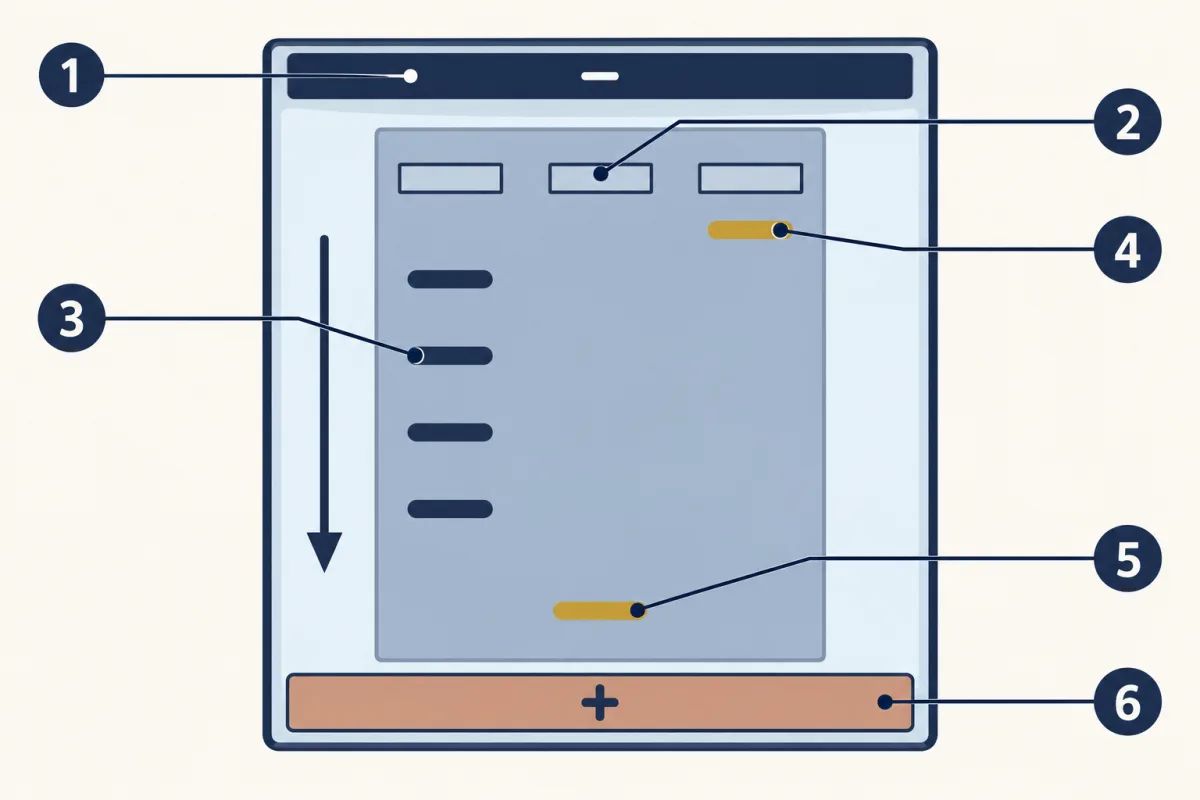
- negative end
- wells
- ladder
- long piece
- short piece
- positive end
-
From a human gene to insulin
-
From one product to many uses
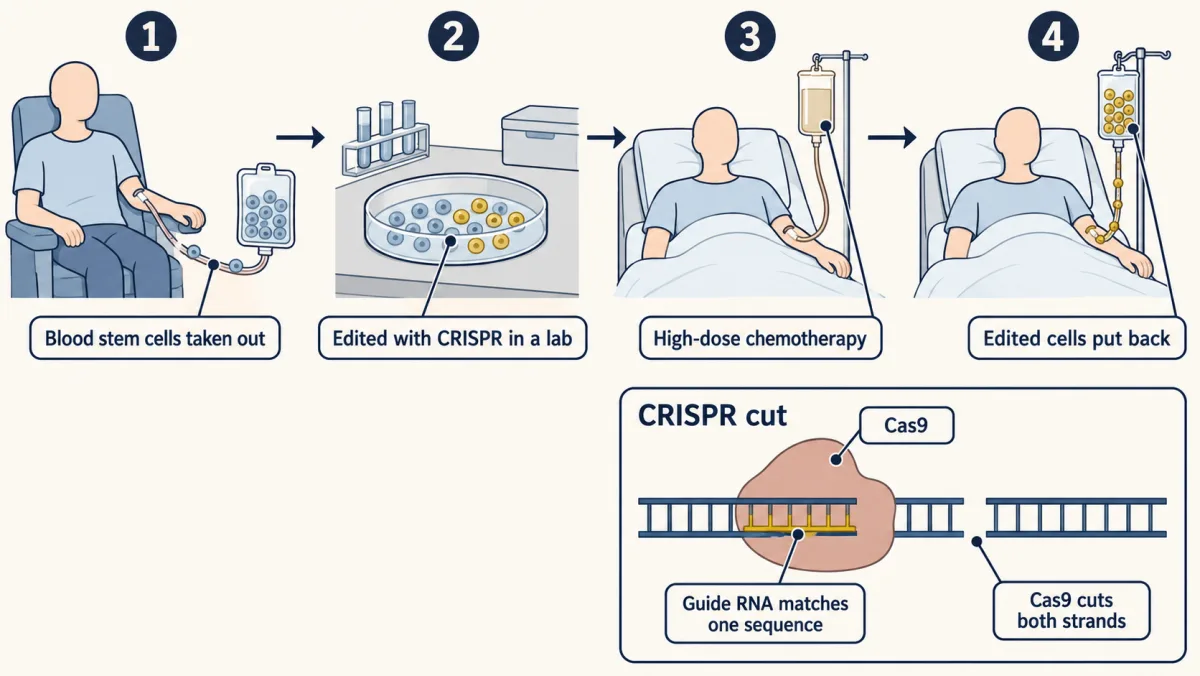
The first approved CRISPR treatment edits one kind of cell, a patient’s own blood stem cells, outside the body and returns them after chemotherapy. AI-generated illustration -
Elaborate: how common are engineered crops?
-
Going deeper
-
Evaluate: check your thinking
Where this lesson fits
Before thisReview first
- DNA: Structure and CopyingThis course · Lesson 16
You need to know how DNA is built and copied, since cutting, joining and copying DNA uses that structure.
- From DNA to ProteinThis course · Lesson 18
You need to know how a cell reads a gene to make a protein, including introns, to see why bacteria need intron-free DNA.
- Enzymes at WorkThis course · Lesson 3
Restriction enzymes and ligase are enzymes that act on particular sequences, so you use how enzymes work.
Elsewhere on the siteFilms, simulations and method films in other courses
- Gene cloning: vectors, libraries and screeningMethod film
It shows how DNA is cut, joined into vectors and grown in bacteria, the same steps used for insulin.
- PCR and quantitative PCRMethod film
It shows how PCR copies one stretch of DNA, one of the tools this lesson names.
- CRISPR-Cas9 genome editingMethod film
It shows how a guide RNA and Cas9 cut a chosen DNA sequence, as in this lesson's CRISPR tool.
Suggested by an AI model from the lessons themselves, then checked. How we use AI