Biology Together · Skim version
Creek Critters
Read the full lesson → Skim the whole course →
The guiding idea
Is a creek just water? A strainer, a white tray and a few turned rocks show what lives in it.
At a shallow, slow creek in a public park, you and your child catch small animals from under rocks with a kitchen strainer, look at them in a white tray, sort them by how they move, and put every one back.
-
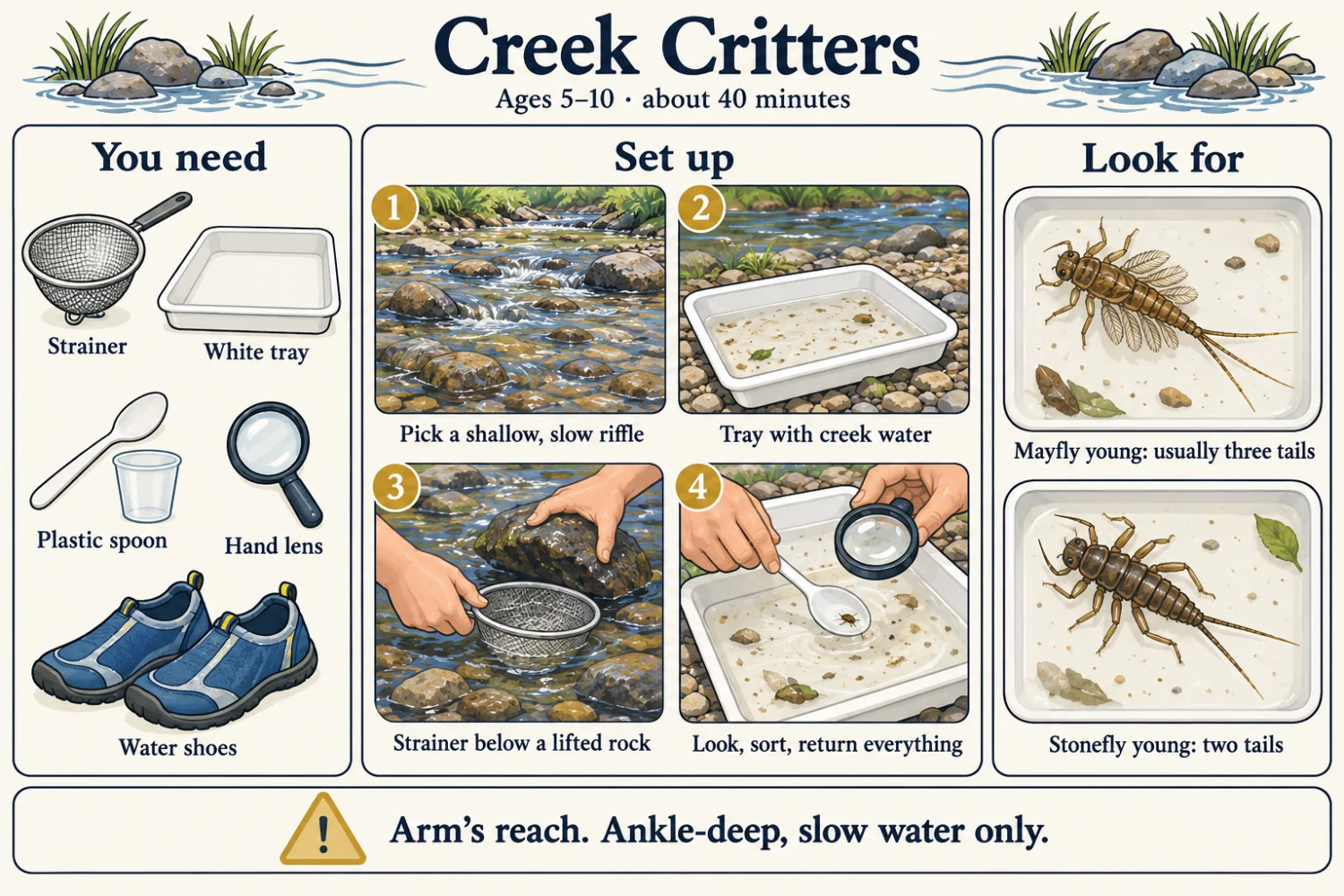
At a glance: print this card or keep it open while you work. The full steps and safety notes are below. AI-generated illustration -
The big idea
-
What to do
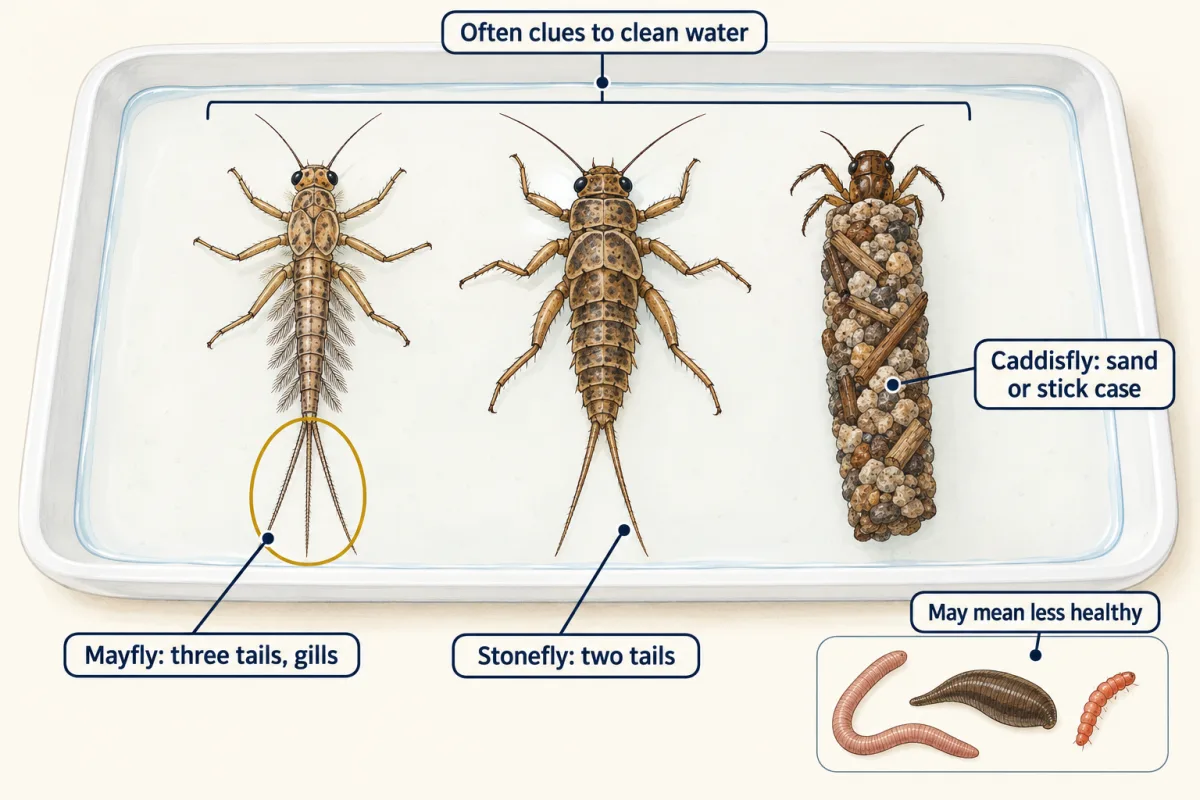
Mayfly young usually have three tails and gills along their sides, stonefly young have two tails, and caddisfly young often live in little cases. Finding mostly worms, leeches or tiny red larvae may mean less healthy water. One visit is a clue, not a final answer. AI-generated illustration 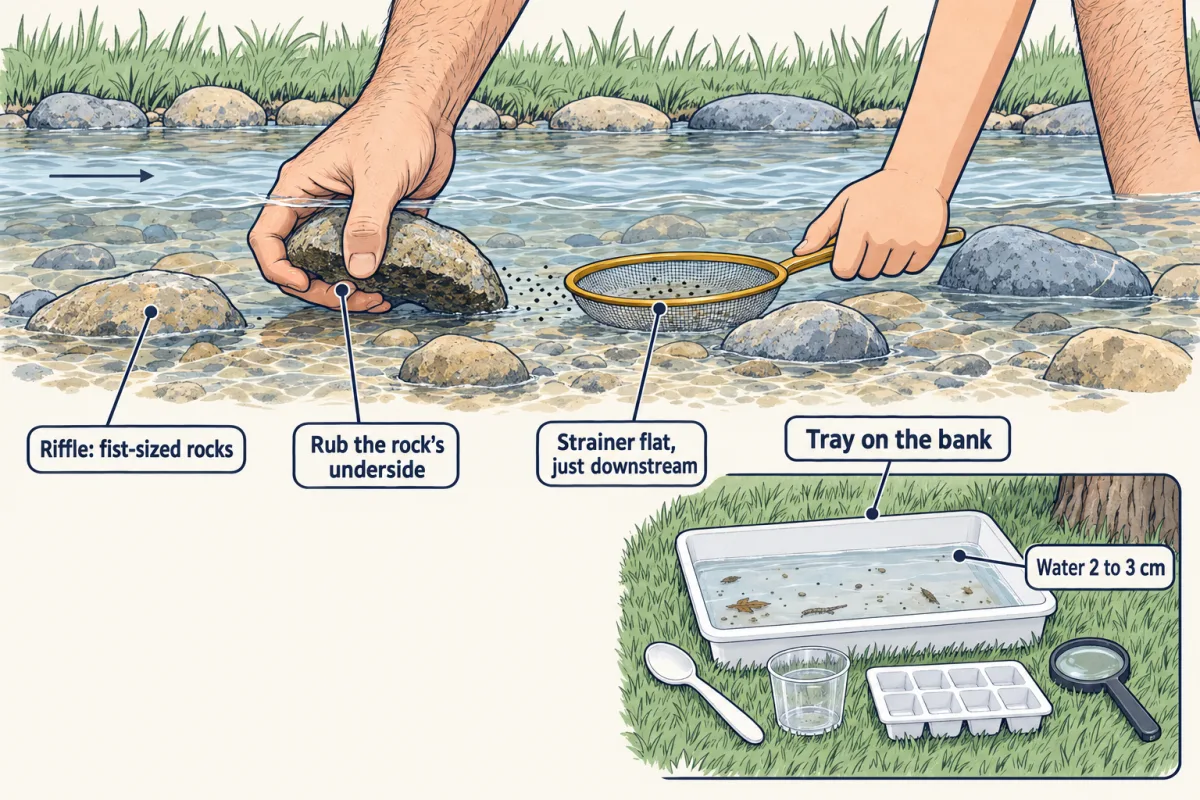
One person holds the strainer flat just downstream of a rock while the other lifts the rock and rubs its underside. Tip the strainer into the tray, and stay within arm's reach of your child. AI-generated illustration -
Questions to ask while you do it
-
What children often think
-
Why it works
-
Easier and harder
-
If it doesn’t go as planned
-
Observation sheet
-
Going deeper
Where this lesson fits
Before thisReview first
- Who Eats Whom?This course · Lesson 21
Your child uses the idea of who eats whom to guess what the creek animals eat and what eats them.
- Backyard Habitat HuntThis course · Lesson 19
Your child already practised close looking for small animals in one patch, which this lesson repeats in a creek.
After thisStudy next
- Food Webs and EnergyOne level up · Life Science
This takes the creek's chain of leaf-eaters, predators and fish further, following how energy passes along it.
- Producers, Consumers and DecomposersOne level up · Life Science
This takes further the idea that leaf-eating creek animals break down fallen leaves while others eat them.
Elsewhere on the siteFilms, simulations and method films in other courses
- Two Sides of Every EcosystemFilm · Life Science
It shows how the water's conditions decide which animals can live in it, like the clean-water clues here.
Suggested by an AI model from the lessons themselves, then checked. How we use AI