Neuroscience · Skim version
Designing a Causal Circuit Experiment
Read the full lesson → Skim the whole course →
The guiding idea
Light alone changed firing and turning behaviour in mice with no opsin at all. What does your light-on versus light-off comparison actually show?
A recording tells you that activity goes with a behaviour.
From the film: What Did the Light Change?
- Light can change firing and behaviour even when no opsin is present.
- Driving activity tests sufficiency; suppressing it tests necessity under the tested conditions.
- Crossing construct with light separates an opsin-linked effect from an effect of light itself.
- A causal claim must name the cells, projection, timing and measured behaviour.
From the film: How Much Evidence Is Enough?
- In this design, the animal—not each repeated trial—is the independent experimental unit.
- A standardized effect compares a group difference with the variability around it.
- Smaller effects require larger samples for the same power target.
- Association and held-out prediction do not by themselves establish causation.
-
From a manipulation to a claim
-
Read the two-by-two as two differences
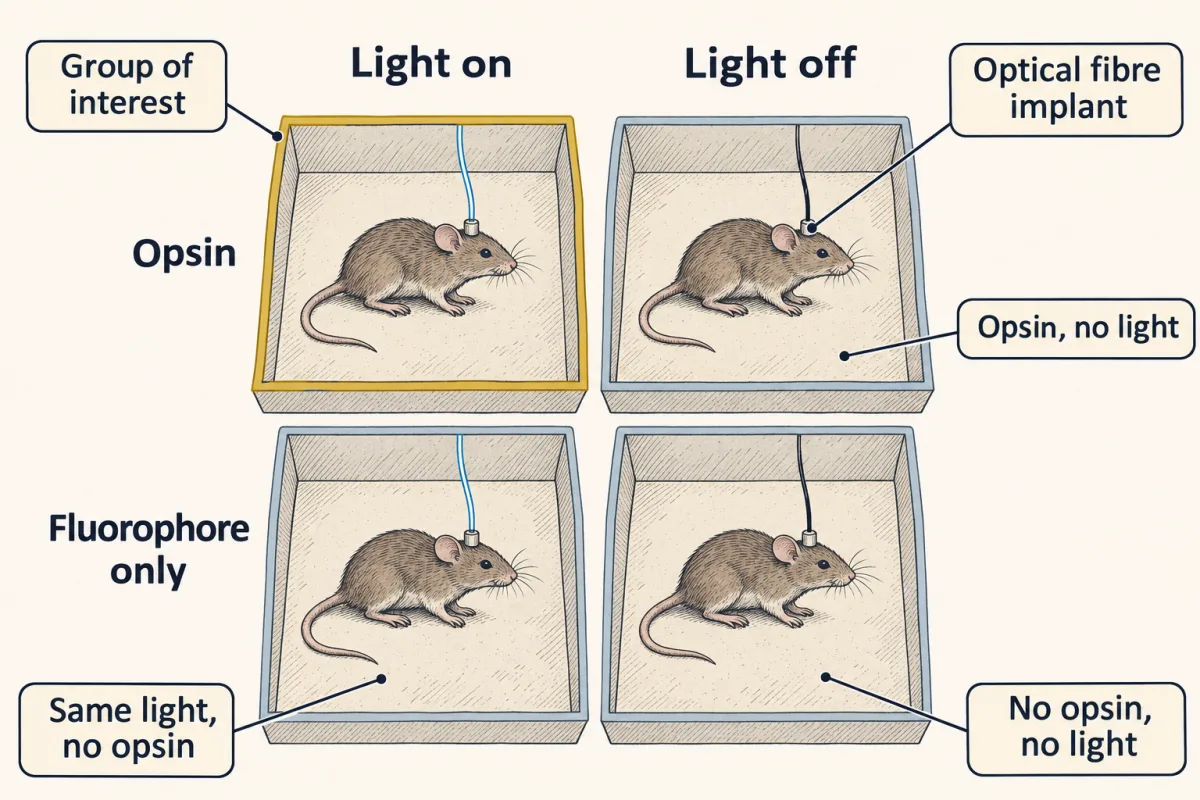
Cross opsin or fluorophore with light on or off, calculate the light effect within each construct group, and compare those two effects. AI-generated illustration -
Effect size, power and the experimental unit
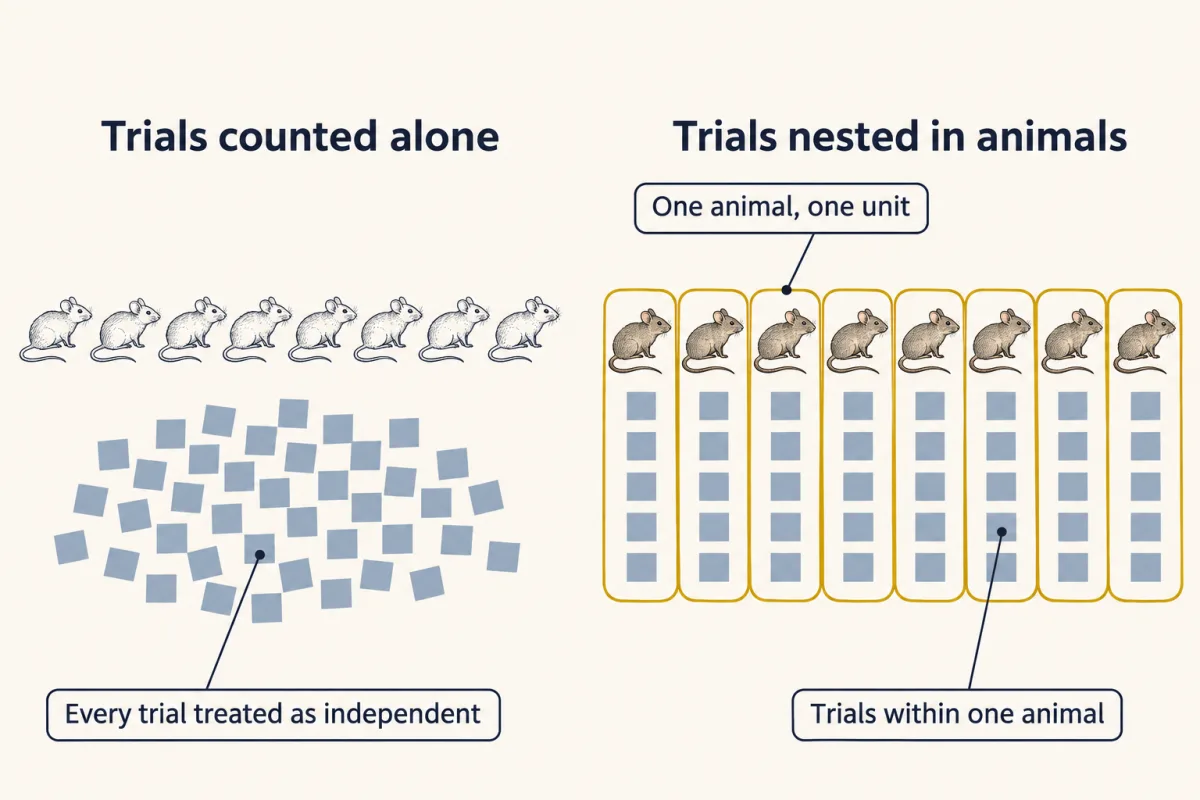
Each animal contributes one independent cluster; its trials can still be modelled at trial level while remaining grouped in the analysis. AI-generated illustration -
Association, prediction and causation in human imaging
-
Going deeper
Where this lesson fits
Before thisReview first
- Emotion and StressThis course · Lesson 20
You need the amygdala structures from there to follow the basolateral-to-central amygdala projection experiment here.
- Recording Many Neurons: Imaging, Arrays and AtlasesThis course · Lesson 27
You need its account of what recordings and imaging measure to judge the imaging association claims here.
Suggested by an AI model from the lessons themselves, then checked. How we use AI