How Populations Change
Read the transcript of “How Populations Change”
Film transcript: How Populations Change
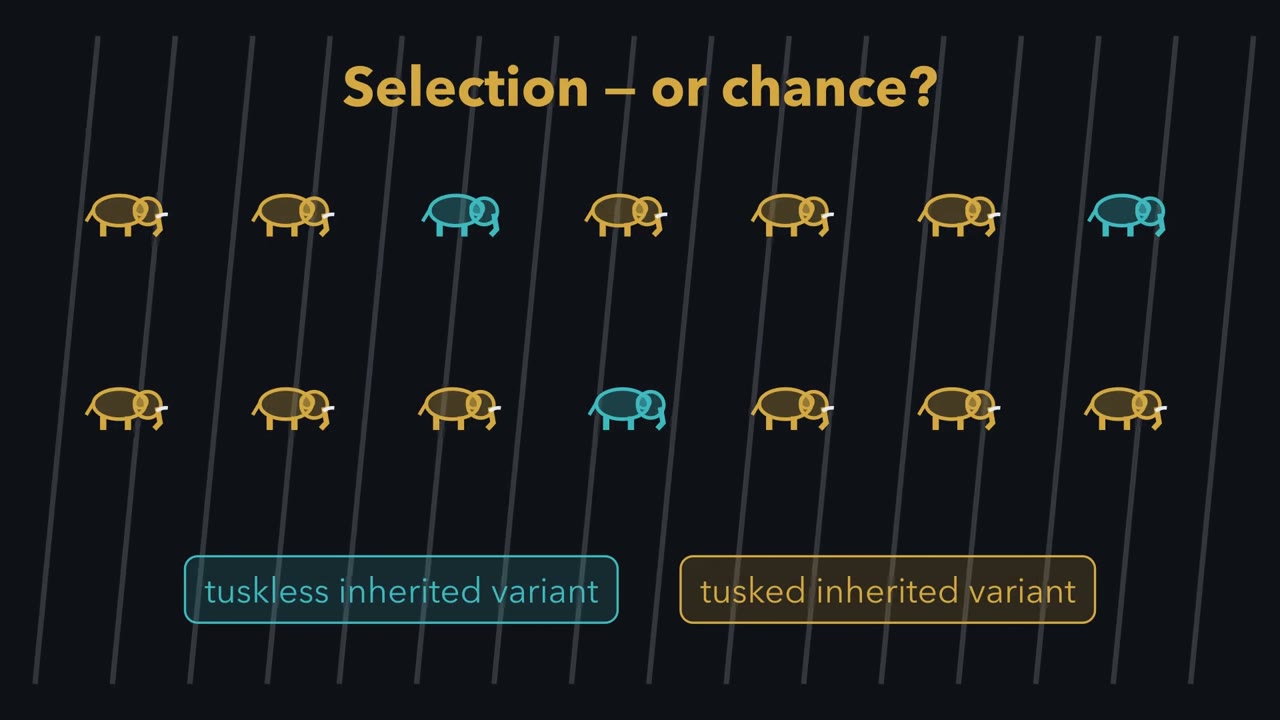
How can a population change when no individual changes its inherited trait? Watch this schematic herd. Each animal keeps its color through life, but the colored shares can change when a new generation replaces the old. Individuals in one population are not identical. Some differences come from food or experience. Others are inherited. Only inherited differences can pass from parents to offspring, so those differences can shape later generations. Zoom into the population's gene pool: all its alleles, meaning versions of genes. A mutation can make a new allele. Gene flow can bring an allele from another population. Both can change what the pool contains.
Sexual reproduction does something different. Meiosis and fertilization reshuffle alleles that already exist into new combinations. The offspring can differ from both parents without a new allele appearing. Now suppose teal and gold individuals leave offspring equally often.
Predict the next generation. Will one color steadily take over, or will their shares simply wobble? With equal reproductive success, neither color has a consistent advantage. Chance can still make the shares wobble. Yet the model has no directional push toward teal or gold. Real populations usually produce more young than their environments can support. Food, space, predators, disease, and other limits mean many never reproduce. The surviving adults are only part of the story; reproduction matters too. Now change the conditions.
Suppose teal individuals leave more offspring because their inherited variation fits those conditions better. More teal markers pass through the survival-and-reproduction filter. The next generation starts with a larger teal share. When inherited variations affect reproductive success, populations change across generations. That process is natural selection. It needs inherited variation and unequal reproductive success under the current conditions. Follow one gold individual. It never turns teal. Follow one teal individual. It never turns gold. The changing pattern appears only when we compare the population across generations. Selection can work only with variation that is present.
If every marker begins gold and no new teal allele appears or arrives, a teal advantage cannot change the population. Conditions cannot select a variant that is absent. Whether a variation helps, harms, or has no effect often depends on the environment. Selection does not plan ahead, and organisms do not change inherited traits because they need them. Return to the whole field. Different individuals entered, some left more offspring, and the next generation has a different mix. The population changed because reproductive success differed, not because individuals transformed.
How can a population change when no elephant changes the tusk trait she was born with?
Continue in the lesson: Variation and Survival →
3:49 · Free, with captions and a transcript. The lesson has the full text, the questions and the sources.
More films from this lesson
How this film was made. Narration: written from this lesson's text and read by an AI narrator voice (Kokoro, af_heart). Animation: AI-generated in code (Manim) by Claude, a schematic with no drawn molecular structures. Captions come from the narration script. See something wrong? Report it.