A Cell Cannot Name a Molecule
Read the transcript of “A Cell Cannot Name a Molecule”
Film transcript: A Cell Cannot Name a Molecule
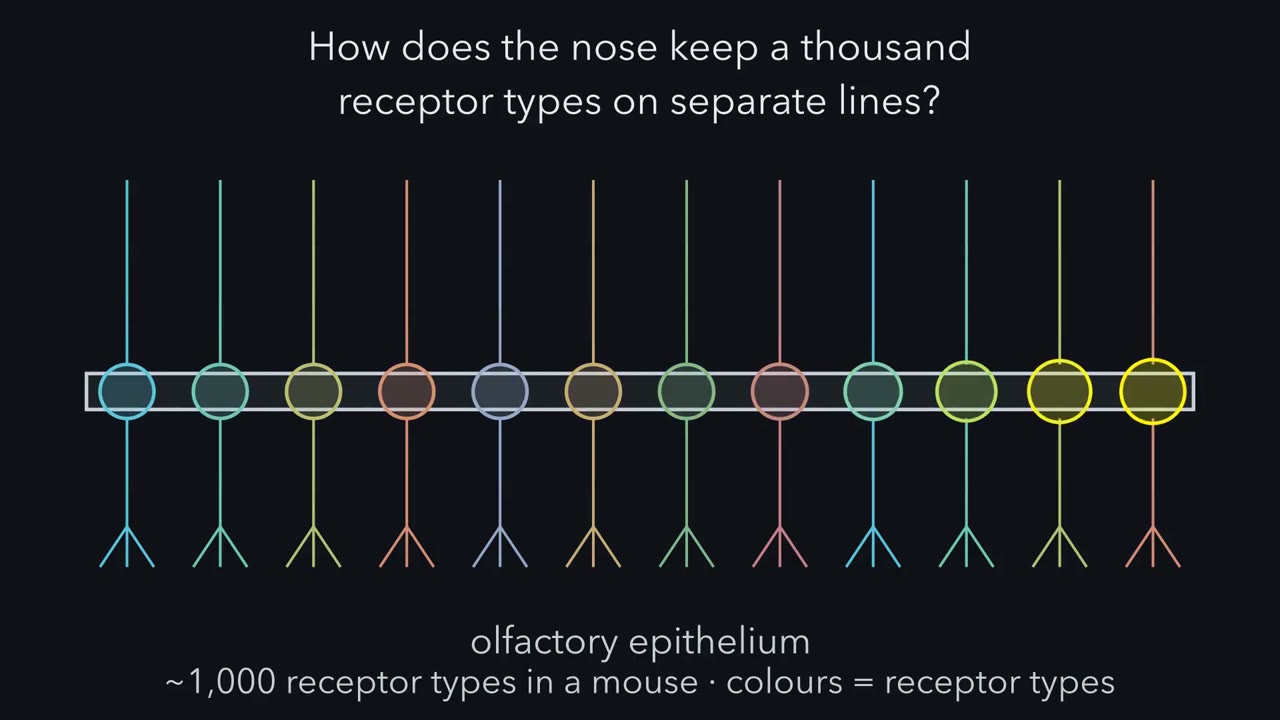
A mouse has about a thousand odorant-receptor genes. It reads an odour from a pattern across its receptors. It also has dozens of bitter-receptor genes. Yet bitter is one taste. Why the difference? Start with one receptor cell. Its output is its activity: how strongly it is active. Two different molecules arrive, each at a concentration that activates it equally. Can this cell tell which molecule it met?
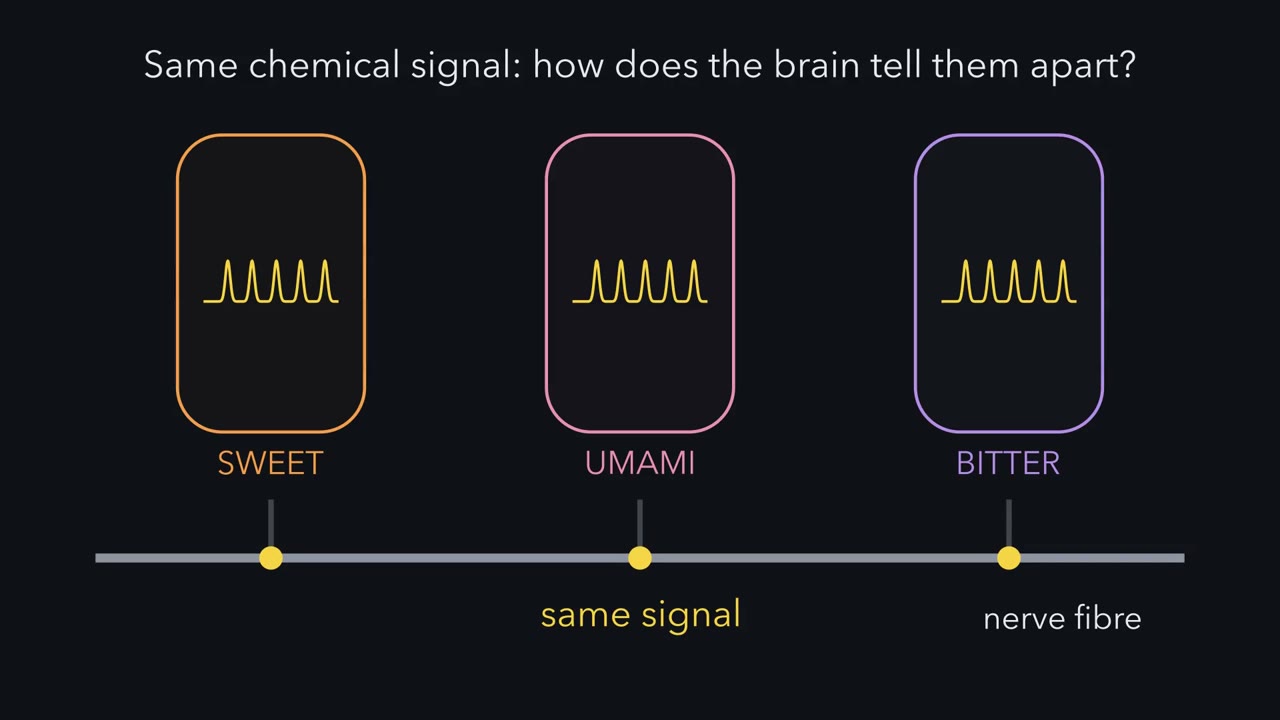
No. A receptor cell reports how strongly it is active, not which molecule activated it. Vision calls this univariance. A cone cannot tell a dim light near its peak from a brighter one far from it. To tell molecules apart when their concentrations vary, a sense needs more than one line. A line is a set of cells whose activity reaches the brain as one channel. In smell, a line is all the neurons with one receptor, and the glomeruli they converge on. In taste, a line is one kind of receptor cell: the sweet cells, the bitter cells, and so on. A pattern is the relative strength of activity across lines, not just which lines are on. The rule: a sense can tell two stimuli apart only if their patterns across separate lines differ.
Smell keeps about a thousand receptor types on separate lines. So an odour is read as a pattern across many lines. Taste pools its receptors into a few kinds of cell. So a taste is read mainly from which kind of cell is active. A line whose activity always means one quality, whatever turned it on, is called a labeled line. Keep the scope in view. The rule is about the periphery, mostly in mice, and it ignores spike timing. Gene count alone does not set the number of lines. What matters is whether receptor identity is kept separate or pooled.
One mouse olfactory neuron, one receptor gene out of about a thousand. One bitter cell, one job. Why do the two chemical senses code so differently?
Continue in the lesson: Smell and Taste →
2:14 · Free, with captions and a transcript. The lesson has the full text, the questions and the sources.
More films from this lesson
How this film was made. Narration: an AI narrator voice (Kokoro, af_heart) reading narration written from this lesson's text. Animation: AI-generated in code (Manim) by Claude, a schematic with no drawn molecular structures. Captions come from the narration script. See something wrong? Report it.