What a Spike Means
Read the transcript of “What a Spike Means”
Film transcript: What a Spike Means
Every sense ends in the same currency: spikes that look alike. So how does a spike say what touched you, where, and how hard? In 1926, Edgar Adrian and Yngve Zotterman recorded one stretch receptor in a frog muscle. Then they hung weights on the muscle. A heavier weight stretches the receptor more. Will its spikes get bigger, or will they come more often?
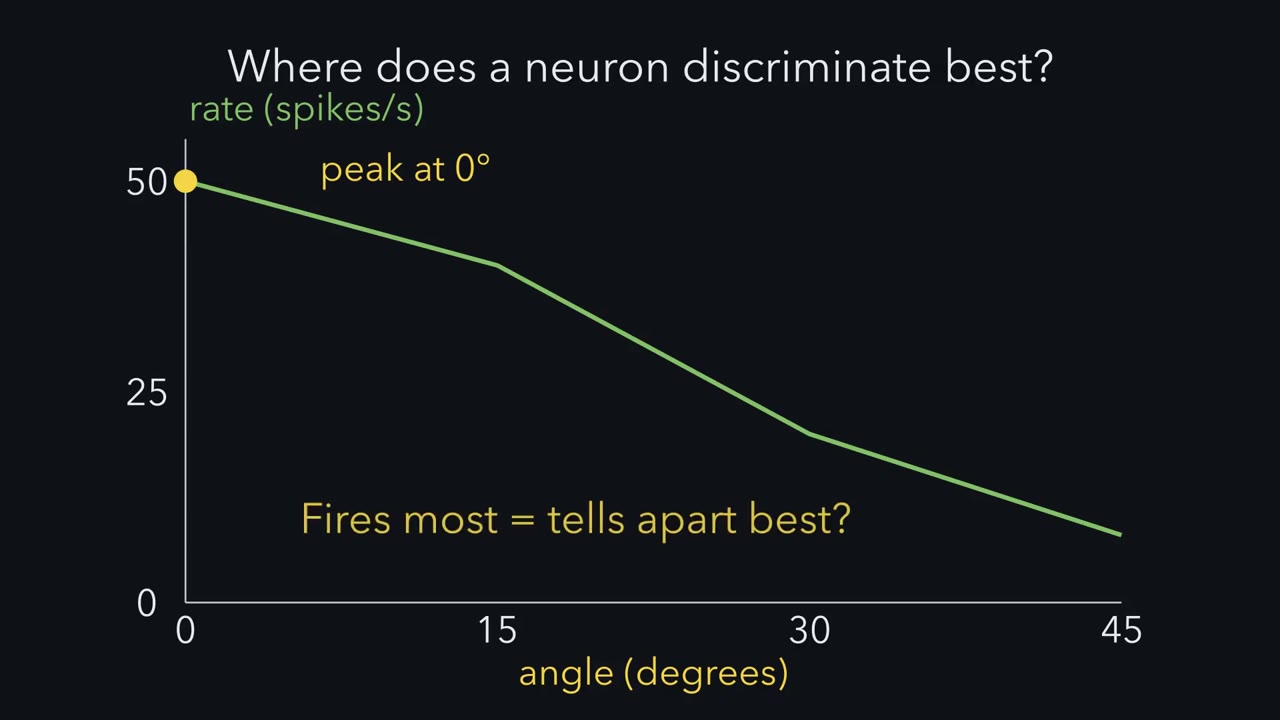
They come more often. Every spike stays the same size. And while a weight is held, the firing slowly falls. So the rate tells you how much. Now the what. Pressure on the closed eye is seen as light. Activity in the optic nerve means light, whatever started it. So the kind of sense comes from the line. Whether every quality works this way is still argued. A tuning curve plots a neuron's mean firing rate against one feature of the stimulus. The count varies from trial to trial. That spread is noise. Here is the one idea, for spikes counted over a fixed time. On each trial, a neuron's rate is its tuning curve, read at the stimulus, plus a fluctuation that averages to zero.
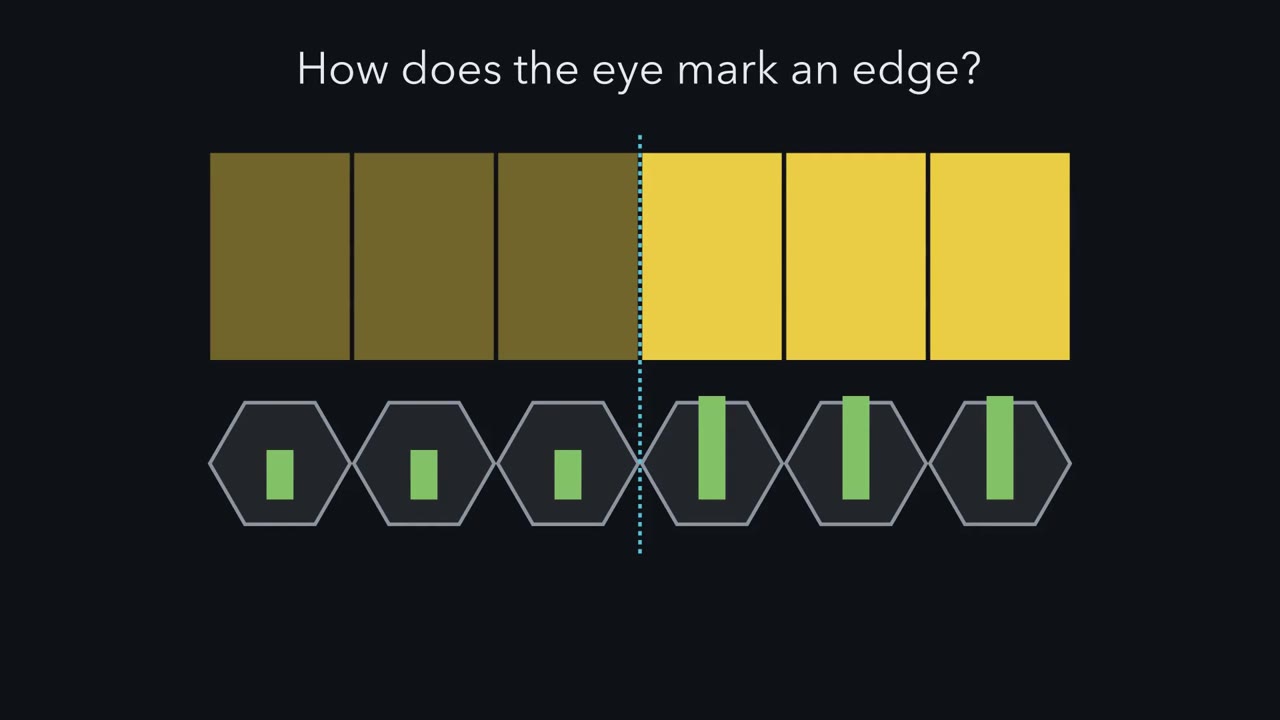
Which neurons respond, and their relative firing rates, together tell you what, where and how much. A small change is easiest to see where the rate changes a lot, compared with the noise. Spike timing can carry information too. How is the rate set? In touch, force opens channels, mostly in the nerve ending itself. In a simple model, each open channel pulls the balance point toward 0 mV. So the receptor potential is graded. Each extra channel moves it less, as the voltage nears 0 mV.
But a graded potential fades as it spreads. To reach the spinal cord, it must become spikes, which regenerate. Receptive fields help tell you where. Many afferents used for fine touch have small fields on a fingertip and larger ones elsewhere. Field size also depends on receptor type. Endings are tuned in time, too. Rapidly adapting endings report change. Slowly adapting endings keep firing, and report the stimulus itself. So a spike means what its neuron is tuned to. Next, neighbours compare.
A heavier weight on a frog's muscle receptor did not make bigger impulses, only more of them. How do identical spikes carry a whole world?
Continue in the lesson: Principles of Sensory Coding →
2:43 · Free, with captions and a transcript. The lesson has the full text, the questions and the sources.
More films from this lesson
How this film was made. Narration: an AI narrator voice (Kokoro, af_heart) reading narration written from this lesson's text. Animation: AI-generated in code (Manim) by Claude, a schematic with no drawn molecular structures. Captions come from the narration script. See something wrong? Report it.