How Chromosome Pairs Make Different Mixes
Read the transcript of “How Chromosome Pairs Make Different Mixes”
Film transcript: How Chromosome Pairs Make Different Mixes
The first film showed why sex cells carry half the chromosomes. But if every sex cell gets half, why are those halves different? Return to the blue and gold chromosome pairs. This time, follow which member enters each sex cell.
A gene can have different versions. Each version is an allele. Put capital B on the blue chromosome and lowercase b on the gold one. A sex cell receives only one member of this pair. Each sex cell has an equal chance of getting capital B or lowercase b. Across many sex cells, about half carry each. Now restore three pairs. During meiosis, each pair sorts by chance, independently of the other pairs in this model. The blue member may move left in one pair. In another pair, the gold member may move left. Each choice changes the final mix. One green sex cell now holds a blue, gold, blue pattern. Reset the parent cell and turn each pair again. Must the next sex cell match that pattern?
Predict what the independent choices will do. The next cell need not match. A gold, blue, gold pattern is also possible. Each pair still contributes one chromosome, so every sex cell has half. What changes is which member arrives. Different eggs and sperm can therefore carry different mixes of alleles. Chance does not promise exact halves in a small group. A short run can contain more copies of one allele. Across many model sex cells, the results should approach equal shares. An allele is not stronger because it appears a little more often once. Blue and gold mark two pair members, not stronger and weaker chromosomes. This model follows whole chromosomes only.
In high school, you will add crossing over. Paired chromosomes can exchange matching pieces, creating still more allele combinations. That later detail does not change today's sorting rule. Mitosis does a different job. It keeps the chromosome number and makes matching body cells for growth and repair.
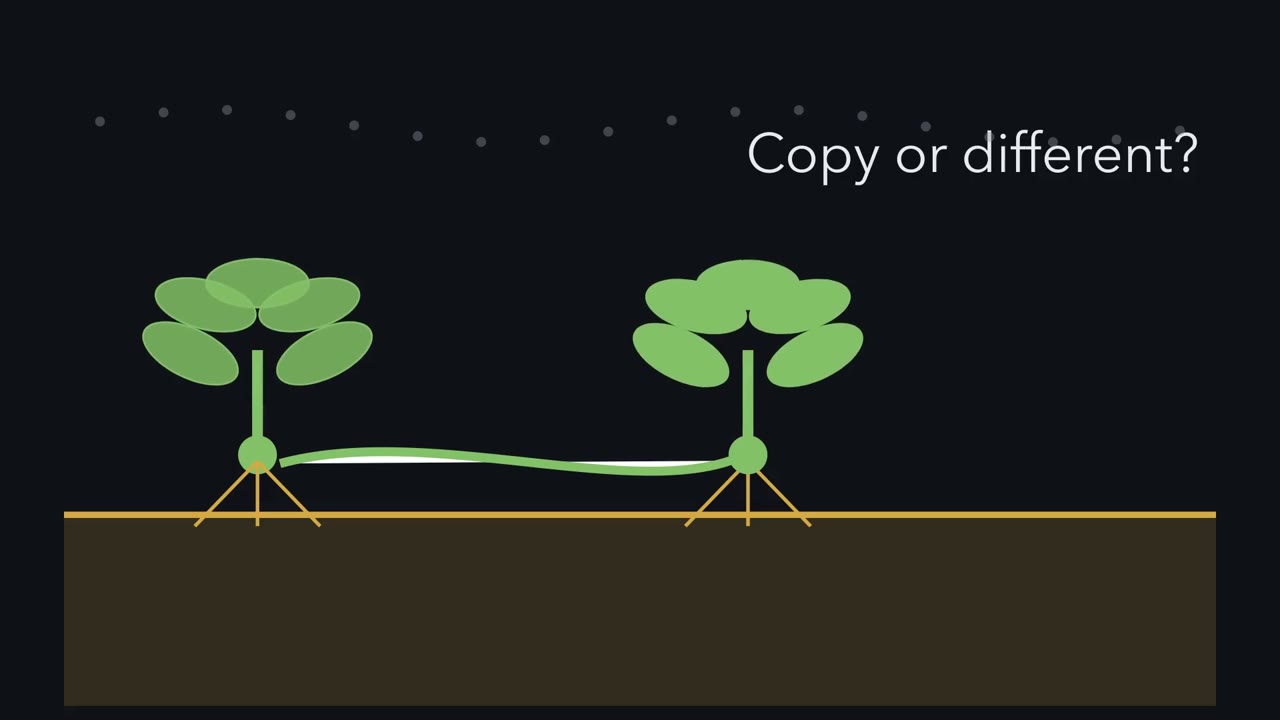
Meiosis makes sex cells with half and can make different mixes. Most asexual reproduction uses the copy path; sexual reproduction uses the sorting path. Now the sibling puzzle has an answer. Each child begins from a different egg and sperm, usually carrying different allele mixes. The alleles stay separate rather than blending like paint.
Sexual reproduction: meiosis halves chromosome number and makes mixes; fertilization restores pairs.
Why does a strawberry runner grow into a copy of its parent, but brothers and sisters do not come out as copies of each other?
Continue in the lesson: Reproduction and Meiosis →
3:15 · Free, with captions and a transcript. The lesson has the full text, the questions and the sources.
More films from this lesson
How this film was made. Narration: an AI narrator voice (Kokoro, af_heart) reading narration written from this lesson's text. Animation: AI-generated in code (Manim) by Claude, a schematic with no drawn molecular structures. Captions come from the narration script. See something wrong? Report it.