Films · Genetics and Molecular Biology
From DNA Fragment to Verified Clone
Read the transcript of “From DNA Fragment to Verified Clone”
Film transcript: From DNA Fragment to Verified Clone
A colony has survived an antibiotic. Does it carry the DNA you wanted? Survival is encouraging, but it answers only one question. Follow one candidate insert through a chain that narrows what the colony might contain. Start with a blue plasmid and a yellow DNA insert. Matching restriction cuts create compatible ends on both pieces. Their exposed bases can pair.
DNA ligase seals the backbone. This creates a recombinant candidate, but other products can form too. Compatibility permits a join; it does not verify the joined pieces. The plasmid carries an origin, a selectable marker, and a cloning site. The origin lets the host copy the circle. The marker can let plasmid-bearing cells survive an antibiotic. The cloning site holds the insert. These parts make propagation possible, but none reads the insert's complete sequence. Next, the plasmid enters bacteria by transformation.
Only some cells take up a circle. Those cells divide, copying the plasmid as they grow. Cells with no plasmid remain mixed among them. The tube now contains several possibilities, so the experiment needs a way to narrow the population. Selection asks whether a cell probably carries a plasmid with the marker. Spread the cells on antibiotic.
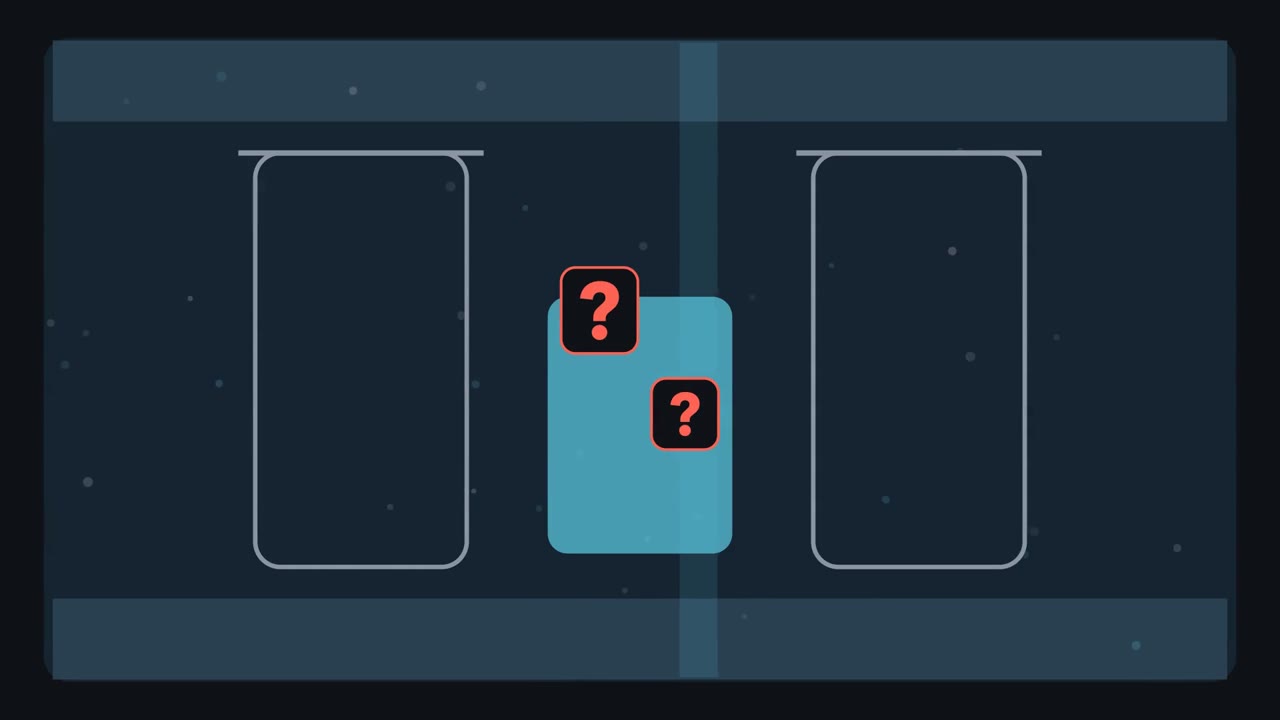
Plasmid-free cells stop growing. Marker-bearing cells form colonies. Yet an empty vector can carry the same marker. Survival enriches plasmid-bearing cells; it does not identify the construct inside each colony. Several colonies remain, and their plasmids are hidden. Which next observation would separate an empty vector from the intended construct? Hold the plate in mind. You need evidence about the DNA inside a colony, not another test of antibiotic survival.
Screening inspects the candidate DNA. A colony PCR or restriction digest can test whether fragments have expected sizes. A matching pattern moves a colony forward, but size is not sequence. Screening changes the odds. It does not turn a candidate into proof. Sequence both junctions and the insert to test the bases and orientation. A correct sequence supports the intended construct. Expression is a separate question: the plasmid also needs a working promoter and other expression parts. Each result earns only the conclusion its measurement can support. The chain now makes sense. Compatible ends create possibilities.
Transformation and growth create copies. Selection removes many cells without plasmids. Screening narrows the candidates. Sequencing tests the construct itself. Cloning succeeds by combining amplification with evidence, one inference at a time.
A white colony survives ampicillin and a PCR tube ends with a bright band. How do you know either contains the DNA you wanted?
Continue in the lesson: Recombinant DNA, Cloning and PCR →
3:39 · Free, with captions and a transcript. The lesson has the full text, the questions and the sources.
More films from this lesson
How this film was made. Narration: written from this lesson's text and read by an AI narrator voice (Kokoro, af_heart). Animation: AI-generated in code (Manim) by Claude, a schematic with no drawn molecular structures. Captions come from the narration script. See something wrong? Report it.