Follow the Flow, Not the Pile
Read the transcript of “Follow the Flow, Not the Pile”
Film transcript: Follow the Flow, Not the Pile
Autophagy wraps cell material in carriers and sends it to lysosomes for recycling. Those carriers are autophagosomes. Yet two cells can hold the same large pile. Is autophagy faster in both? One makes and clears them quickly. The other makes them slowly, but its exit is blocked. A still picture cannot distinguish those stories.
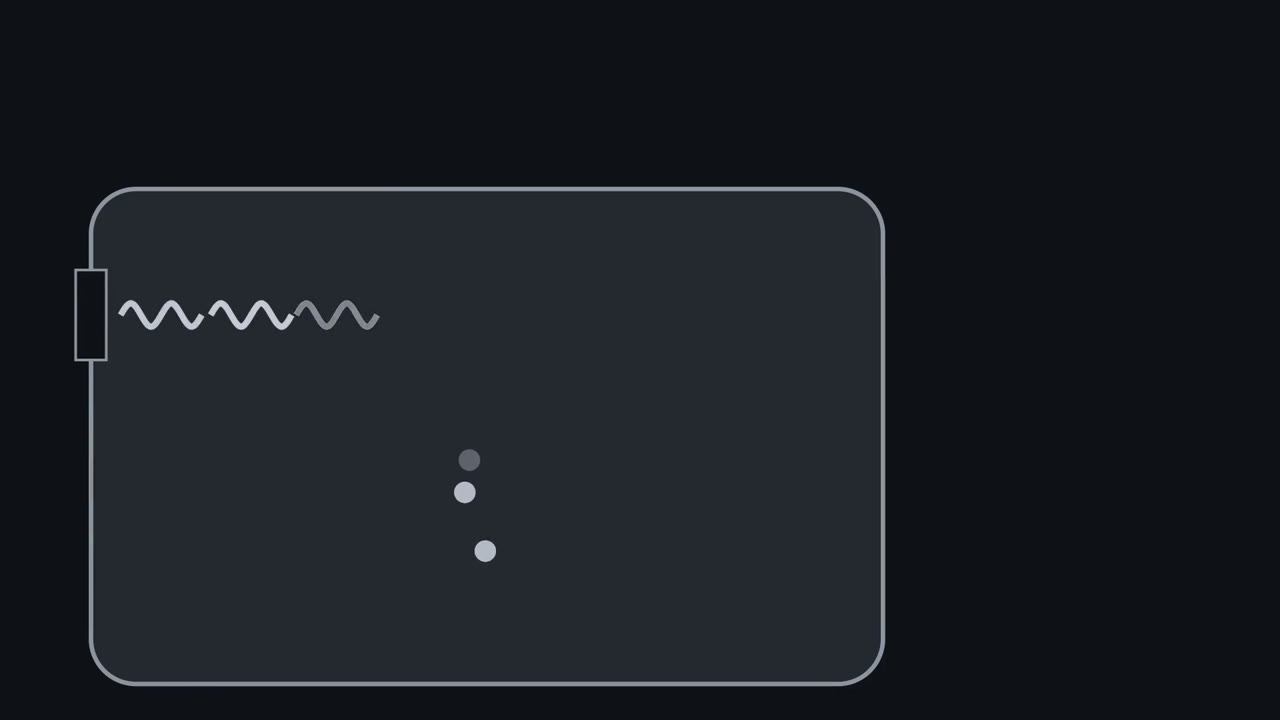
The endoplasmic reticulum, or ER, uses helpers to retry proteins that have not reached their working shape. This is a first picture. In the ER, many failed proteins are returned to the cytosol, tagged with ubiquitin, and destroyed by the proteasome. Ubiquitin is that small protein tag. The proteasome is a capped barrel that unfolds and destroys tagged individual proteins. Now a damaged mitochondrion reaches the same station. It cannot enter the proteasome's narrow barrel. Macroautophagy uses a different physical solution. A blue membrane cup grows around the cargo and closes into an autophagosome. In macroautophagy, autophagosomes carry bulk cytoplasm and whole organelles to lysosomes. The carrier fuses with a lysosome, whose acidic interior digests the cargo into reusable blocks.
Starvation reduces building blocks arriving from outside the cell, so the reuse bin begins to empty. More cytoplasm now enters autophagosomes and reaches lysosomes. Digestion sends recovered blocks back into the bin. During starvation, autophagy recycles cell material into reusable building blocks. That recycling may be one reason autophagy-defective yeast lose viability faster during nitrogen starvation. Now watch the carrier pool between its two gates. For a defined cellular pool, change equals arrival minus clearance over the interval. Matching rates keep the pool level. Faster arrival makes it grow.
Slower clearance does too. For a defined cellular pool, a larger pool can mean faster arrival or slower clearance. We need an experiment that separates those possibilities. LC3-II is a protein form attached to autophagosome membranes, so it marks the carriers. Bafilomycin blocks lysosomal acidification, closing the exit during this short assay. Now two LC3-II pools start equally high. After bafilomycin, which pool rises more: the one with fast arrival or slow arrival?
The fast-arrival pool rises more after clearance stops. Its purple gauge climbs steeply while the slow-arrival gauge barely moves. Under a complete lysosomal block that leaves carrier formation unchanged, the extra LC3-II estimates lysosomal turnover over the interval. The equal starting amounts could not reveal that difference. Return to the two cells with equal carrier piles. Their visible amounts matched, but their flows did not. Closing the exit exposed the difference in arrival. The same question works across the recycling map, even when the cargo and route change. Wherever material piles up, ask two questions. How fast does it arrive? How fast does it leave?
When material piles up in a cell, is more arriving or less leaving, and how can you tell?
Continue in the lesson: Protein Quality Control and Organelle Turnover →
4:03 · Free, with captions and a transcript. The lesson has the full text, the questions and the sources.
More films from this lesson
How this film was made. Narration: written from this lesson's text and read by an AI narrator voice (Kokoro, af_heart). Animation: AI-generated in code (Manim) by Claude, a schematic with no drawn molecular structures. Captions come from the narration script. See something wrong? Report it.